Guitar Chord Chart
12 chords, ready to play
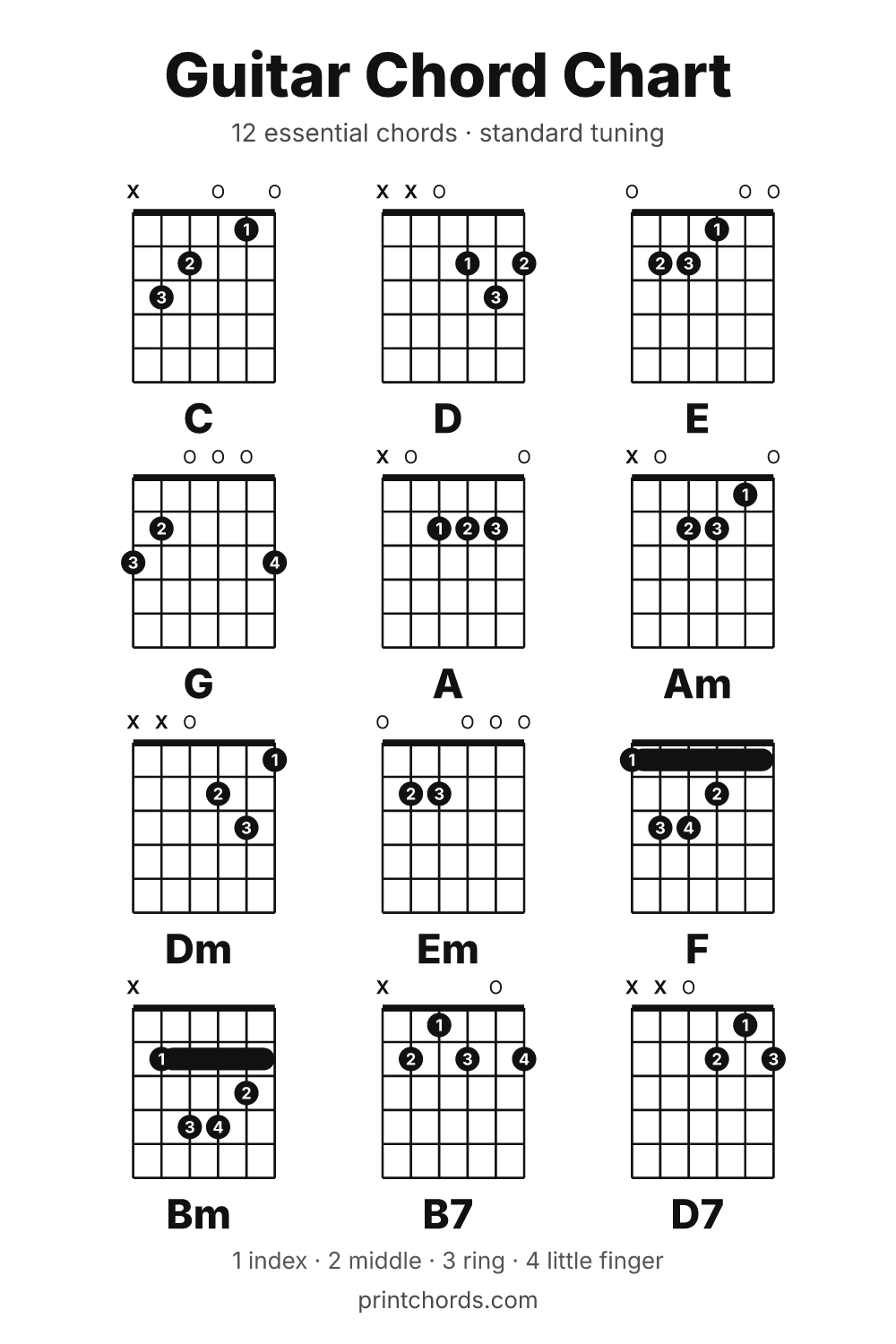
A guitar chord chart with the 12 essential chords. Print the whole thing or save it for later.
Open the chart →Print as many copies as you need for any class. No account, no asking, no watermark across the diagrams.
Hand out anything on this site to your students. Photocopy it, drop it in a course pack, build it into a worksheet or your own teaching material. No permission needed, and it costs nothing, now or later.
The one thing to avoid is reselling the sheets as they are, or republishing them as the main content of another site or app. The terms page spells that out in a few lines.
Each sheet has printchords.com in small type along the bottom, never a watermark over the diagrams. A watermark makes a page not worth printing. This way, a student who liked the hand-out can find the rest of the site.
Start a first lesson with the beginner chart. Eight open shapes, no barre chords, in the order you'd teach them. It'll hold up for a whole term.
Keep a stack of blank sheets for the shapes the printed charts don't cover. When you show a chord and the student writes it down by hand, it sticks in a way that reading it never does. The six-diagram version suits younger students and thick pens.
For the wall, print the full chord chart and the pentatonic boxes large. They read from across a room. Everything is plain black on white, so even a tired photocopier keeps it clean.
Every sheet gives you a printable PDF, a PNG for slides, and a Print button.
12 chords, ready to play
A guitar chord chart with the 12 essential chords. Print the whole thing or save it for later.
Open the chart →8 chords, ready to play
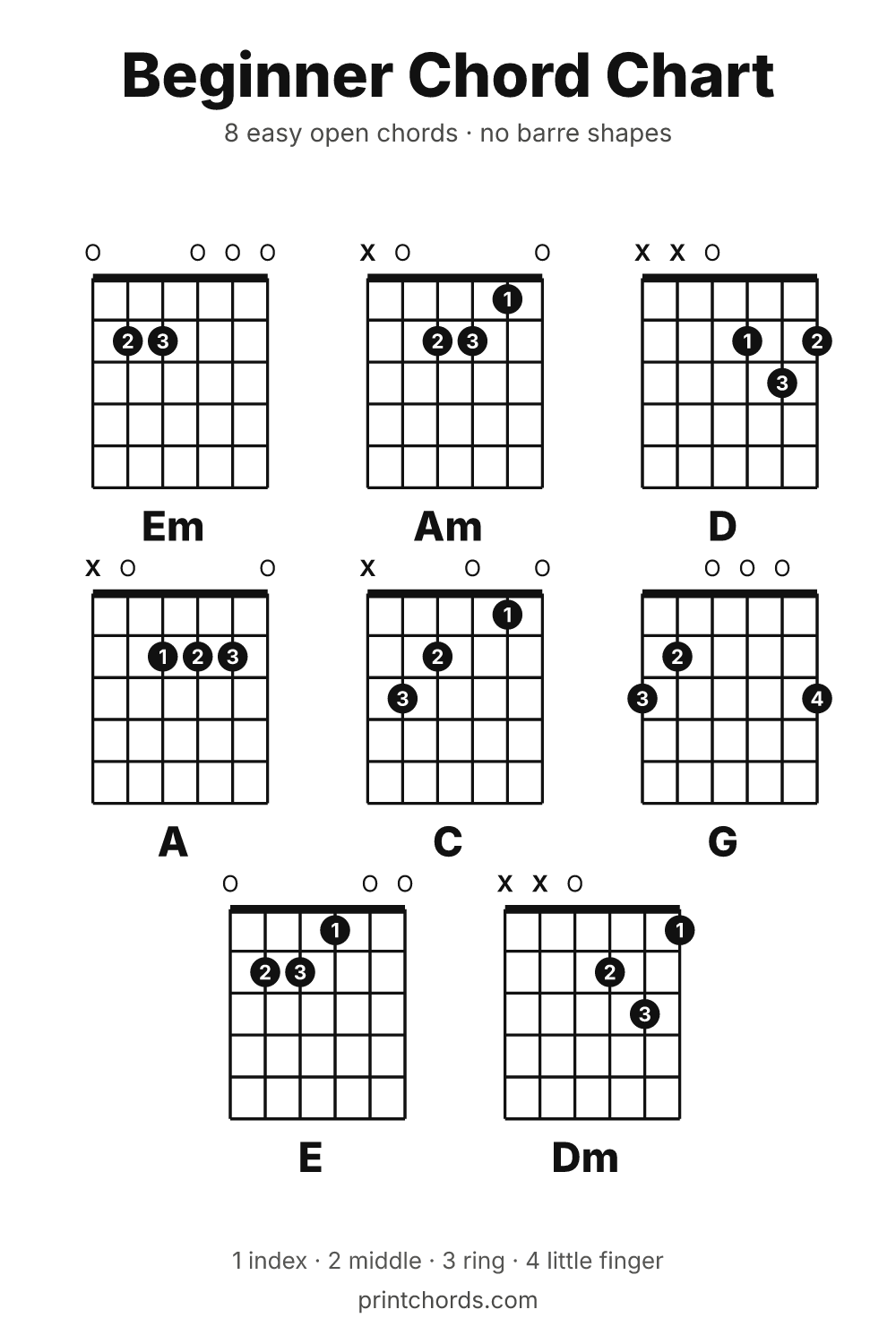
Eight easy open chords, listed in the order you should learn them. No barre shapes anywhere.
Open the chart →8 chords, ready to play
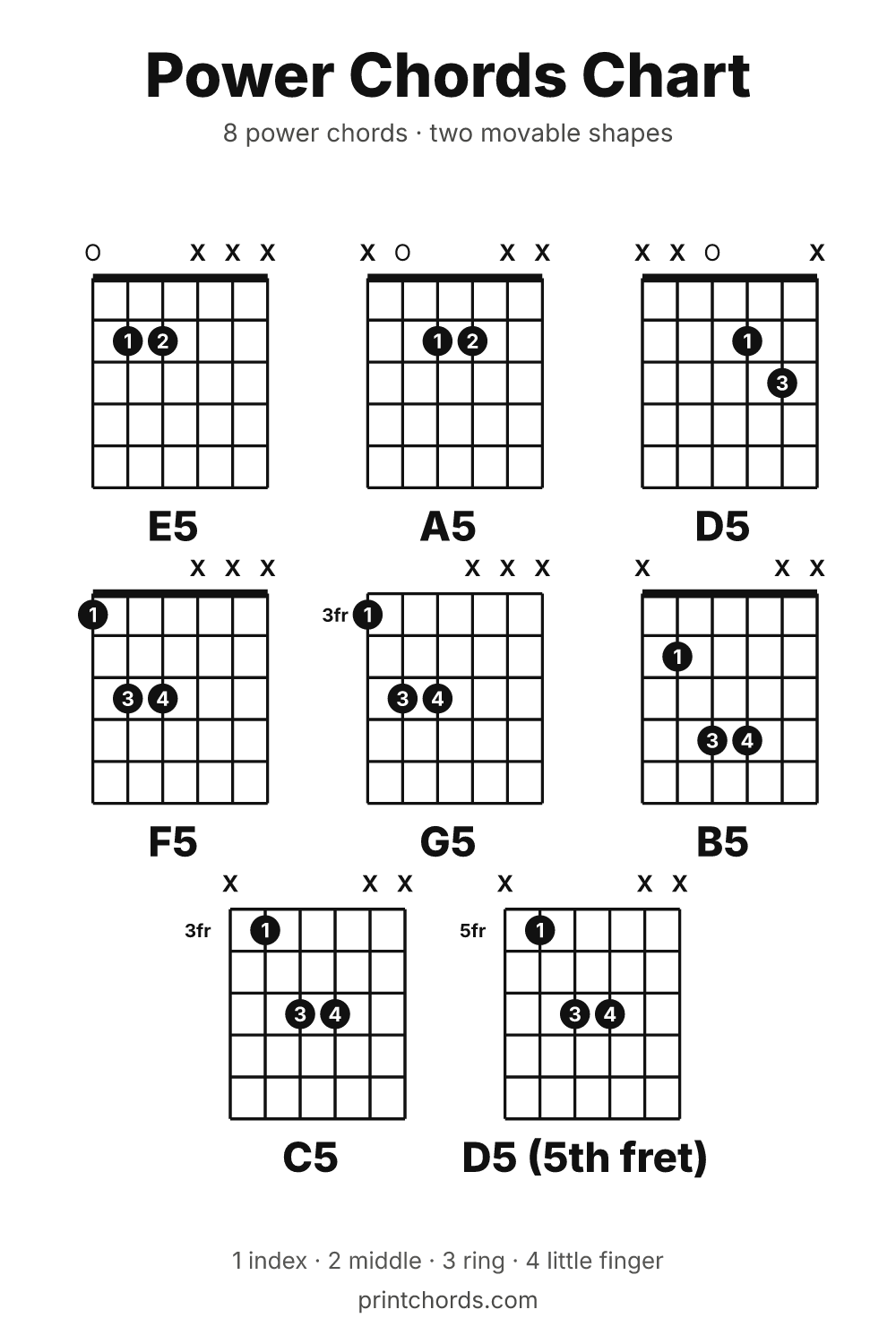
Eight power chords, plus the two movable shapes that cover every other one.
Open the chart →132 chords at a glance
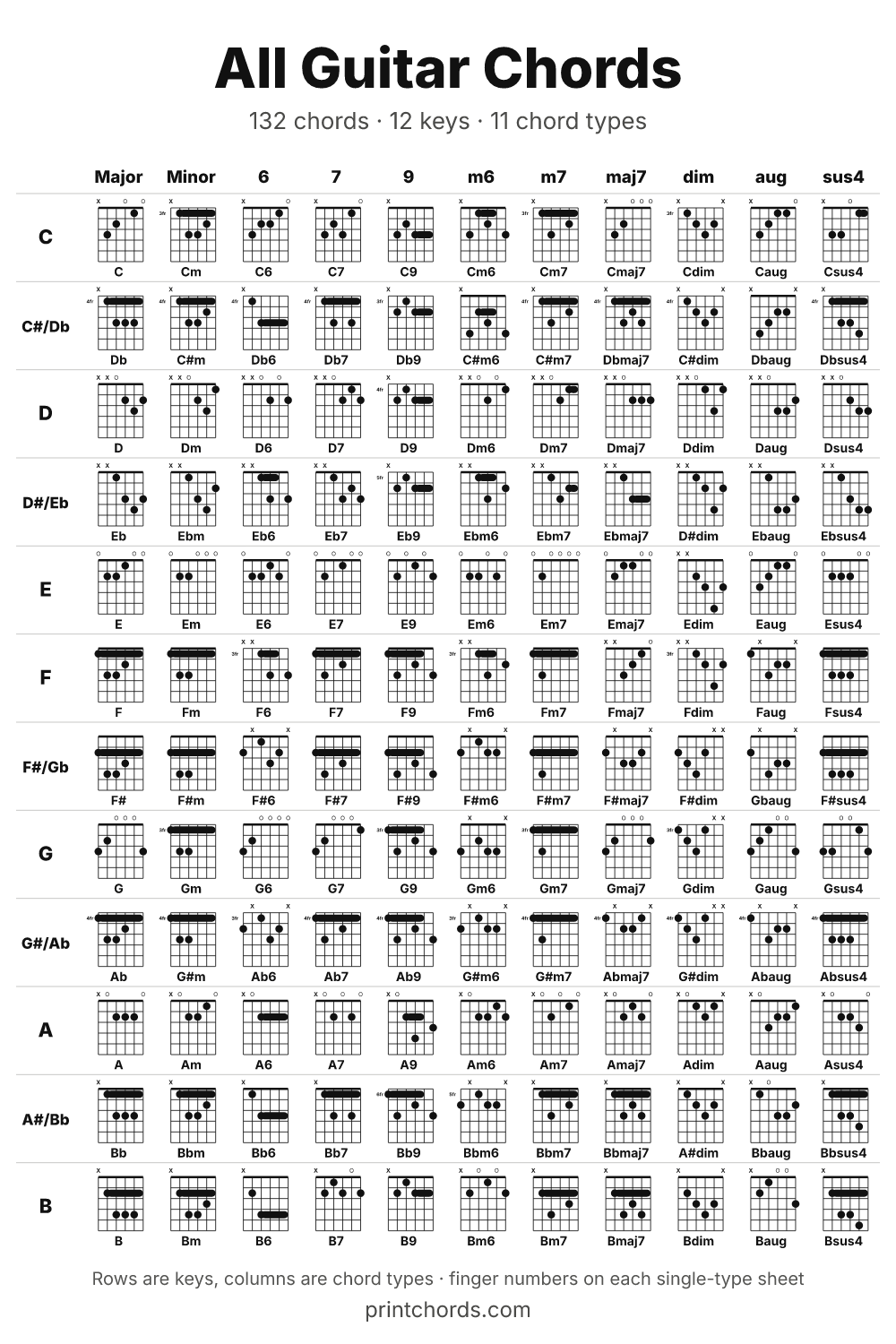
132 chords on one page, every key down the side and every chord type across the top.
Open the full chart →12 keys, one shape each
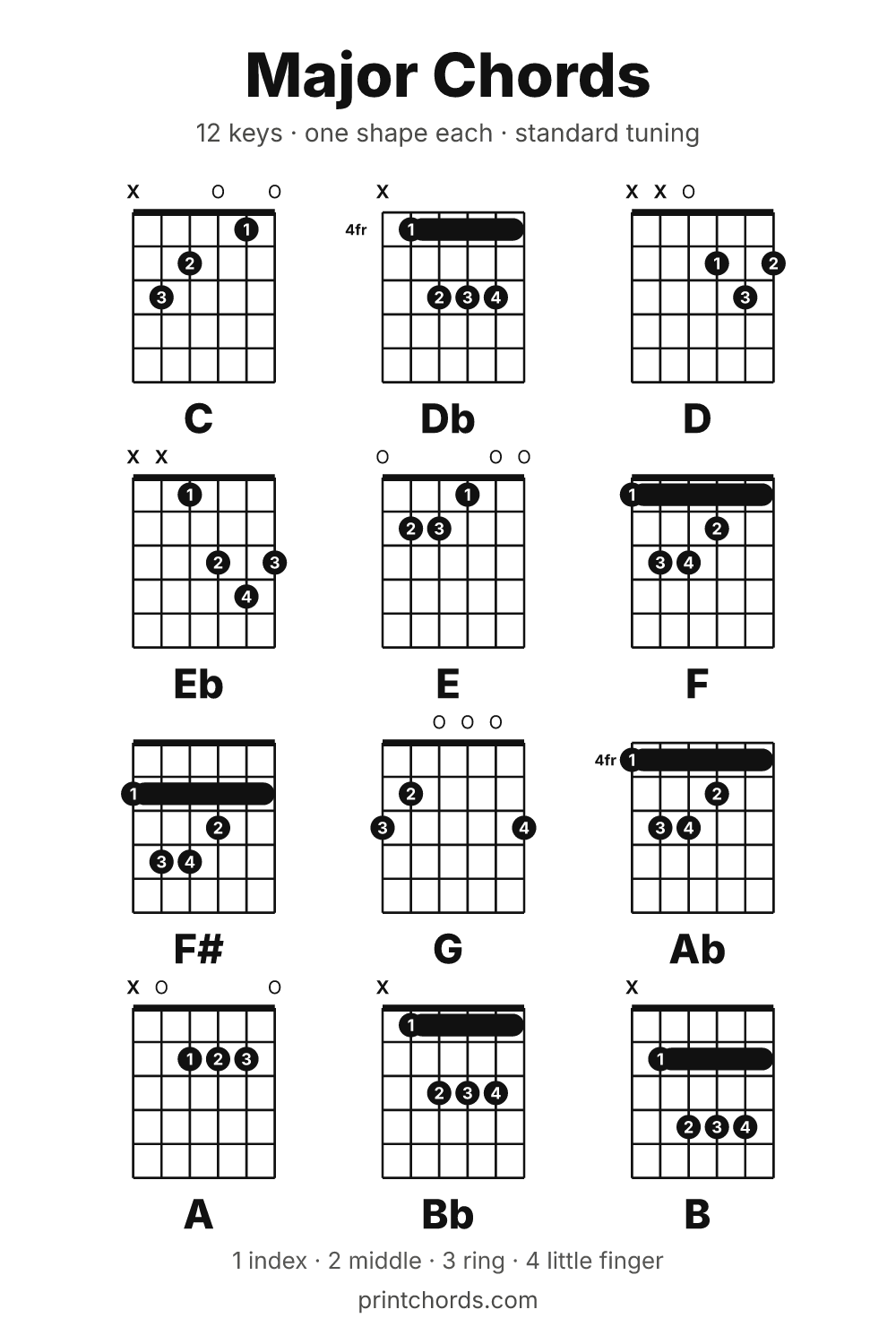
Root, major third and fifth. The bright, settled sound most songs come home to.
See them on the full chart →12 keys, one shape each
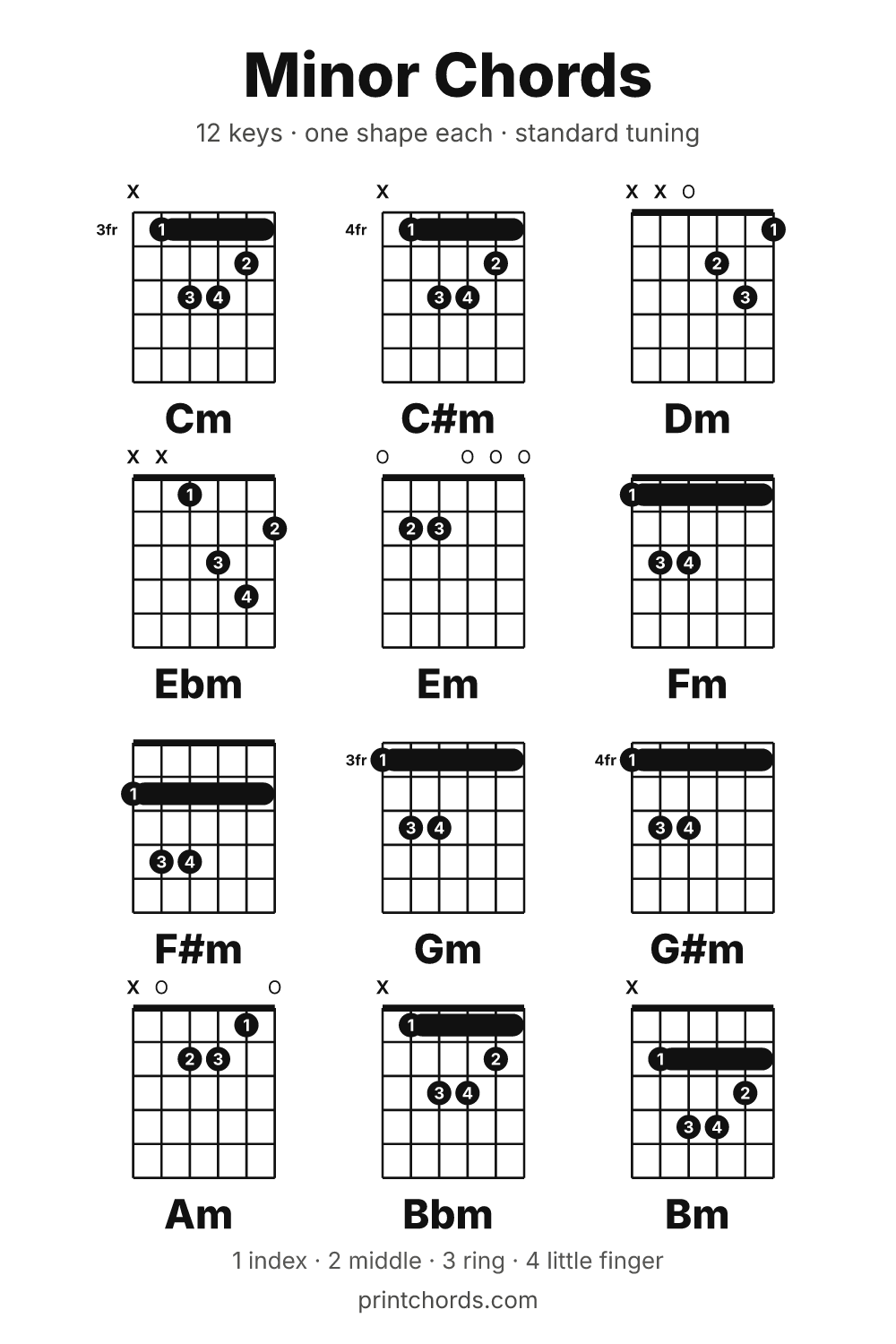
Drop the third by one fret and the chord turns darker. The root and the fifth stay where they were.
See them on the full chart →12 keys, one shape each
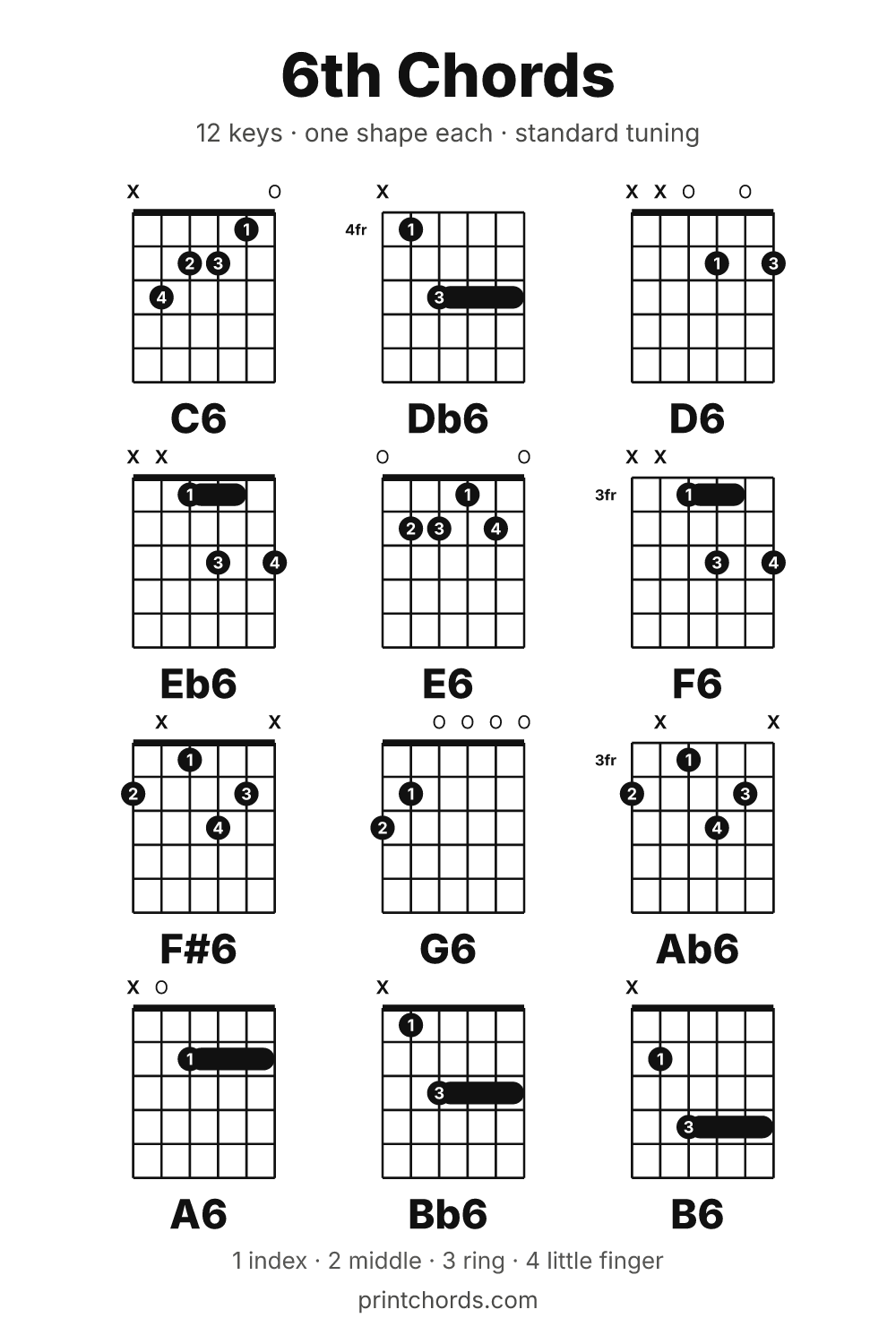
A major chord with the sixth added. Sweet and a little old-fashioned, it turns up in swing, country and on the last chord of a song.
See them on the full chart →12 keys, one shape each
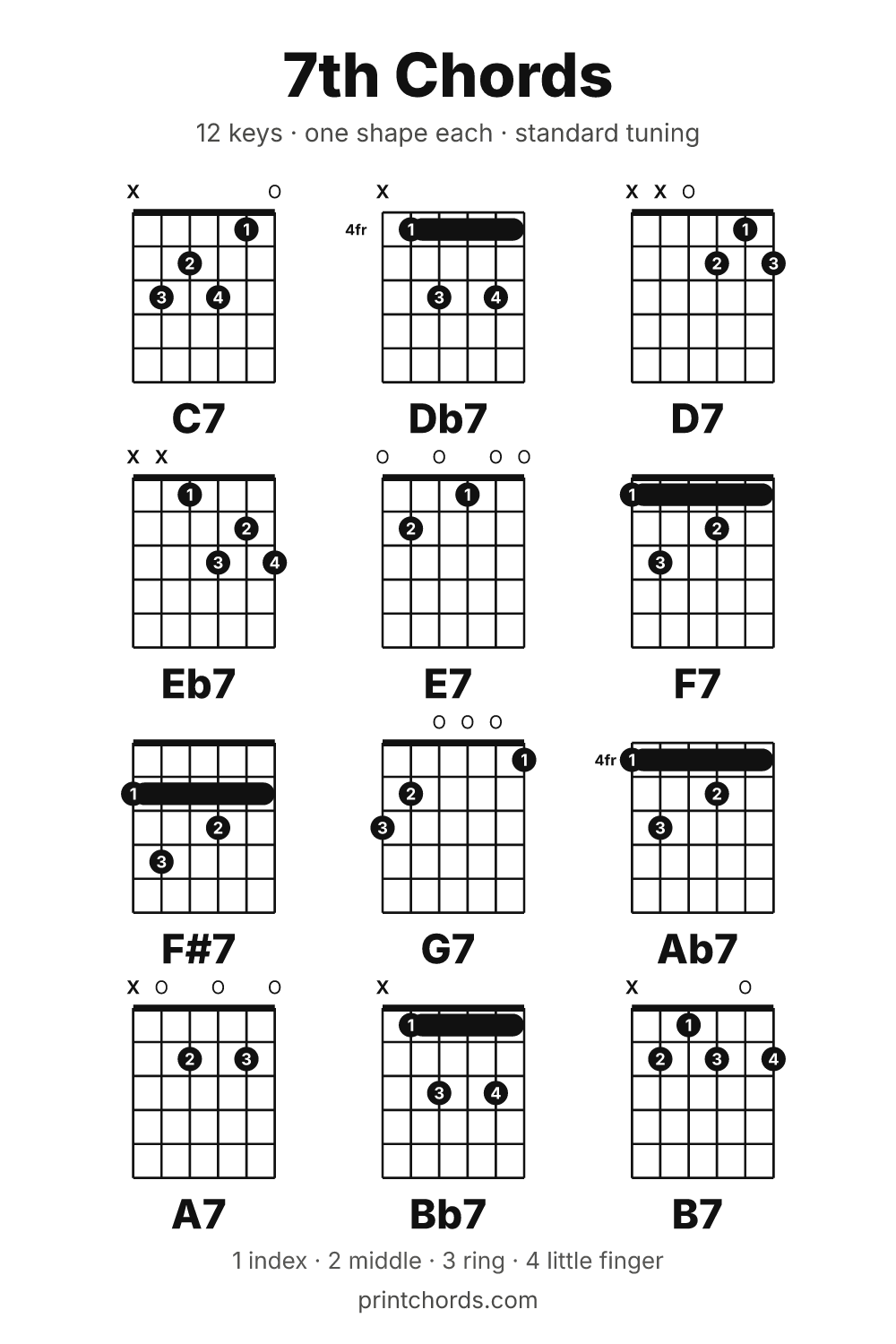
A major chord plus the flat seventh. It pulls toward the chord a fourth above, and a twelve-bar blues runs on nothing else.
See them on the full chart →12 keys, one shape each
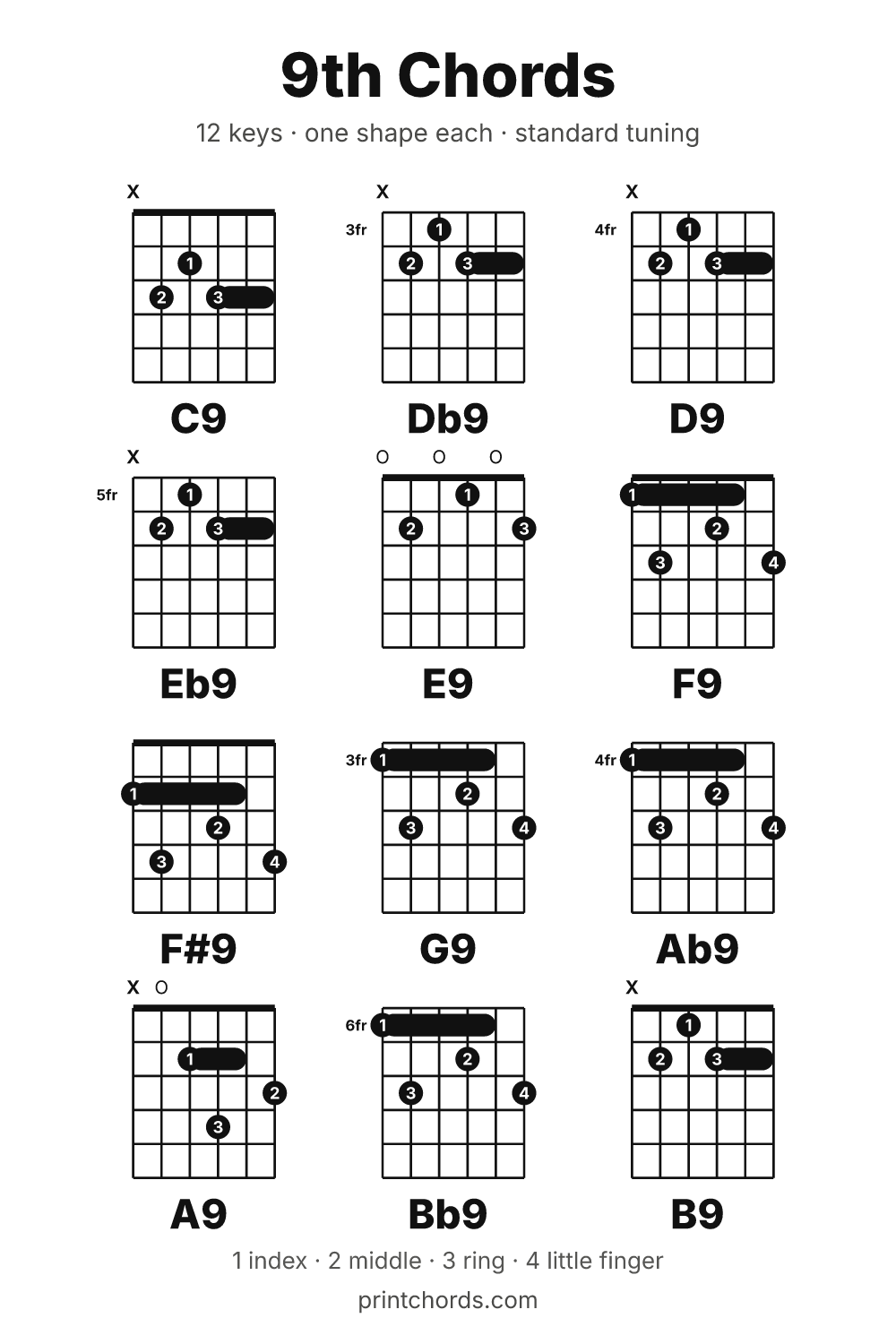
A 7th chord with the ninth on top. Funk and blues players reach for it when a plain 7 sounds too thin.
See them on the full chart →12 keys, one shape each
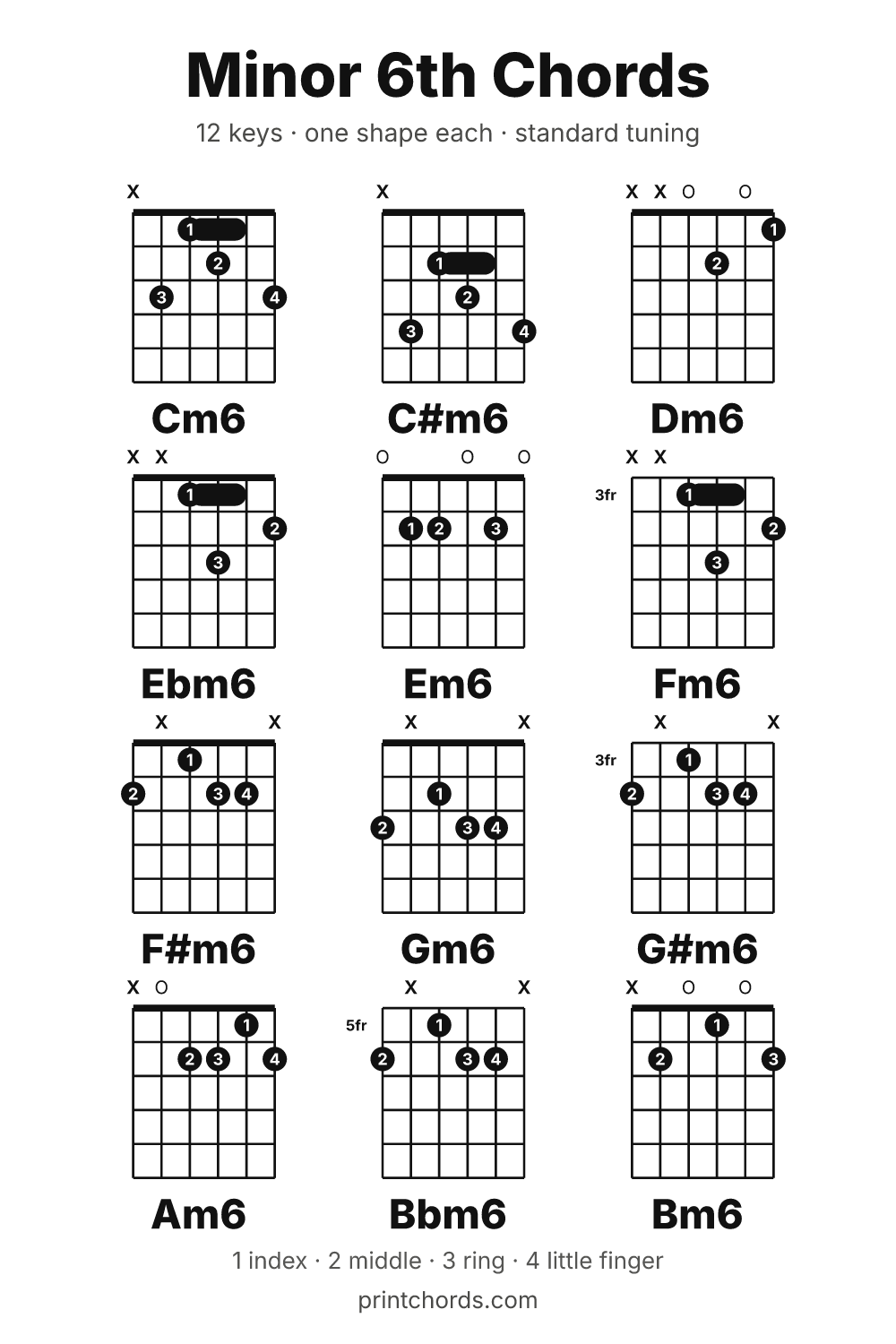
A minor chord with a major sixth. Dark without being sad, and a staple of jazz, bossa nova and gypsy jazz.
See them on the full chart →12 keys, one shape each
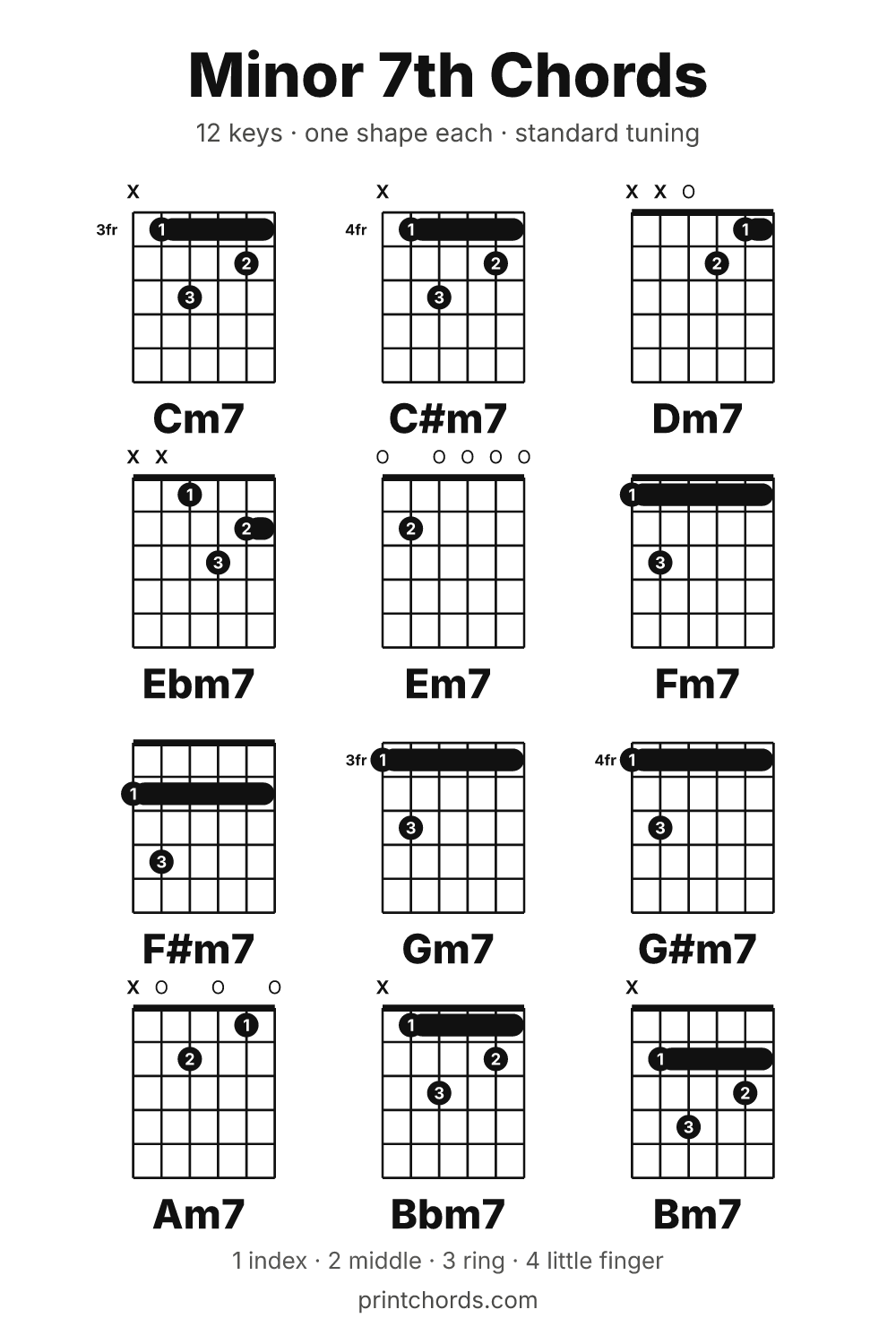
A minor chord with the flat seventh. Softer than plain minor, and the everyday minor sound in soul, R&B and jazz.
See them on the full chart →12 keys, one shape each
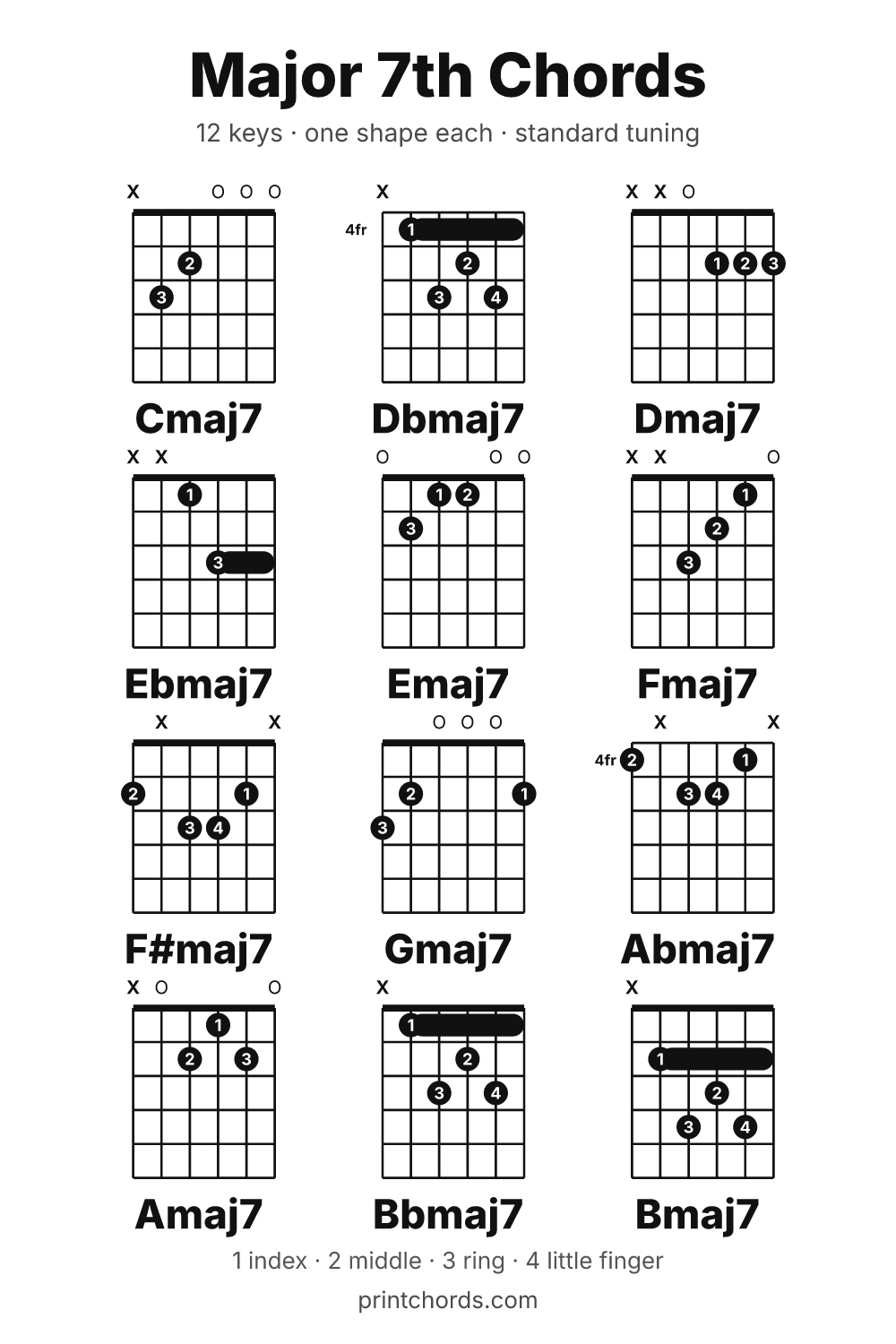
A major chord with the major seventh, one fret below the octave. Open and dreamy, the sound of a lot of ballads.
See them on the full chart →12 keys, one shape each
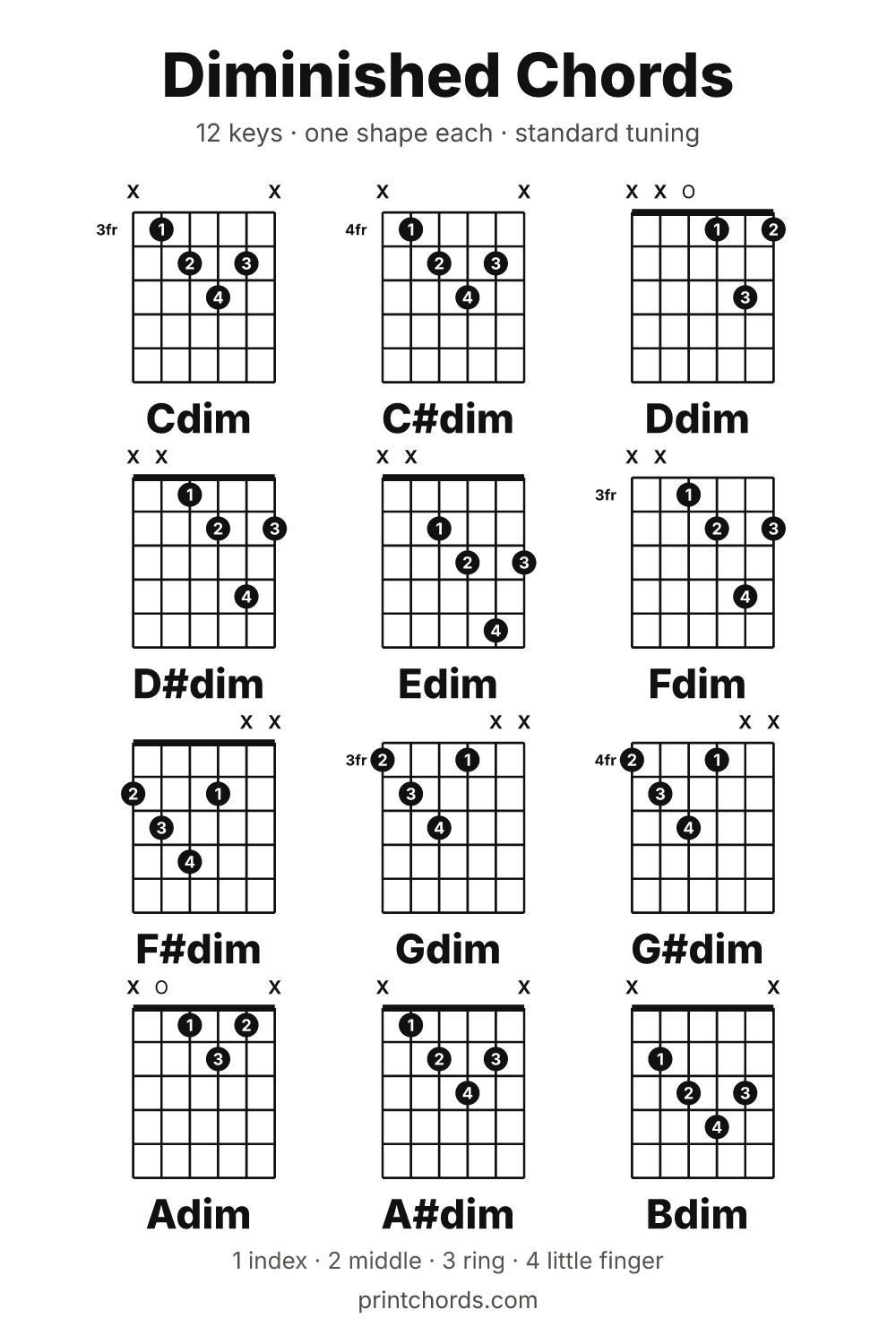
Root, minor third and flat fifth: three notes, tense and unstable. It usually passes between two other chords. The four-note dim7 is a different chord.
See them on the full chart →12 keys, one shape each
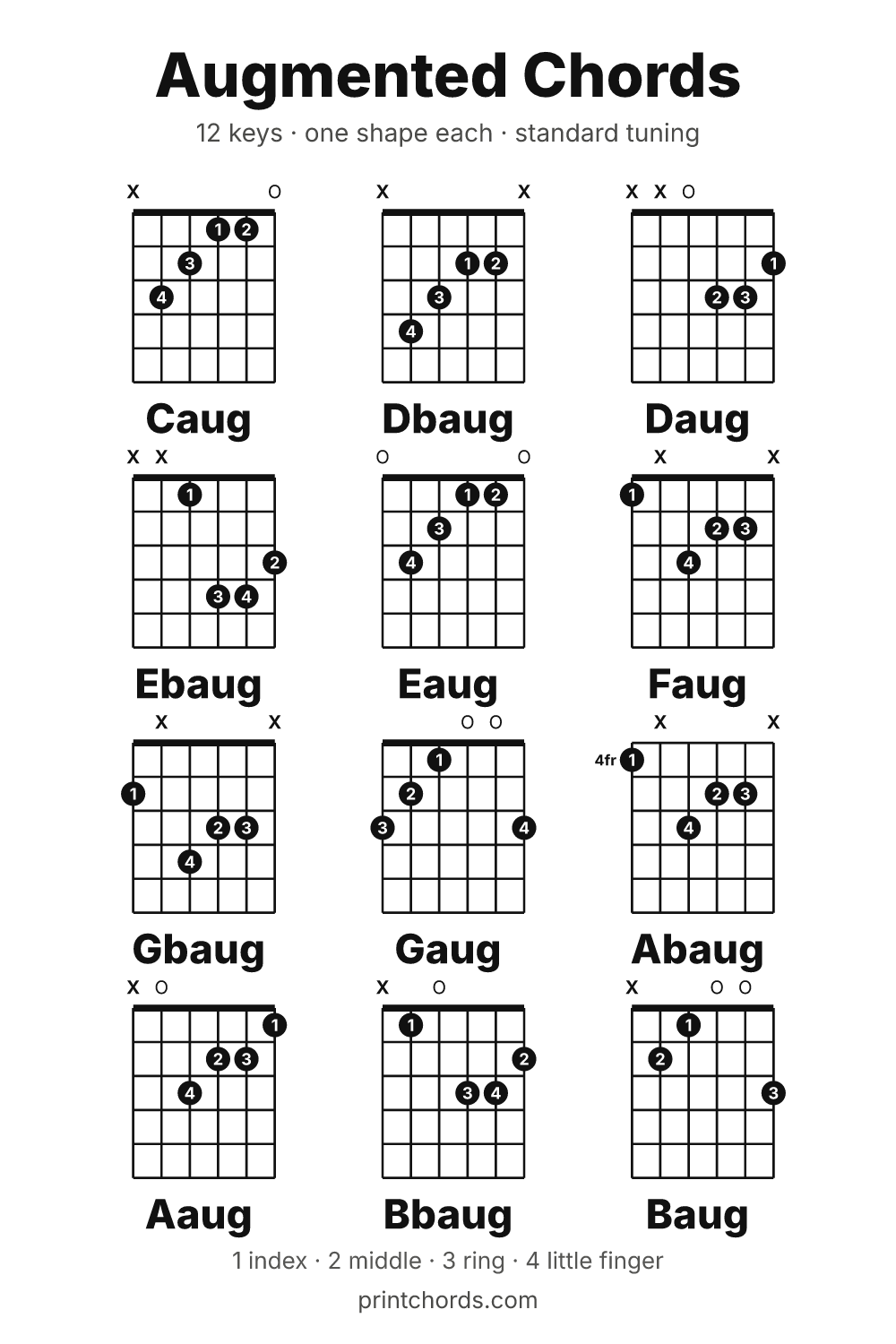
A major chord with the fifth raised one fret. It never sounds finished, so it leads straight into whatever comes next.
See them on the full chart →12 keys, one shape each
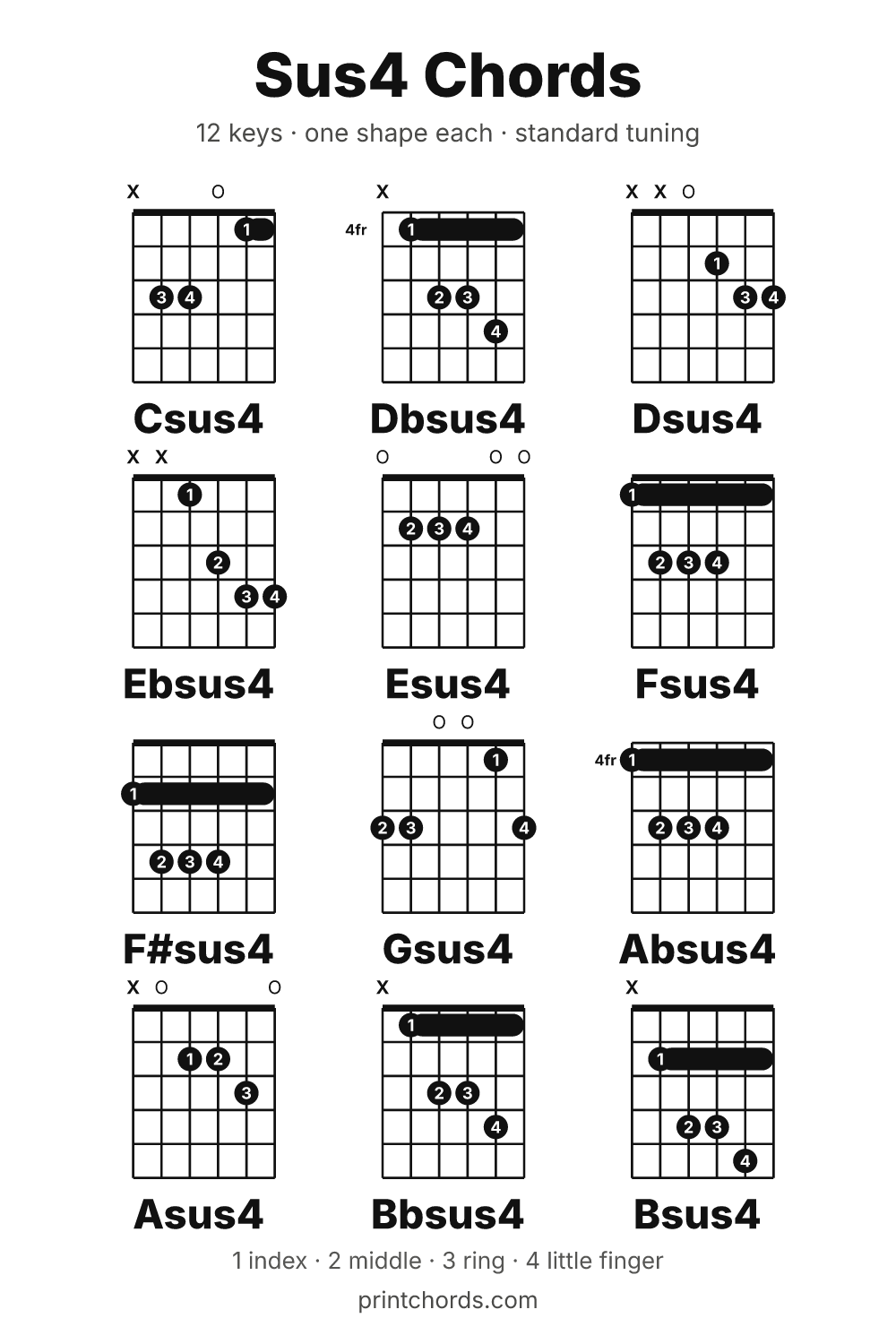
The third is swapped for the fourth, so the chord hangs in the air until the fourth falls back to the third.
See them on the full chart →Practice notes and lesson handouts
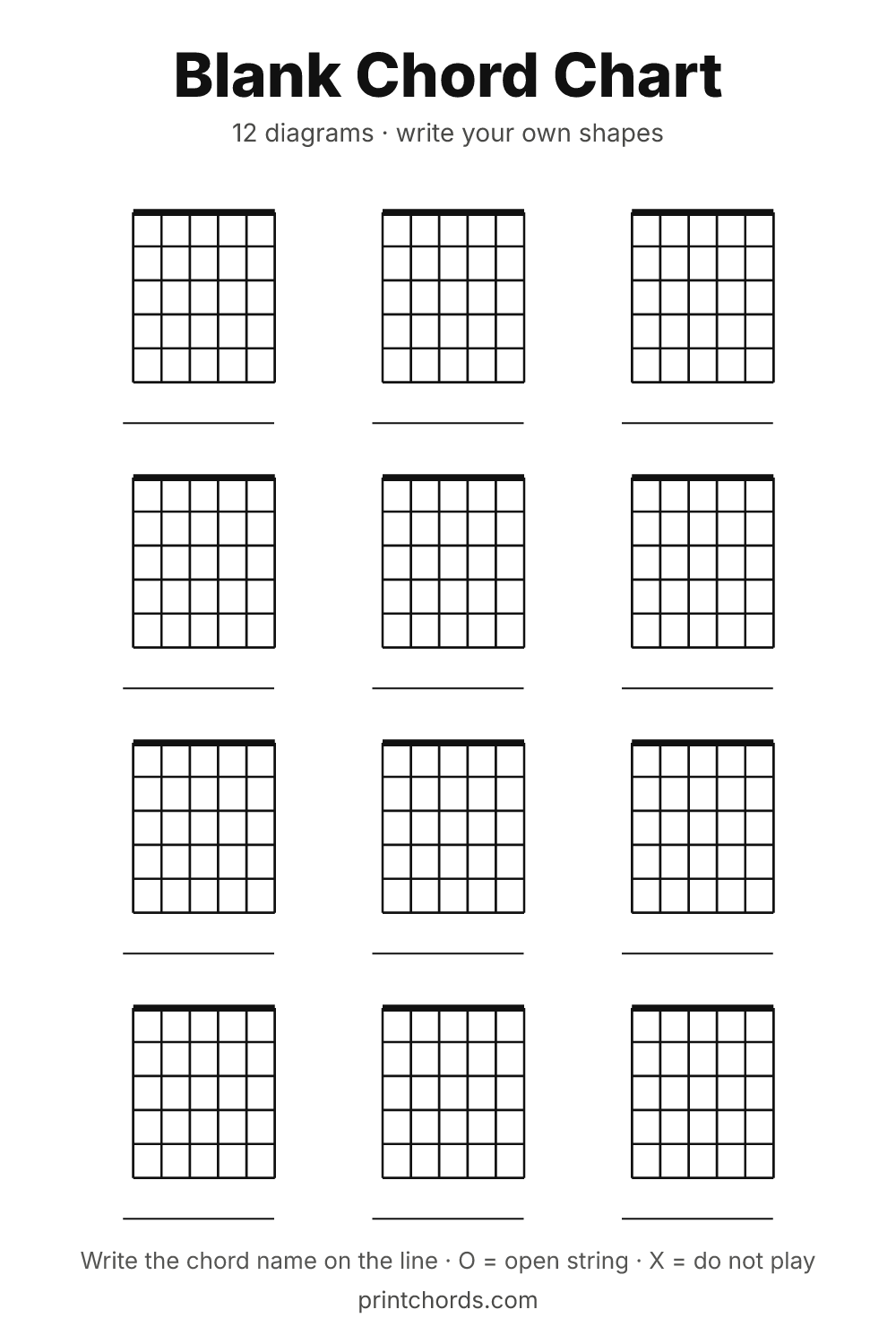
The size you'll reach for most days. Each grid has room underneath for the chord name without crowding the page.
About blank charts →Songs and long chord runs
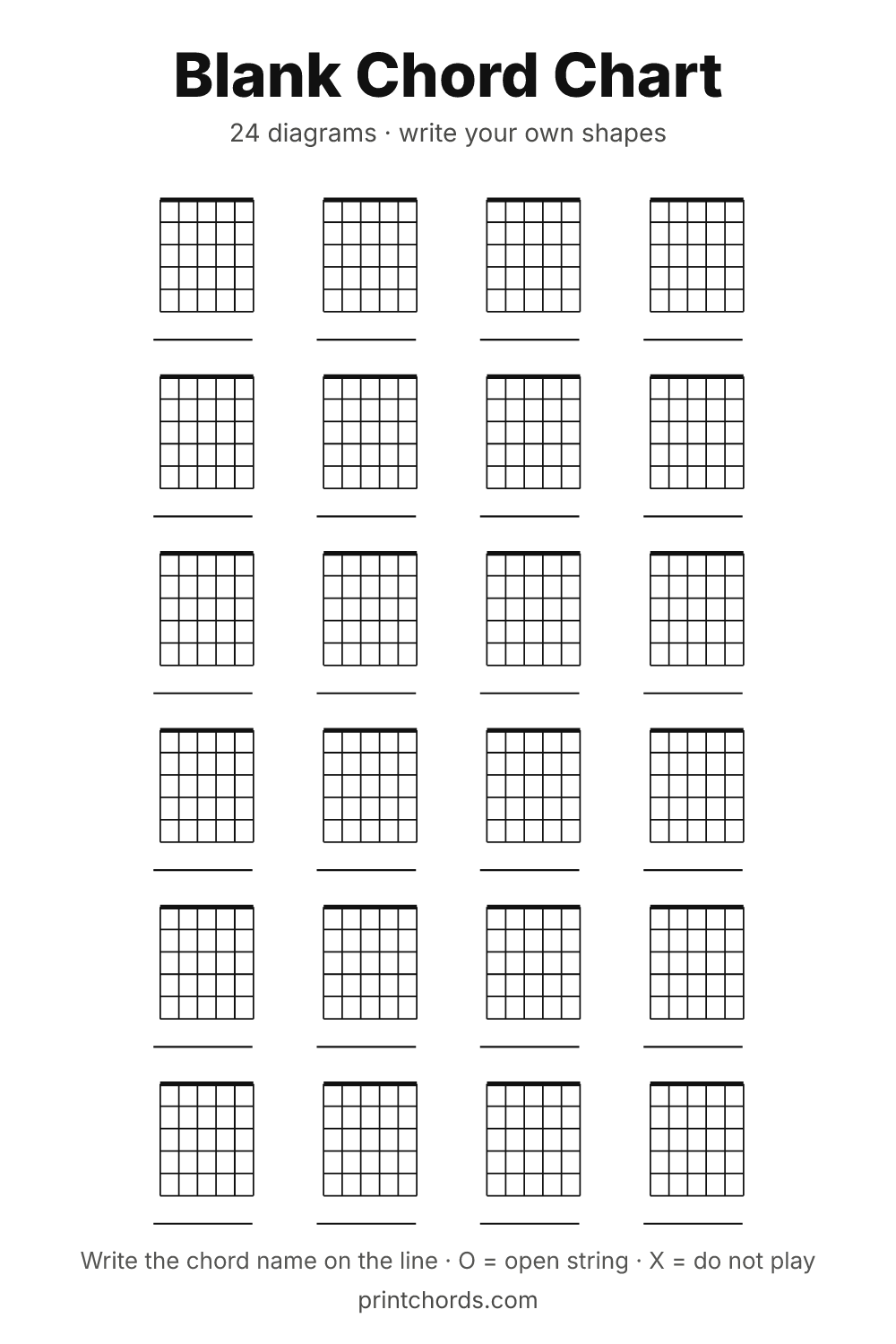
Twice as many grids on the sheet, so a whole song or a batch of variations fits without flipping the page.
About blank charts →Beginners and classroom walls
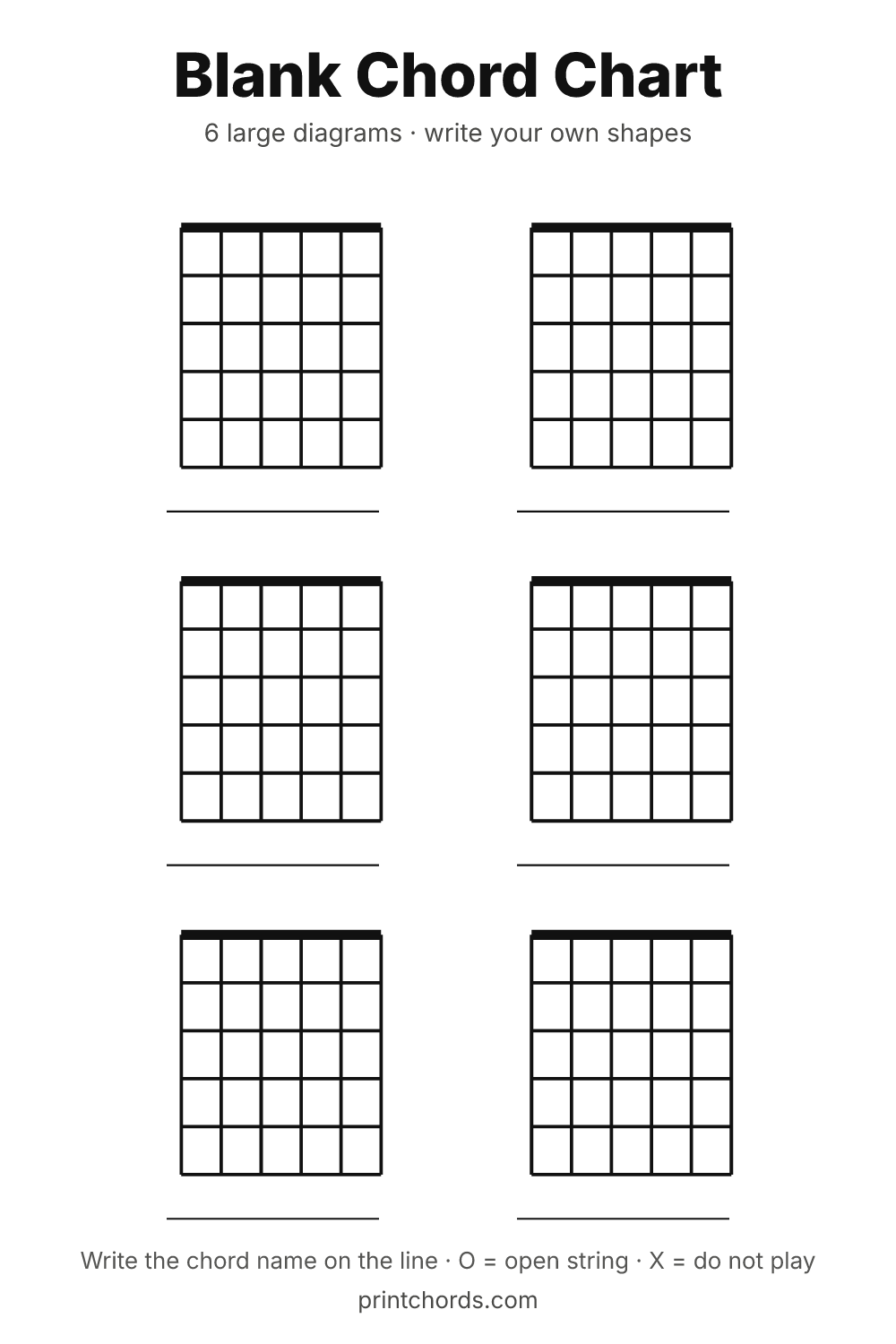
Oversized grids for young students, fat pens, and any sheet headed for a wall.
About blank charts →Got a class page or a resource list? Link straight to the chart page, not the file. That way your students always land on the current copy. You don't need to credit anyone.
Need something your class doesn't have yet? Email info@printchords.com. Teacher requests shape what gets made next more than anything else.