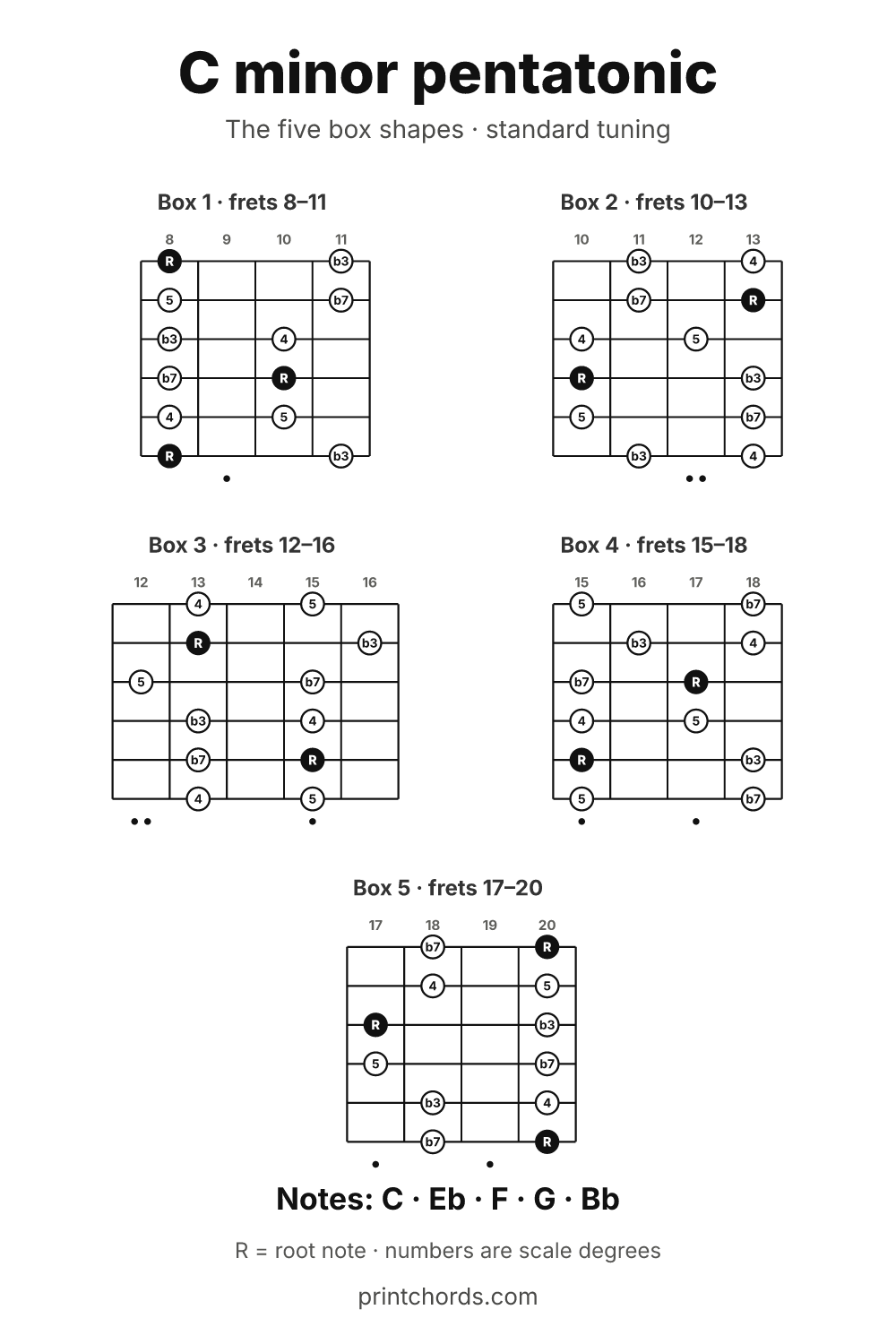
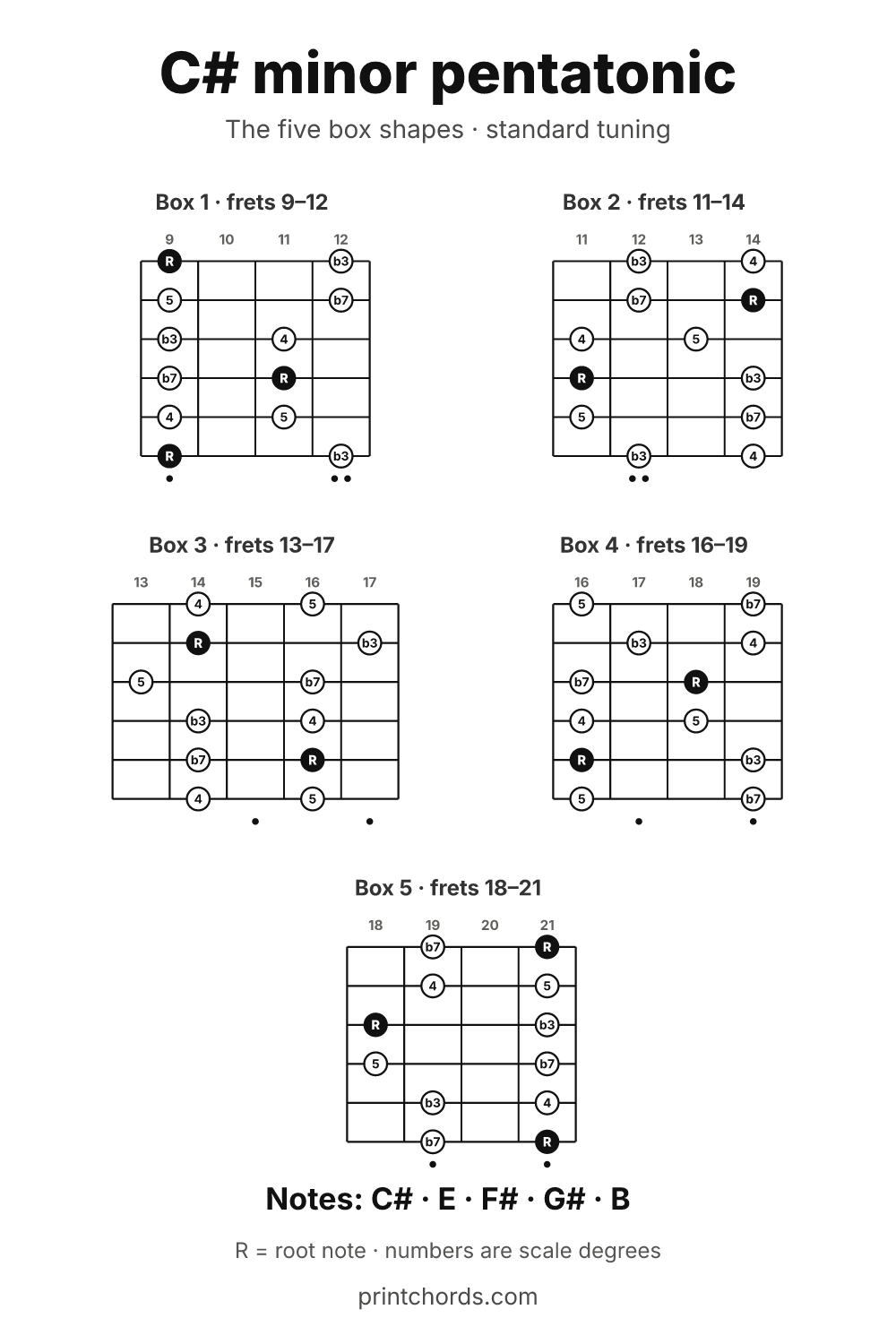
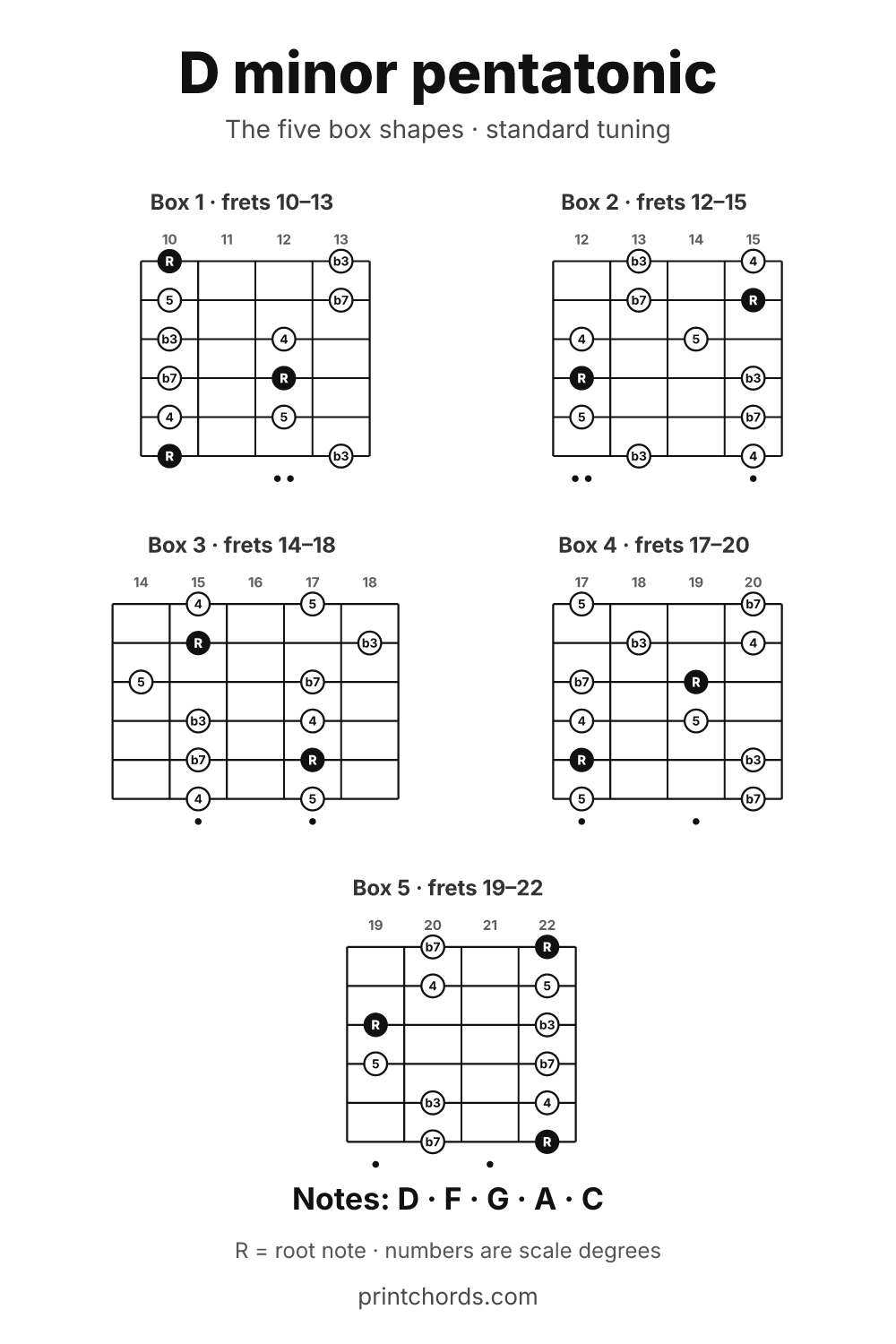
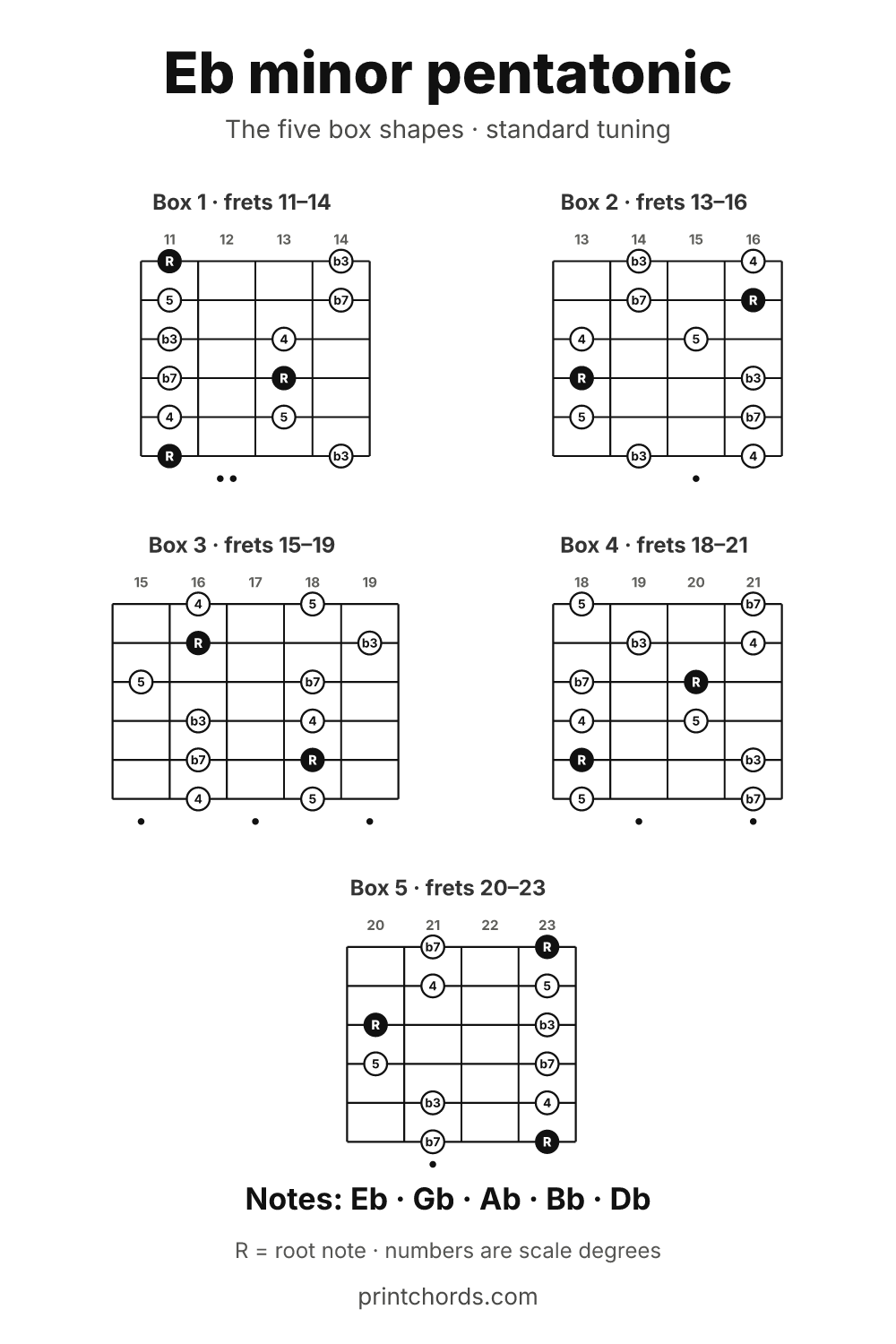
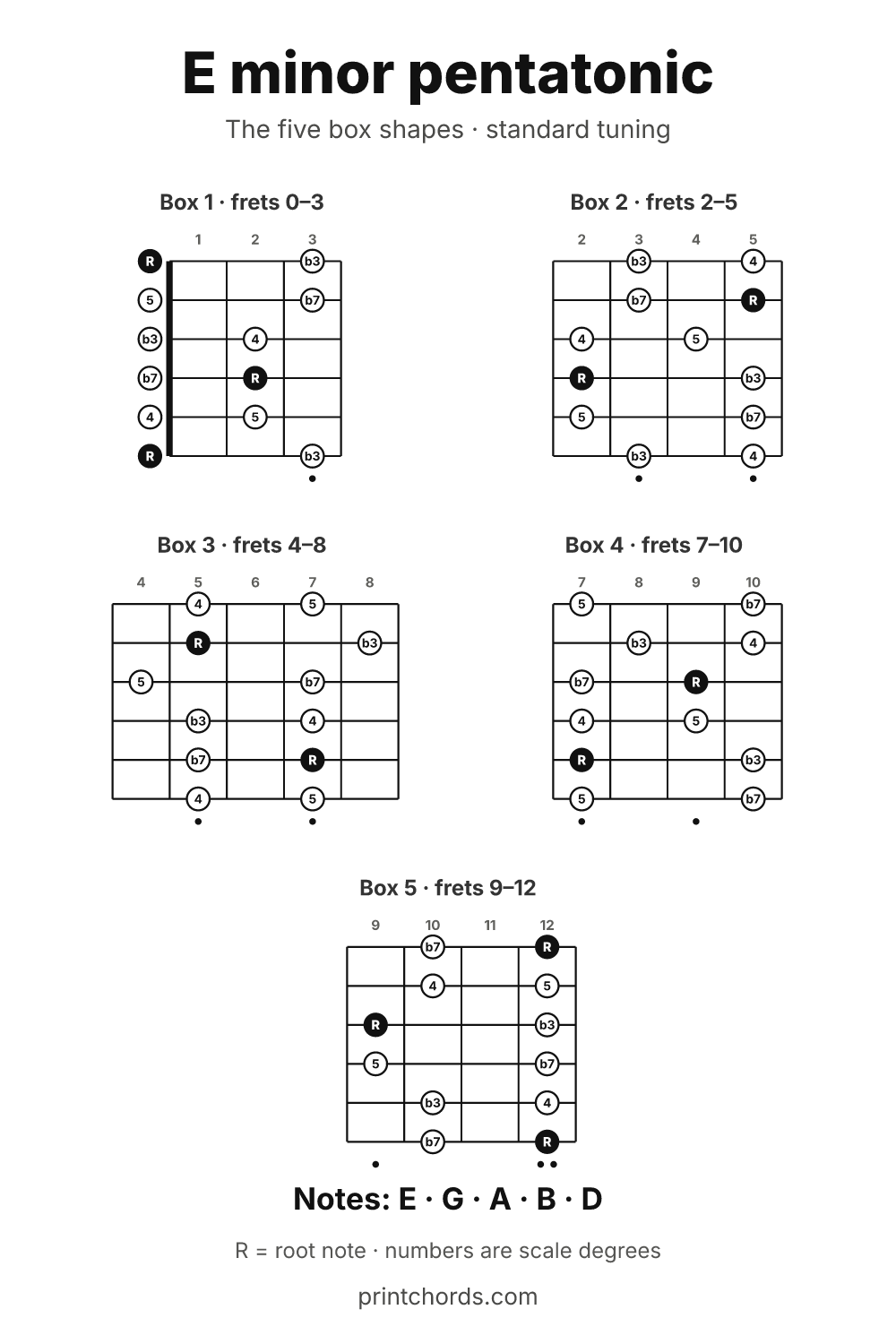
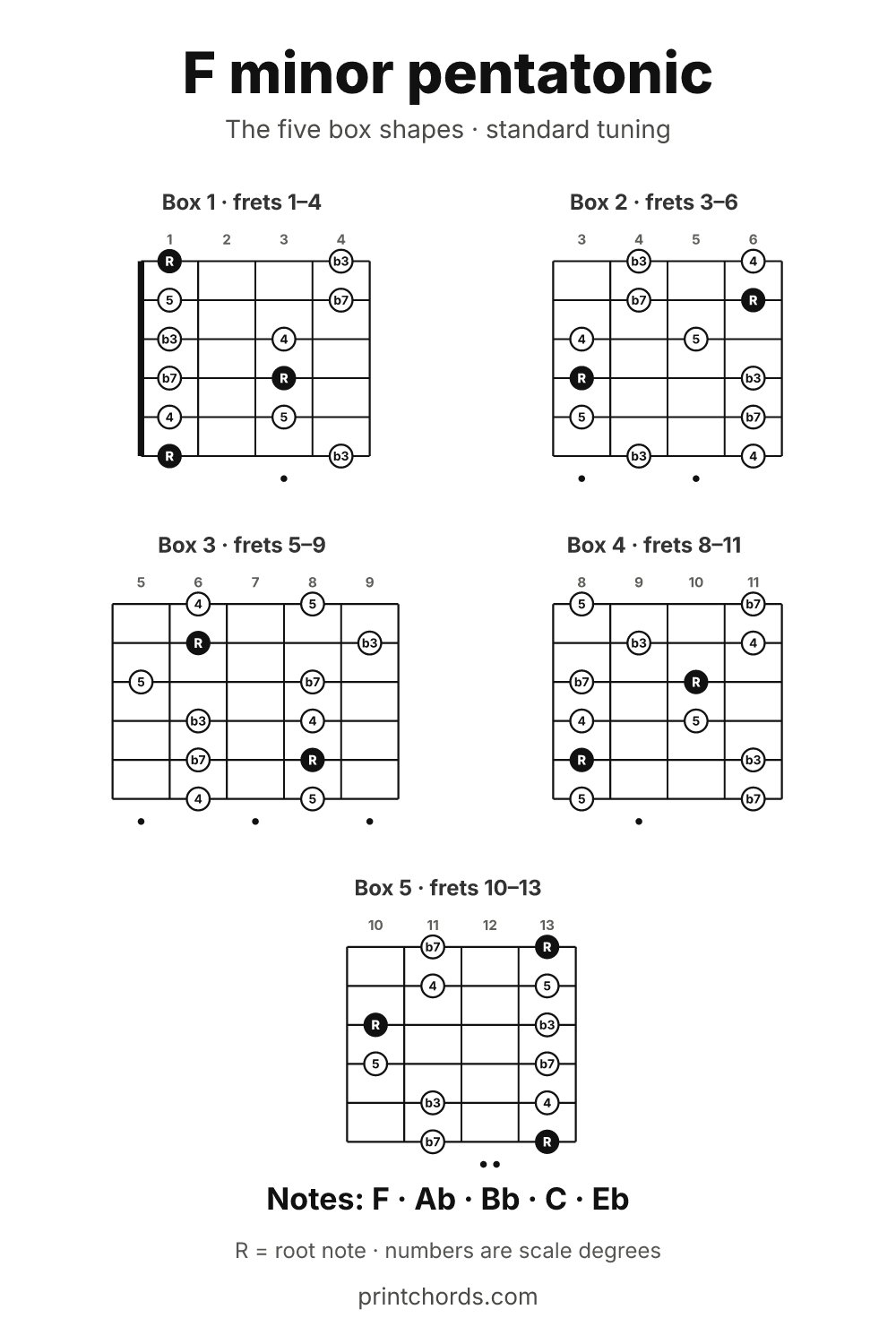
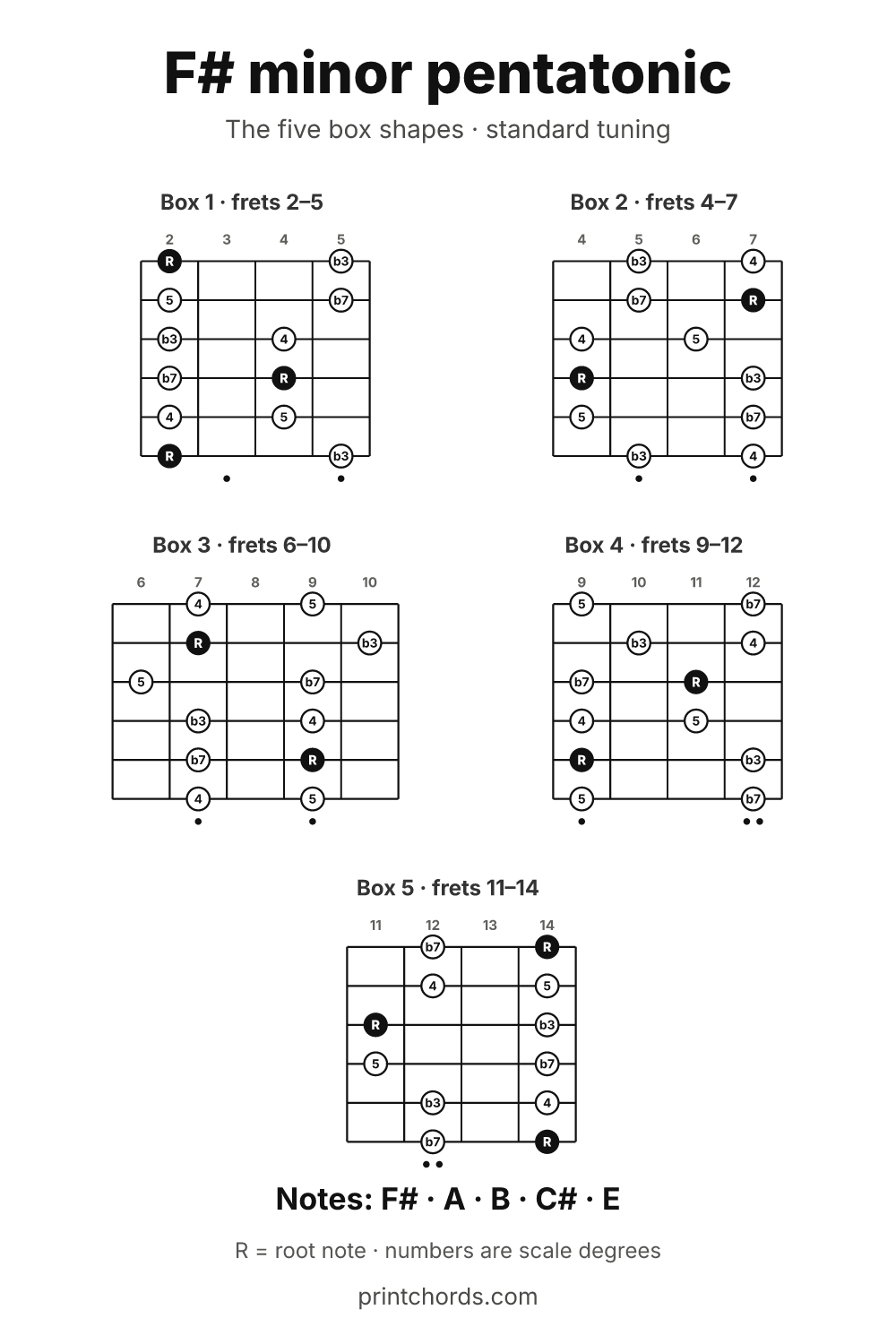
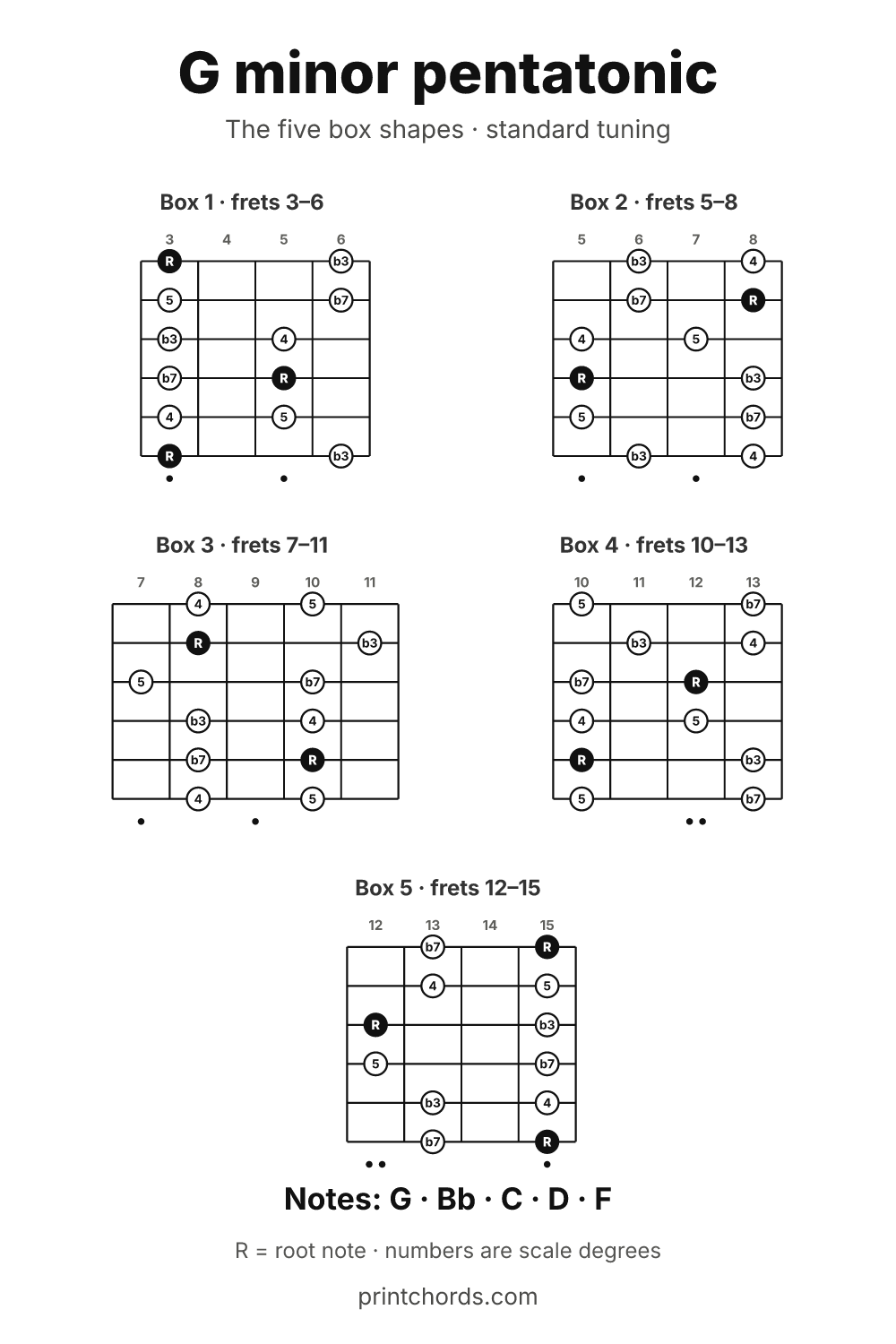
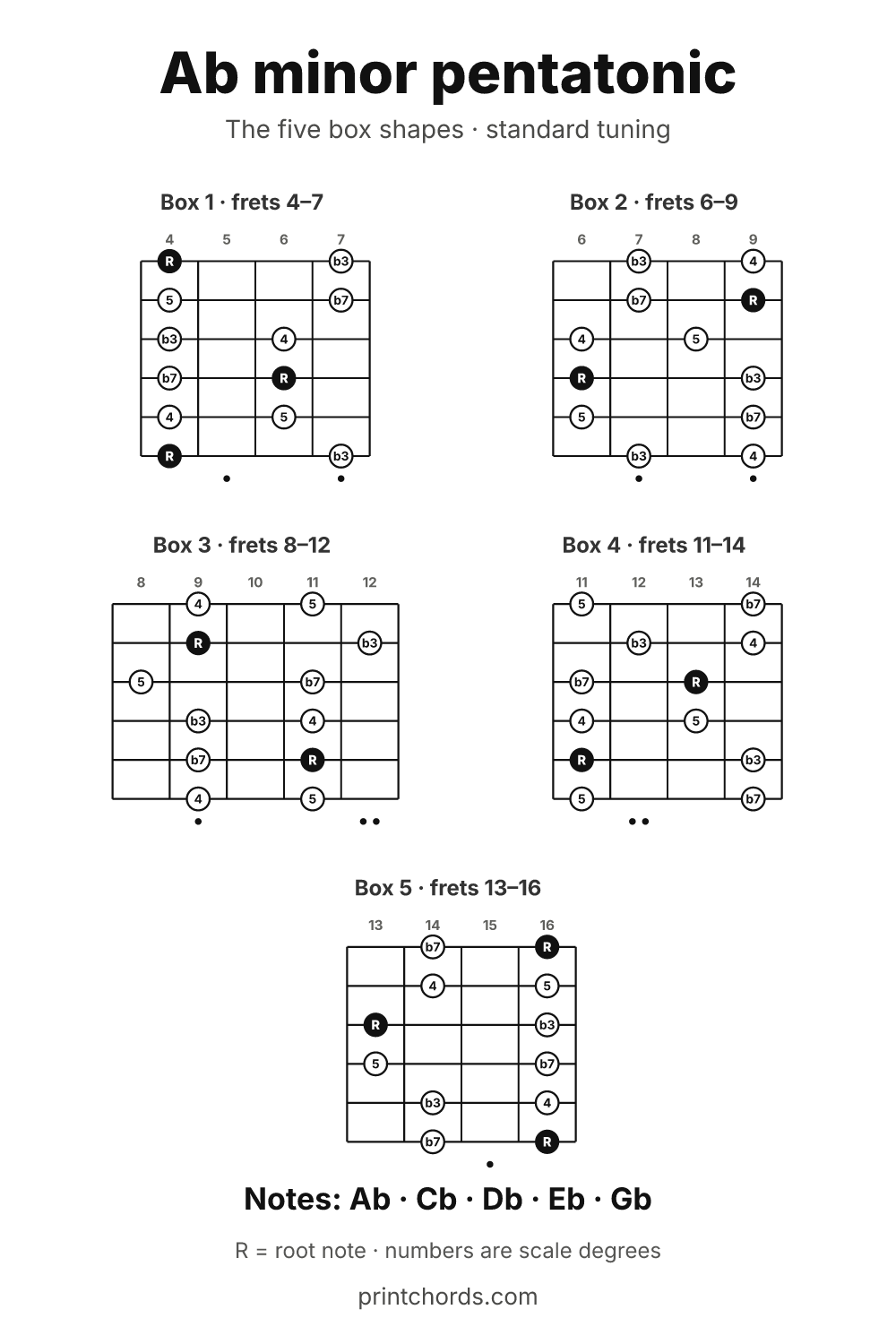
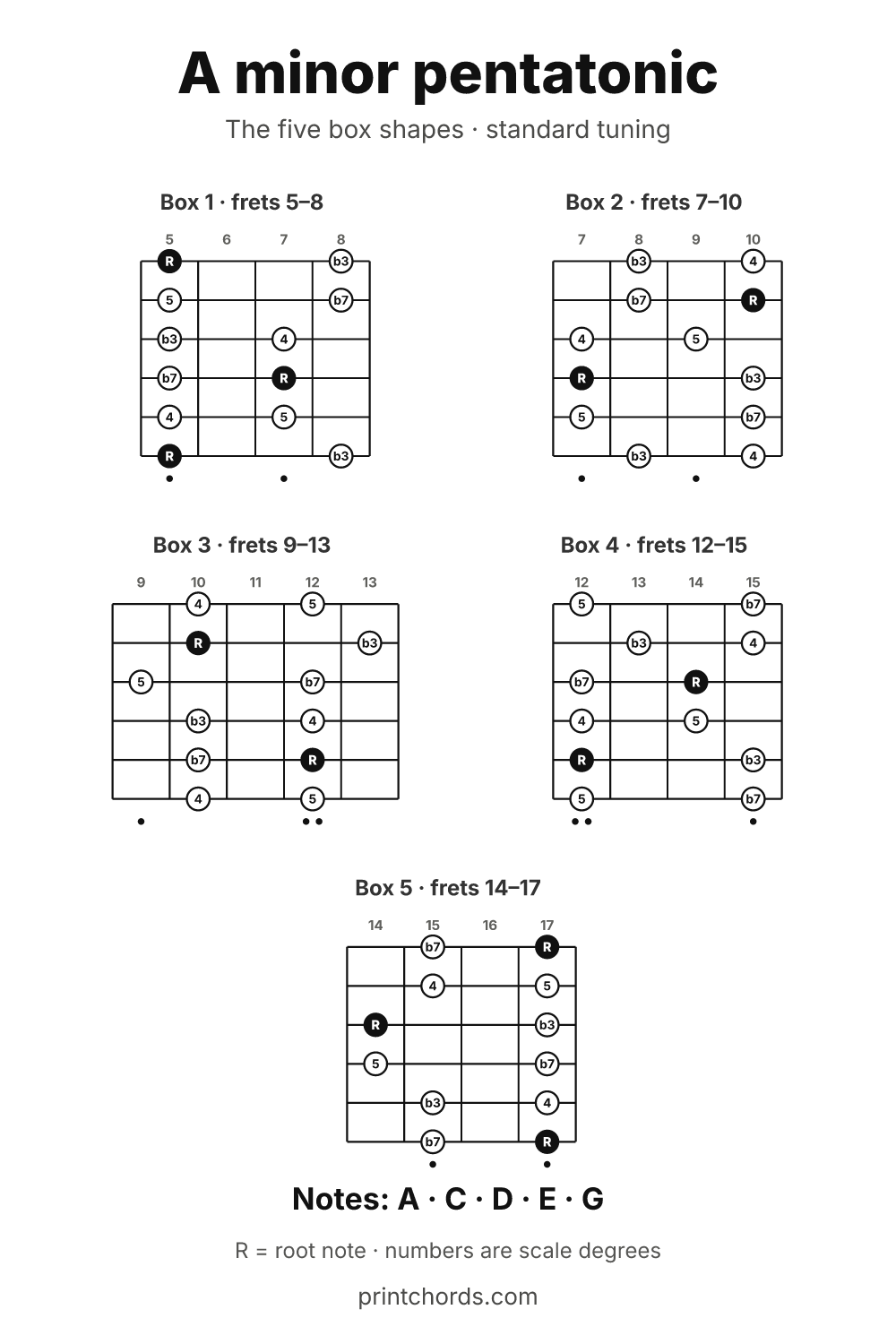
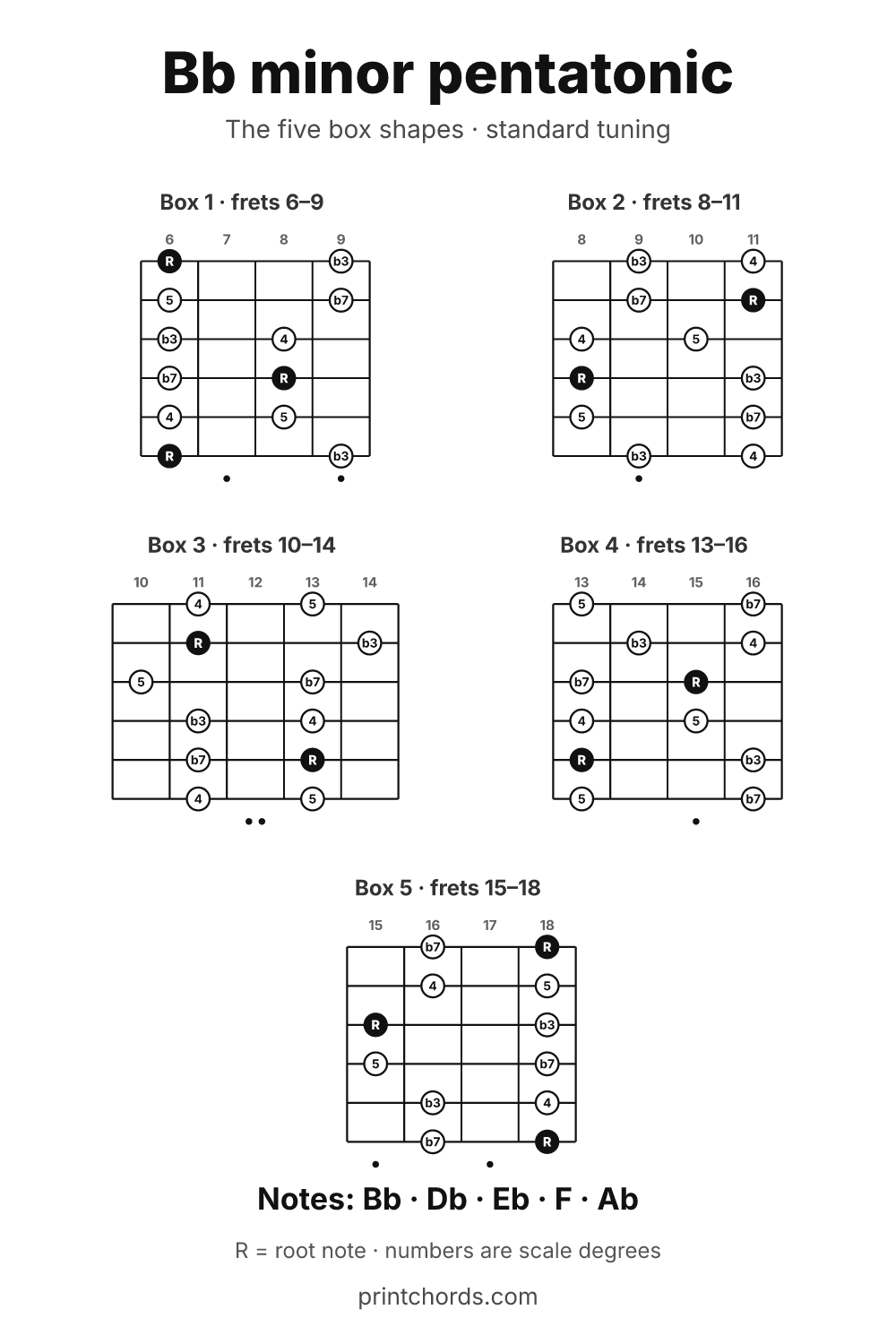
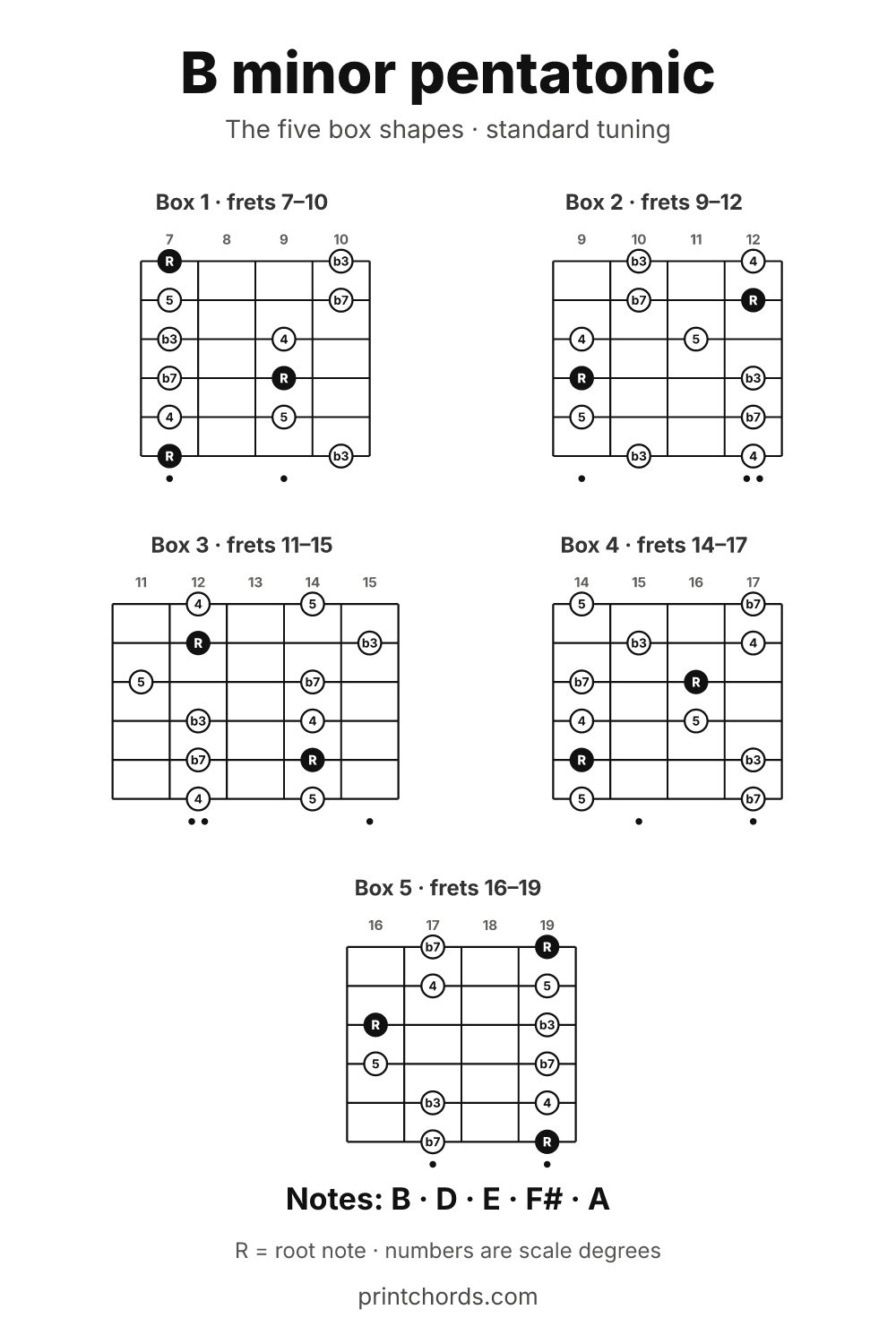
Box 1
Frets 5–8
The shape almost everyone starts with. Its root sits under the index finger on the low E string, so finding it in a new key is one move.
The five pentatonic boxes and the full neck, in any key. Print one box or the whole set.
Every note of the scale from the nut to the twelfth fret. The five boxes below are slices of this.
Each box is the same five notes in a different place. The overlaps are what let you cross between them.
Frets 5–8
The shape almost everyone starts with. Its root sits under the index finger on the low E string, so finding it in a new key is one move.
Frets 7–10
Starts on the note box 1 ended on. Practise crossing between the two before adding any of the others.
Frets 9–13
The one with a stretch on the G string. It sits in the middle of the neck where bends are easiest.
Frets 12–15
Roots on the fifth and third strings. Useful when a solo needs to sit above the vocal.
Frets 14–17
Leads straight back into box 1 an octave higher, which closes the loop up the neck.
One sheet per key, already at the frets you play. Each thumbnail opens that key's printable PDF.
The minor pentatonic covers the whole neck in five shapes that link end to end. Box 1 is where nearly everyone starts, because its root sits under the index finger on the low E string. The other four are the same five notes in different places, and the useful thing is not the shapes themselves but the seams: box 1 shares two strings with box 2, box 2 with box 3, and so on all the way back round.
Learn box 1 until it is automatic, then add box 2 and practise crossing between them rather than playing each in isolation. Players who learn all five as separate shapes tend to get stuck inside whichever one they started in.
Every box here is anchored to the key you pick above, so the fret numbers are the ones you actually play rather than a diagram you have to transpose in your head.
A five-note scale. The minor pentatonic takes the root, flattened third, fourth, fifth and flattened seventh, which leaves out the two notes most likely to clash over a simple chord progression. That is why it forgives so much.
Five, and then it repeats an octave higher. They connect end to end up the neck, which is the point of learning more than one: box 5 leads straight back into box 1.
Box 1. Its root sits on the low E string under the index finger, so finding it in any key is one move, and it is the shape most solos you already know are played in.
Almost. The blues scale is the minor pentatonic with one extra note between the fourth and the fifth. If you have box 1, you are one finger away from the blues sound.