Guitar Scales Chart
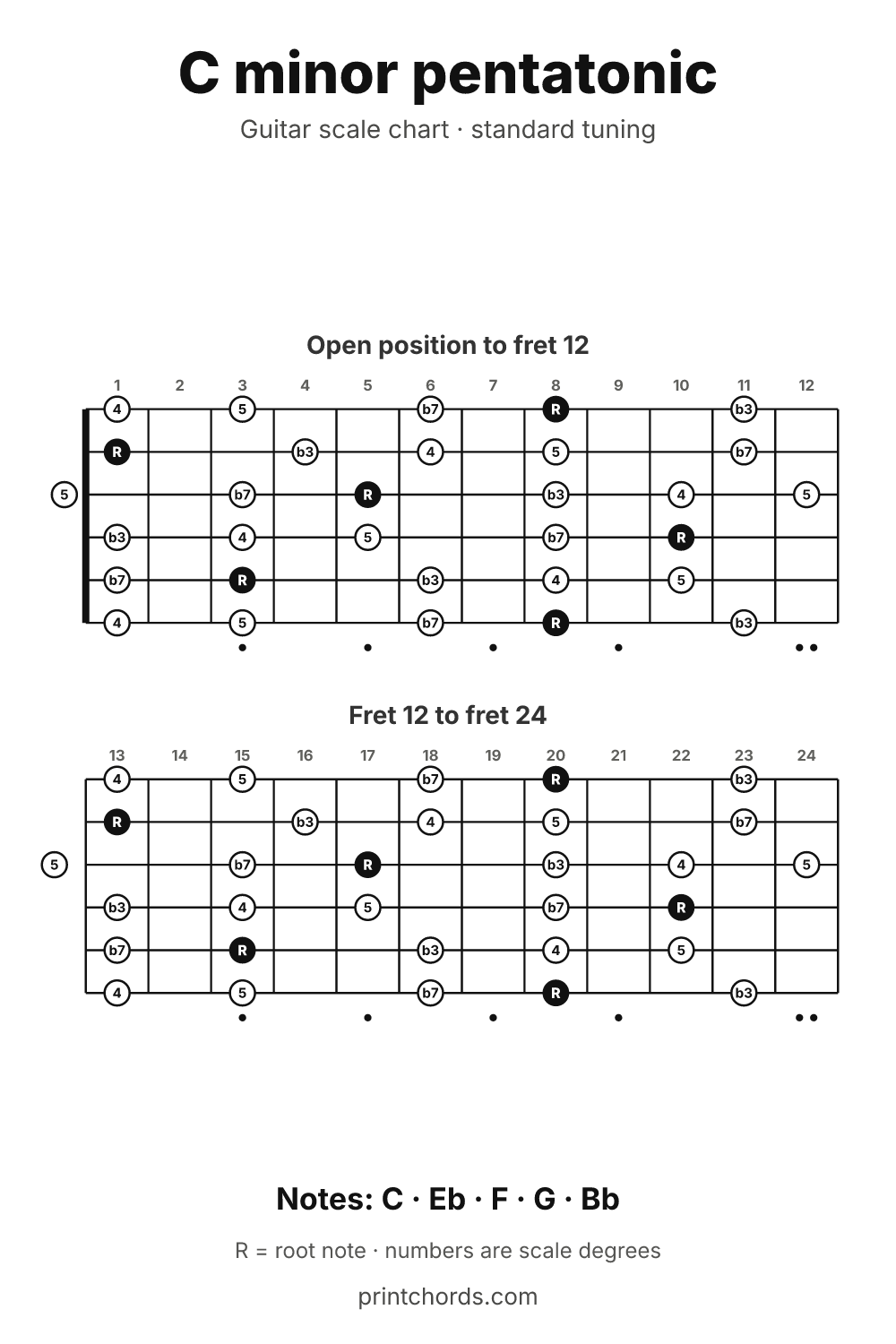
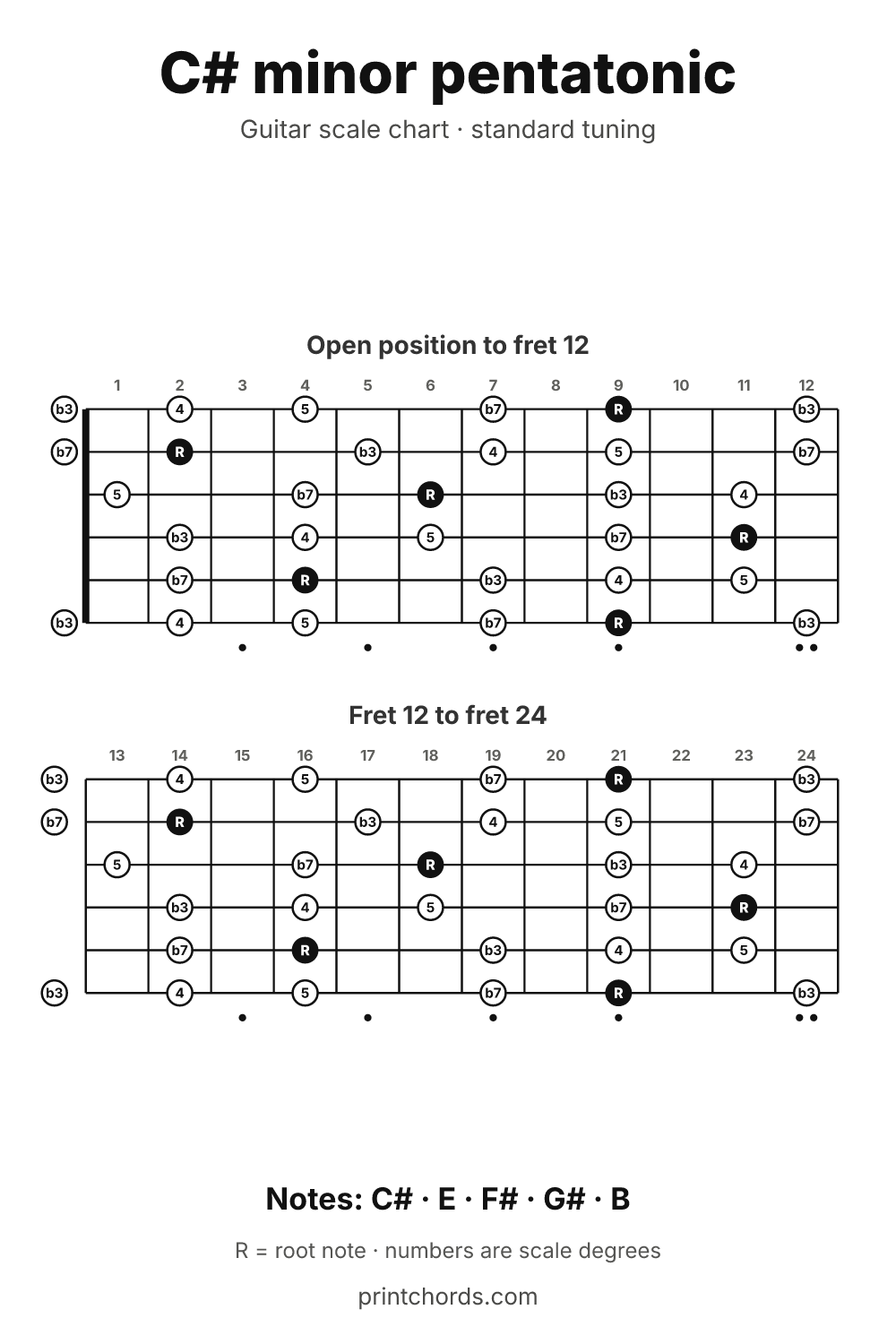
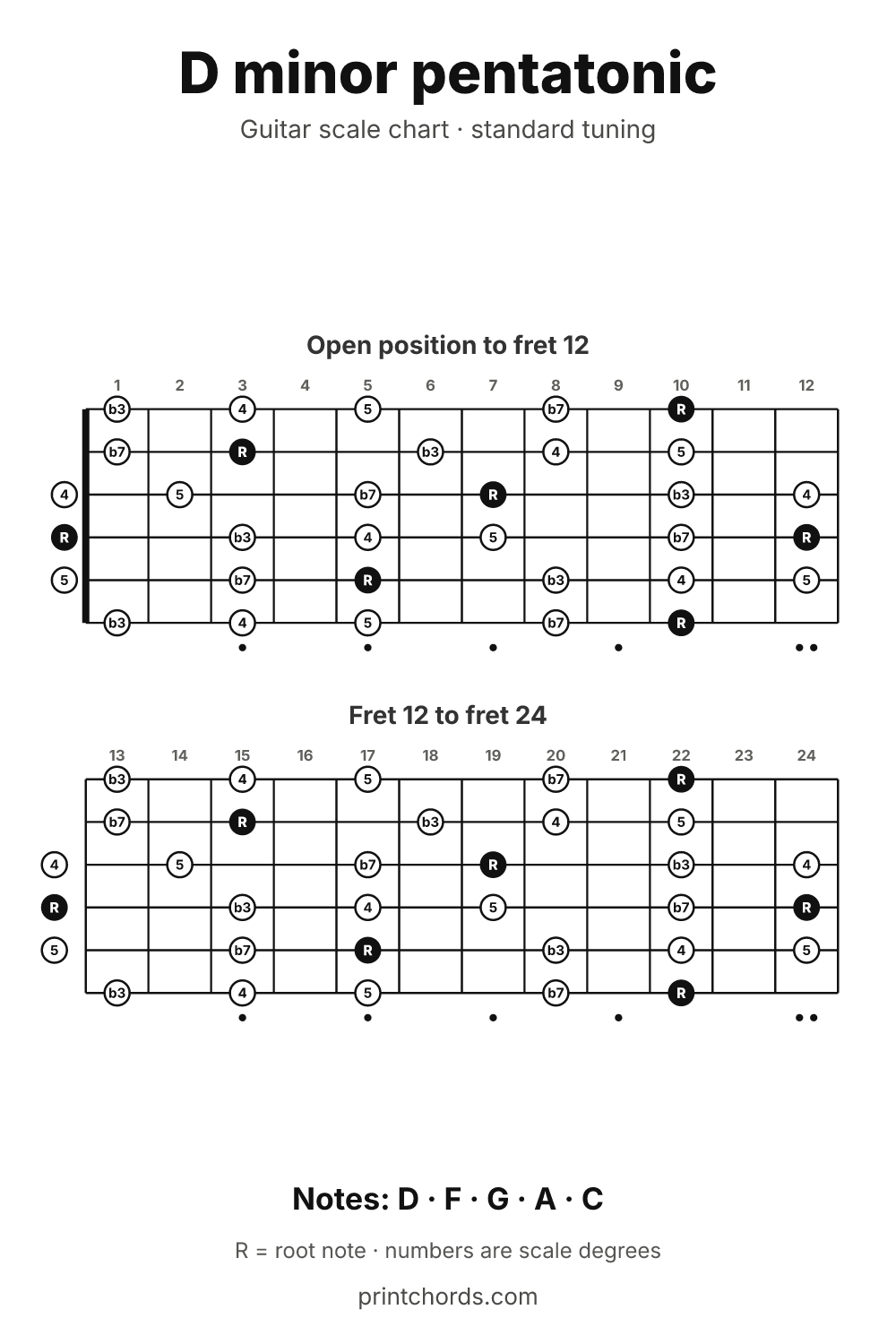
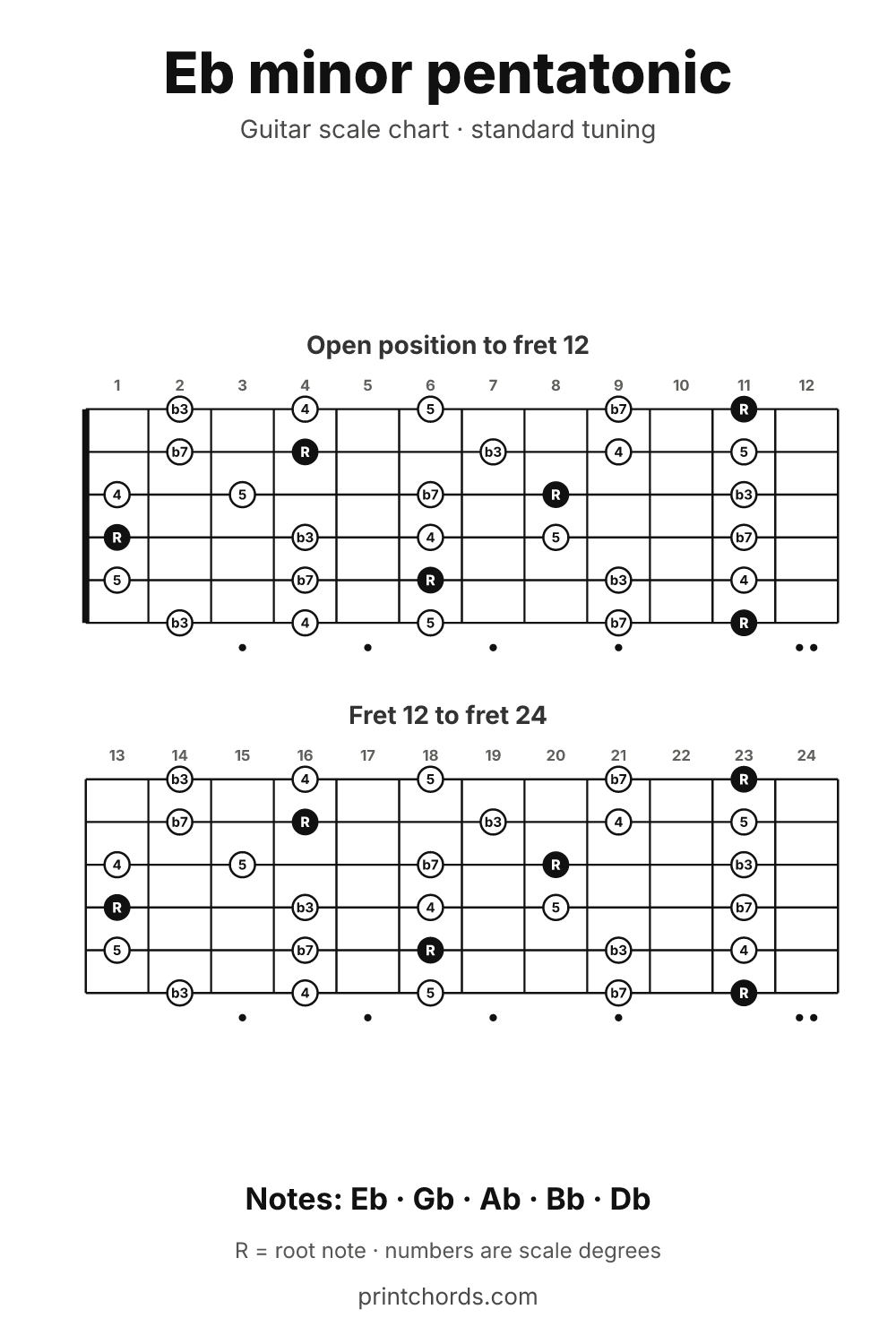
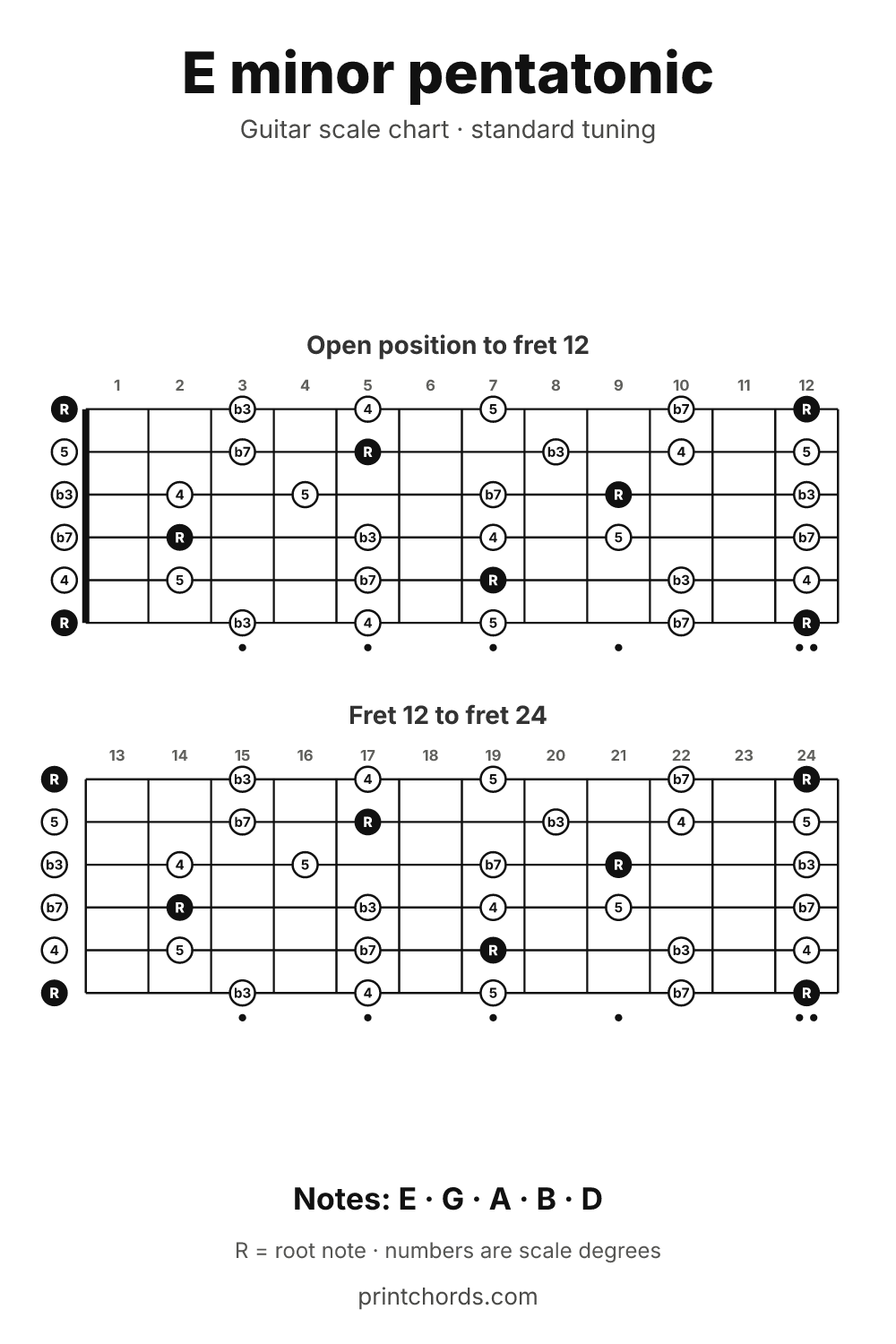
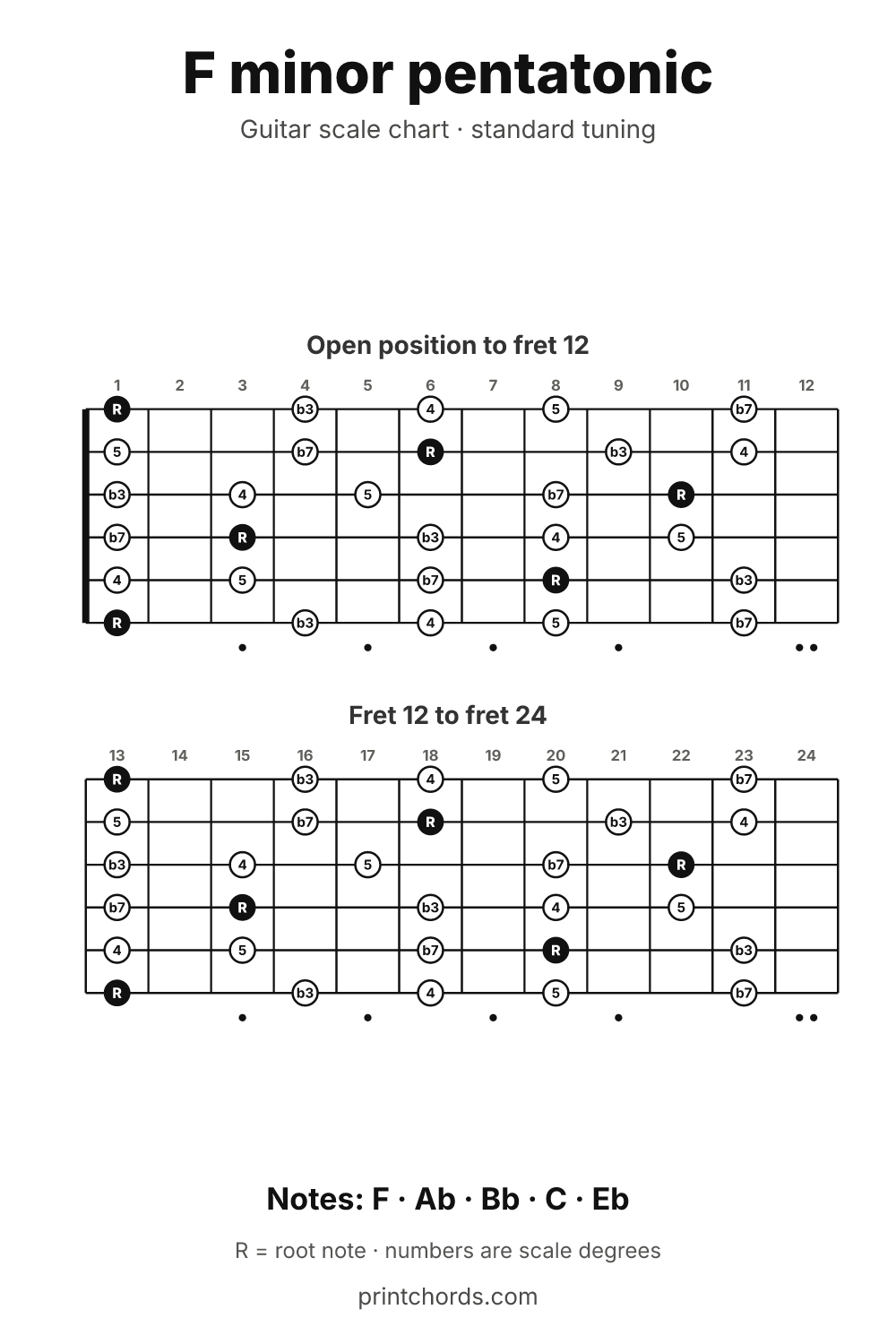
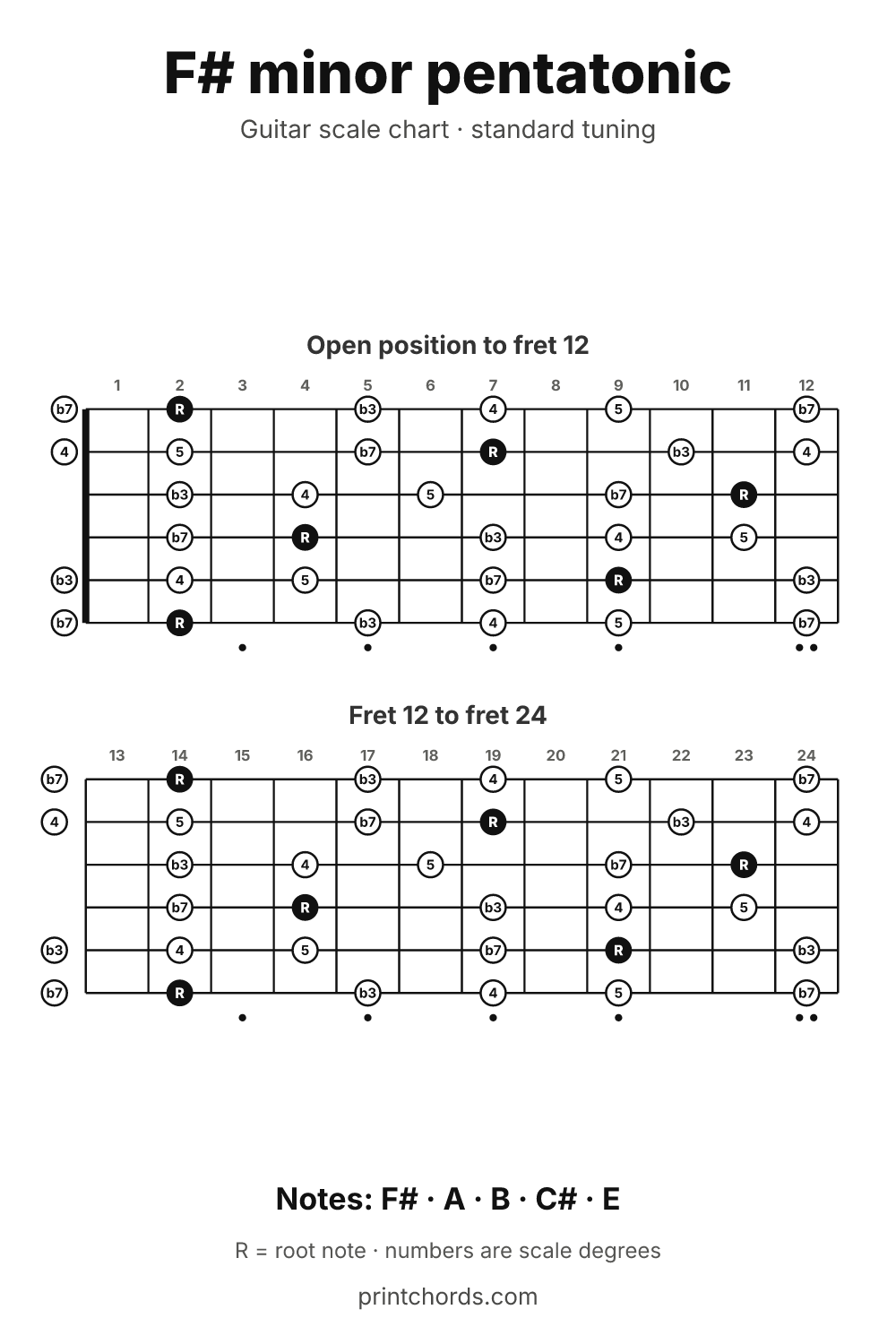
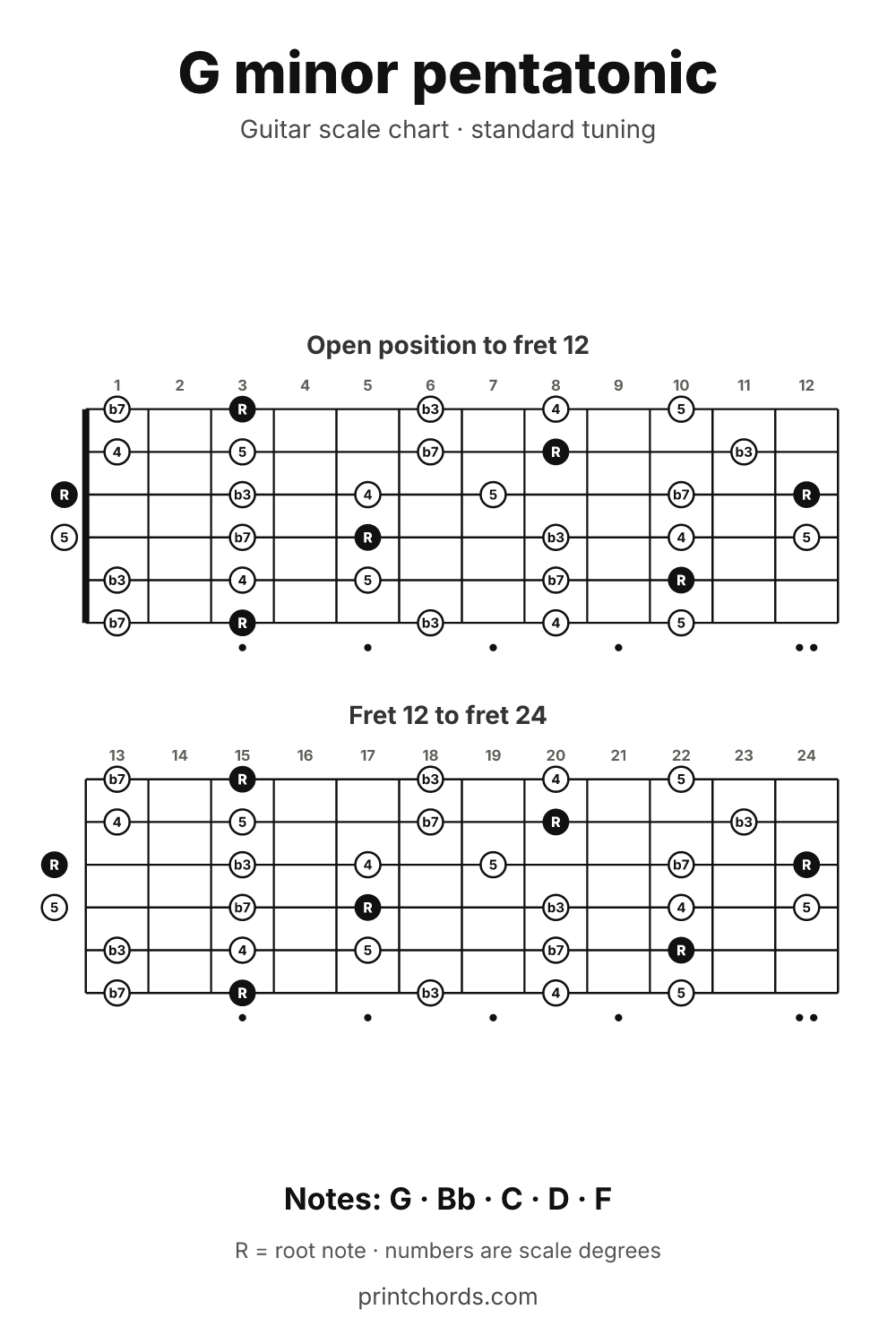
Five scales across the whole neck, in any key. Root notes marked, every shape printable.
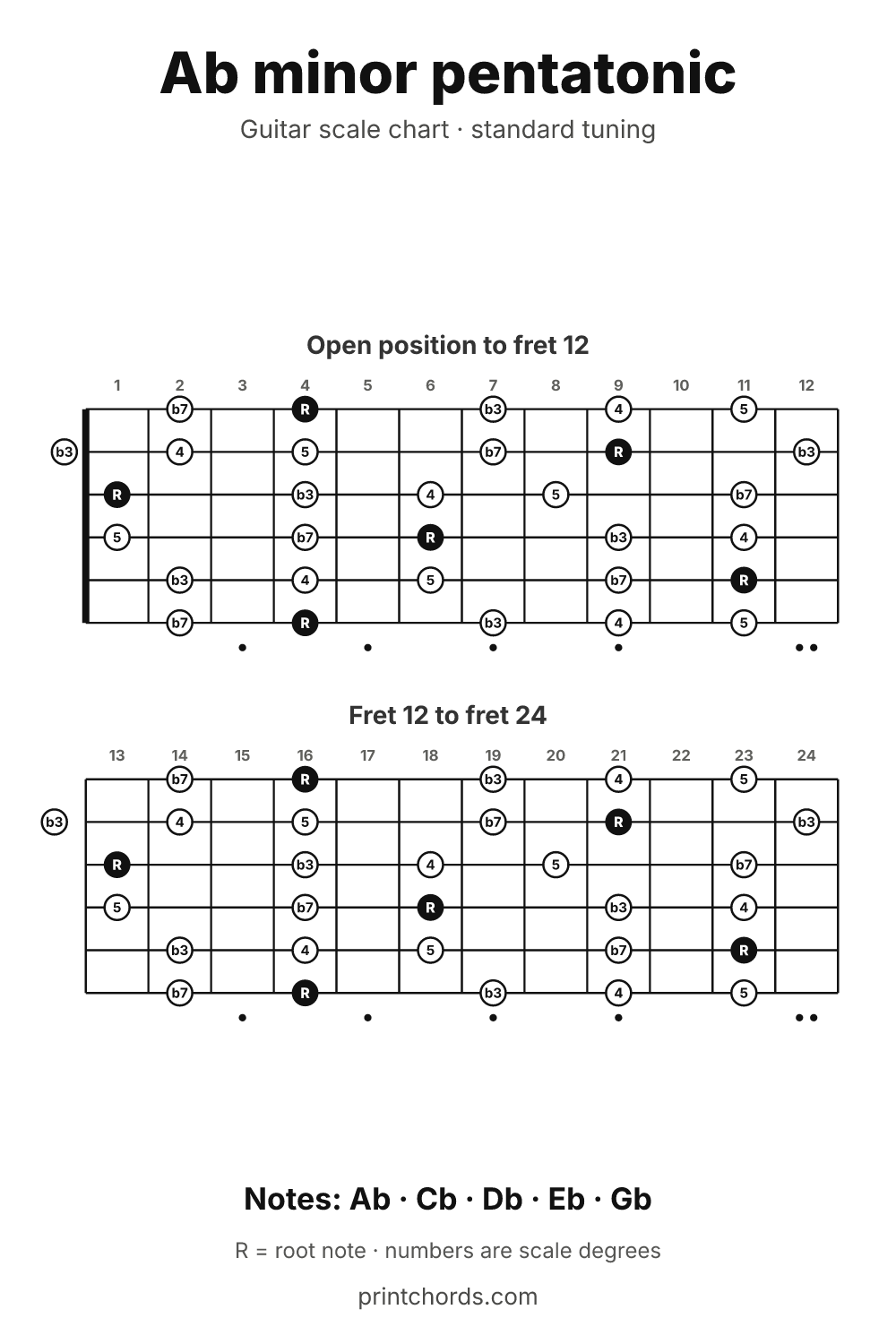
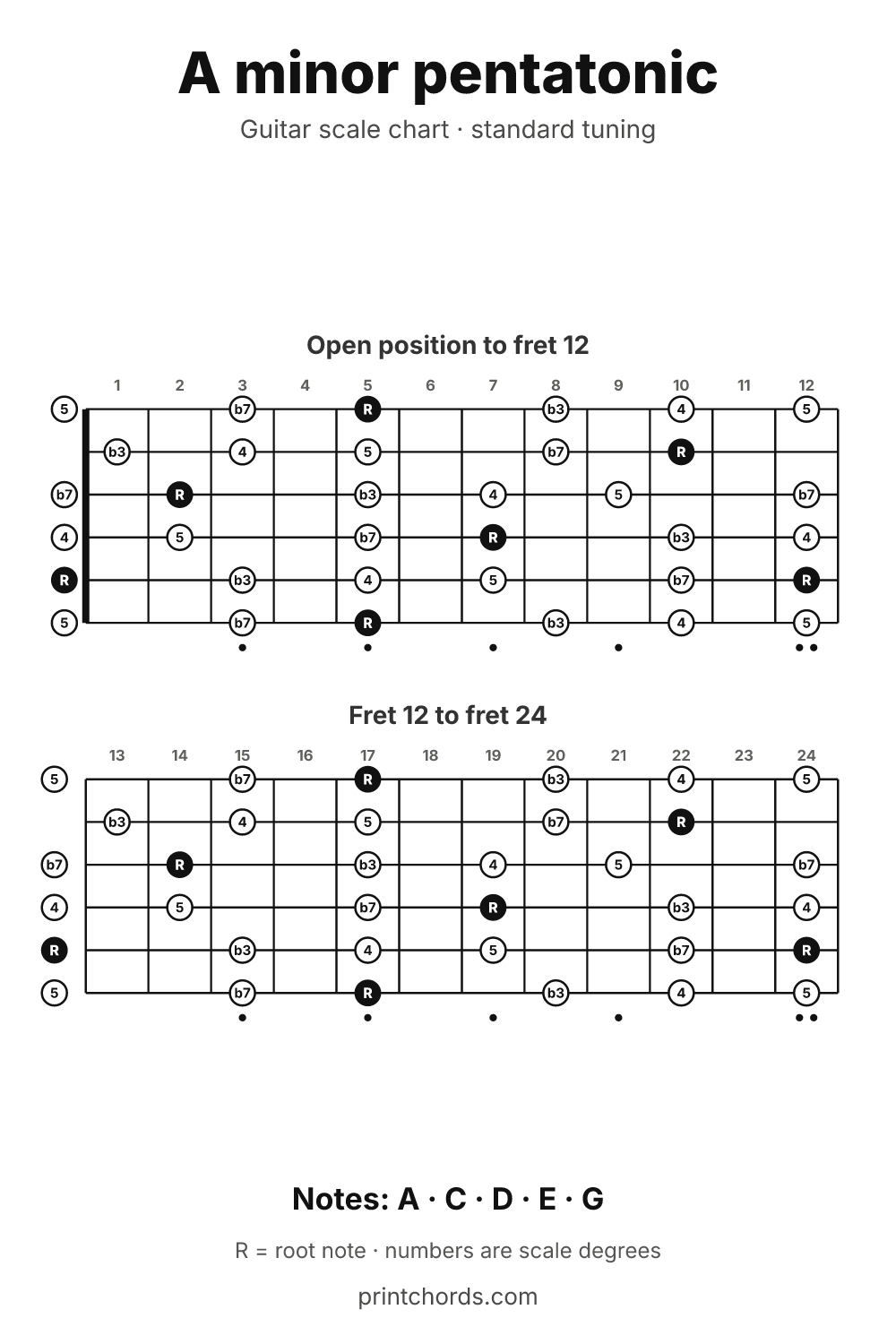
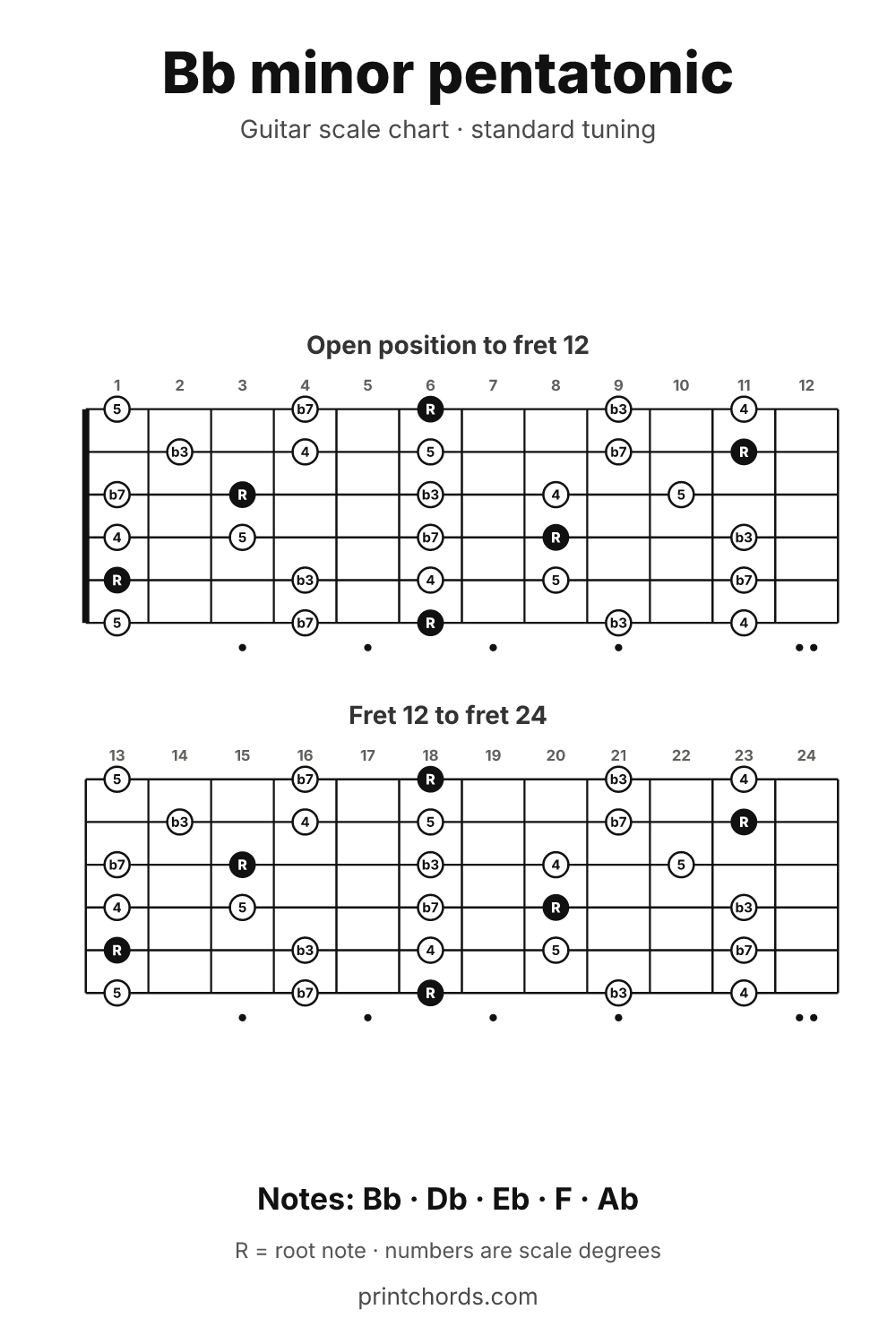
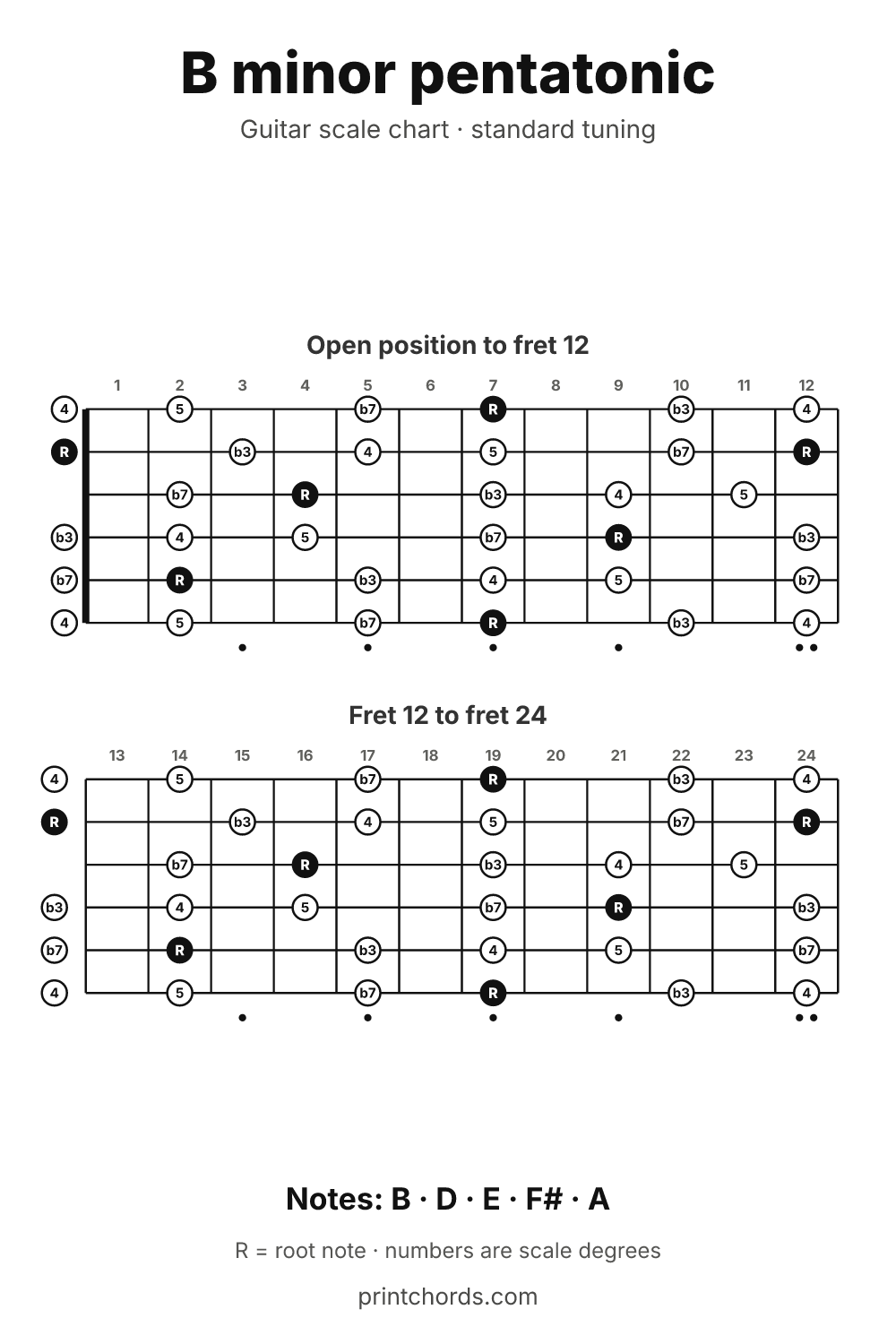
A minor pentatonic
Five notes and no wrong ones. Nearly every rock and blues solo you know starts here.
Minor pentatonic in every key printable PDF
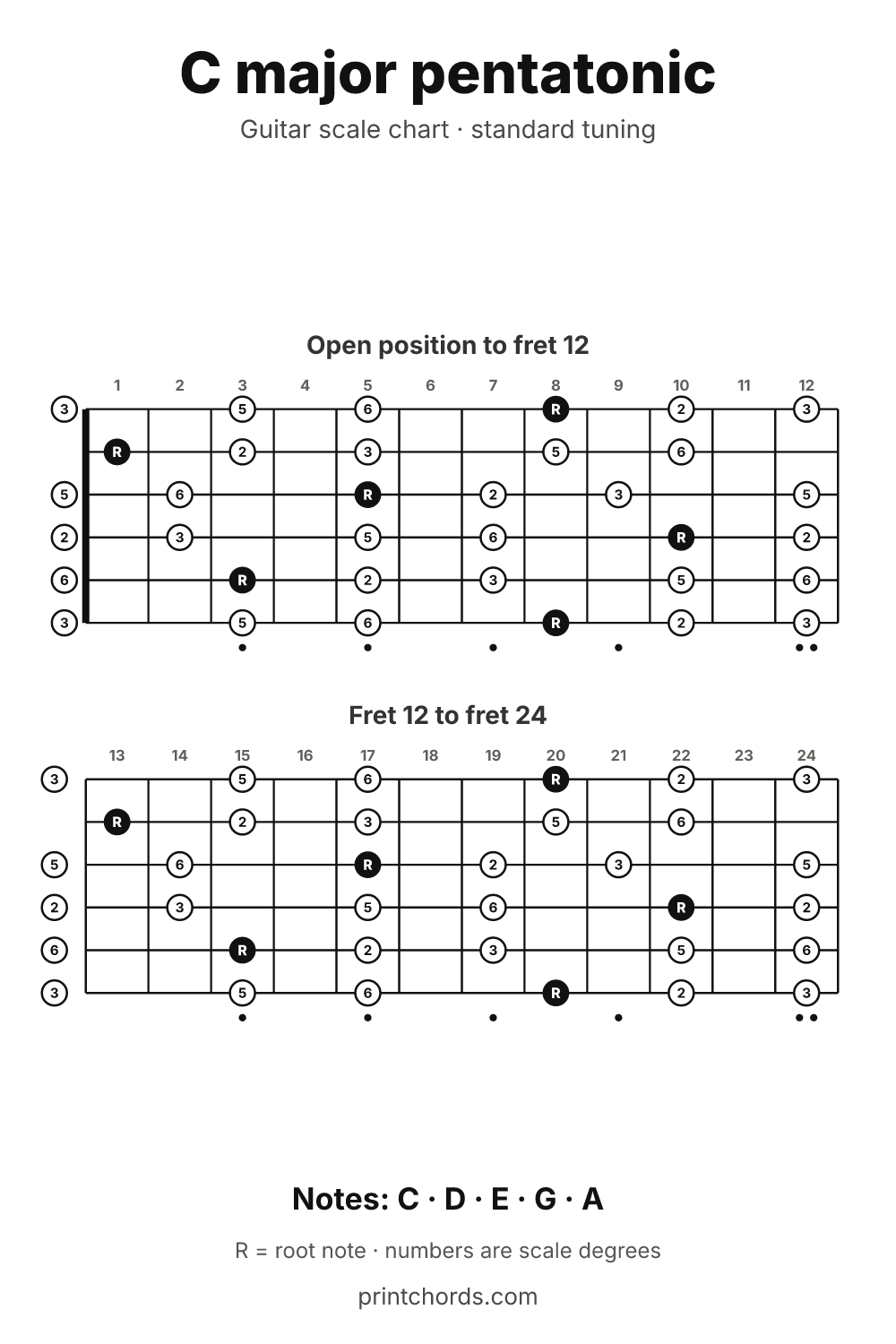
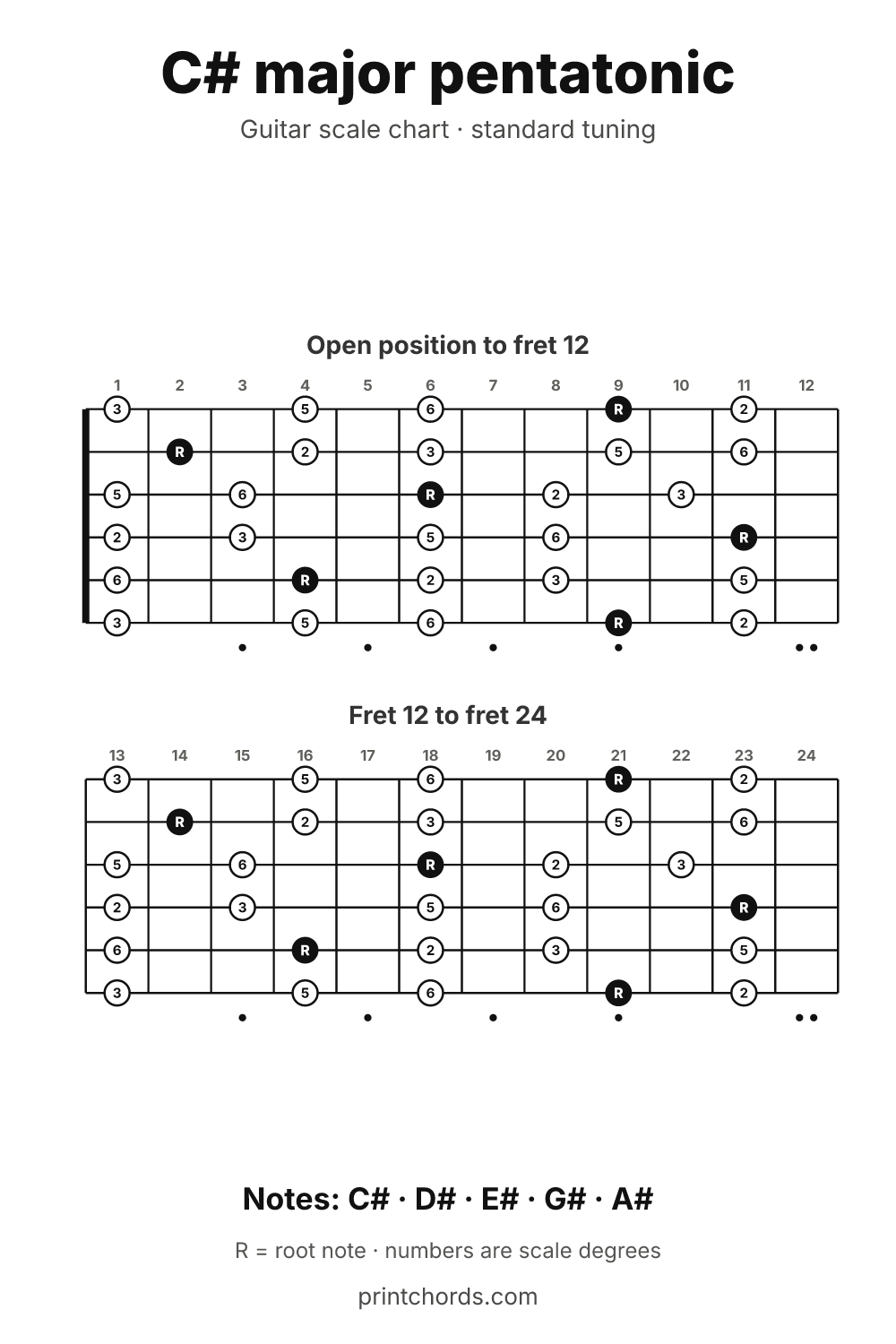
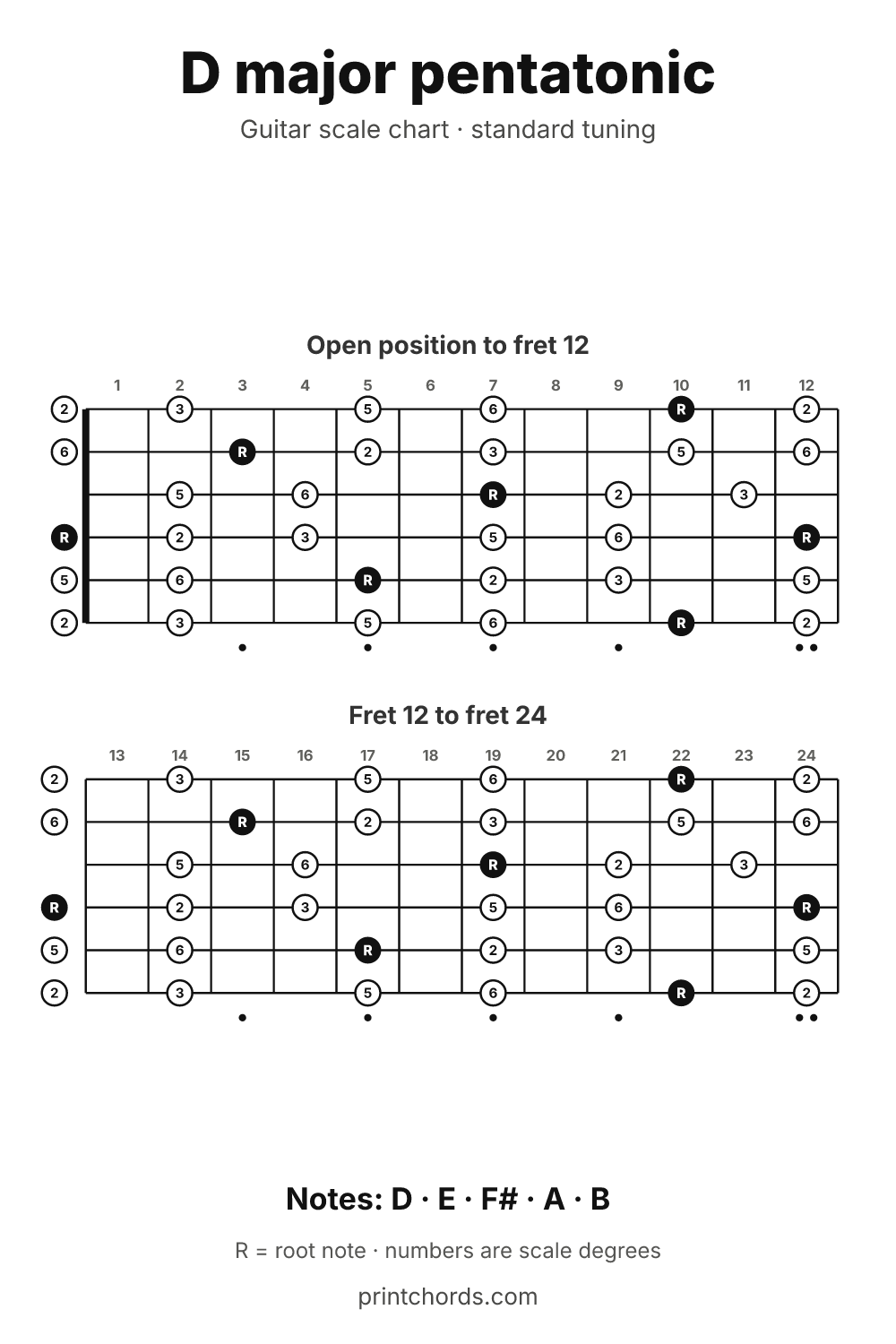
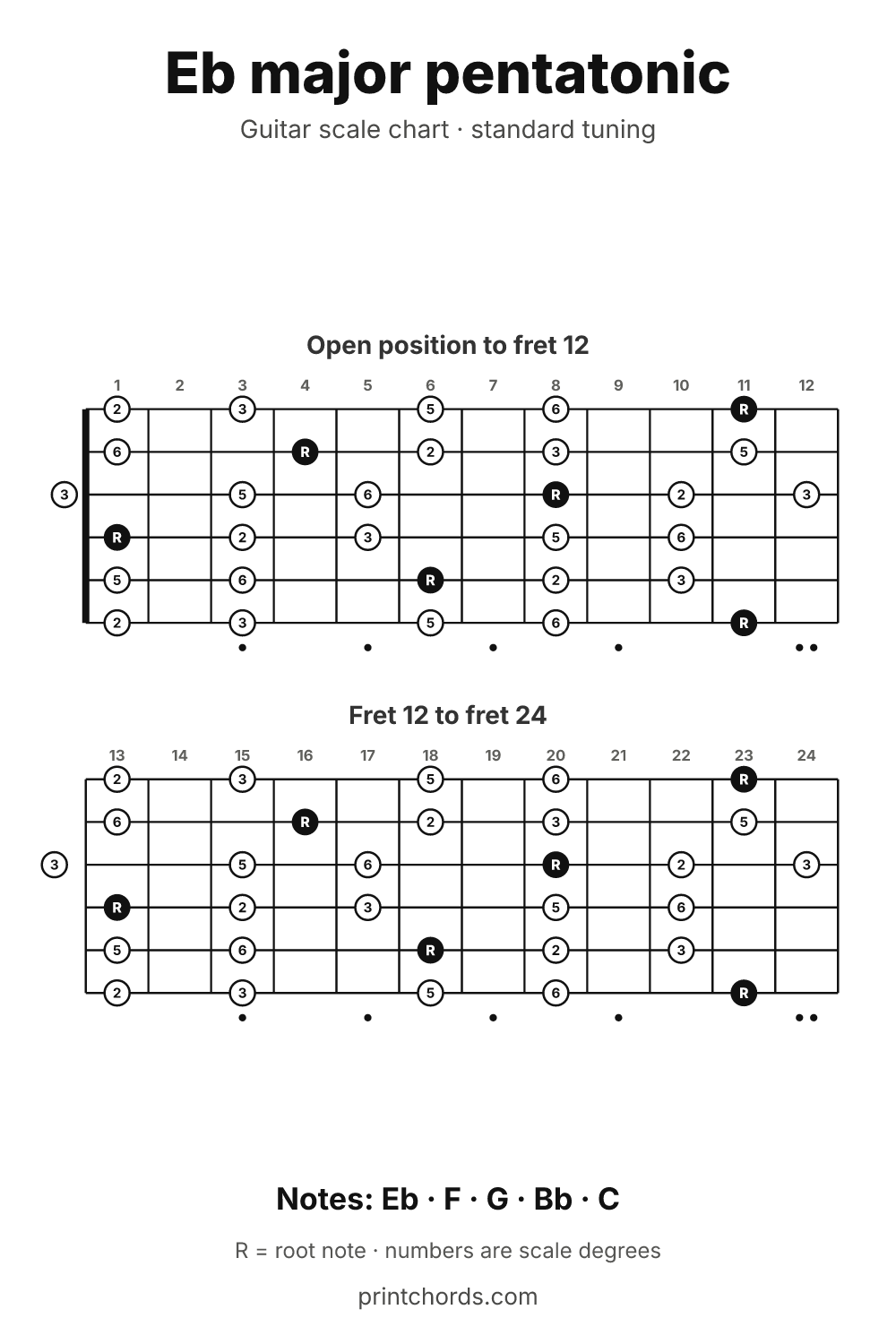
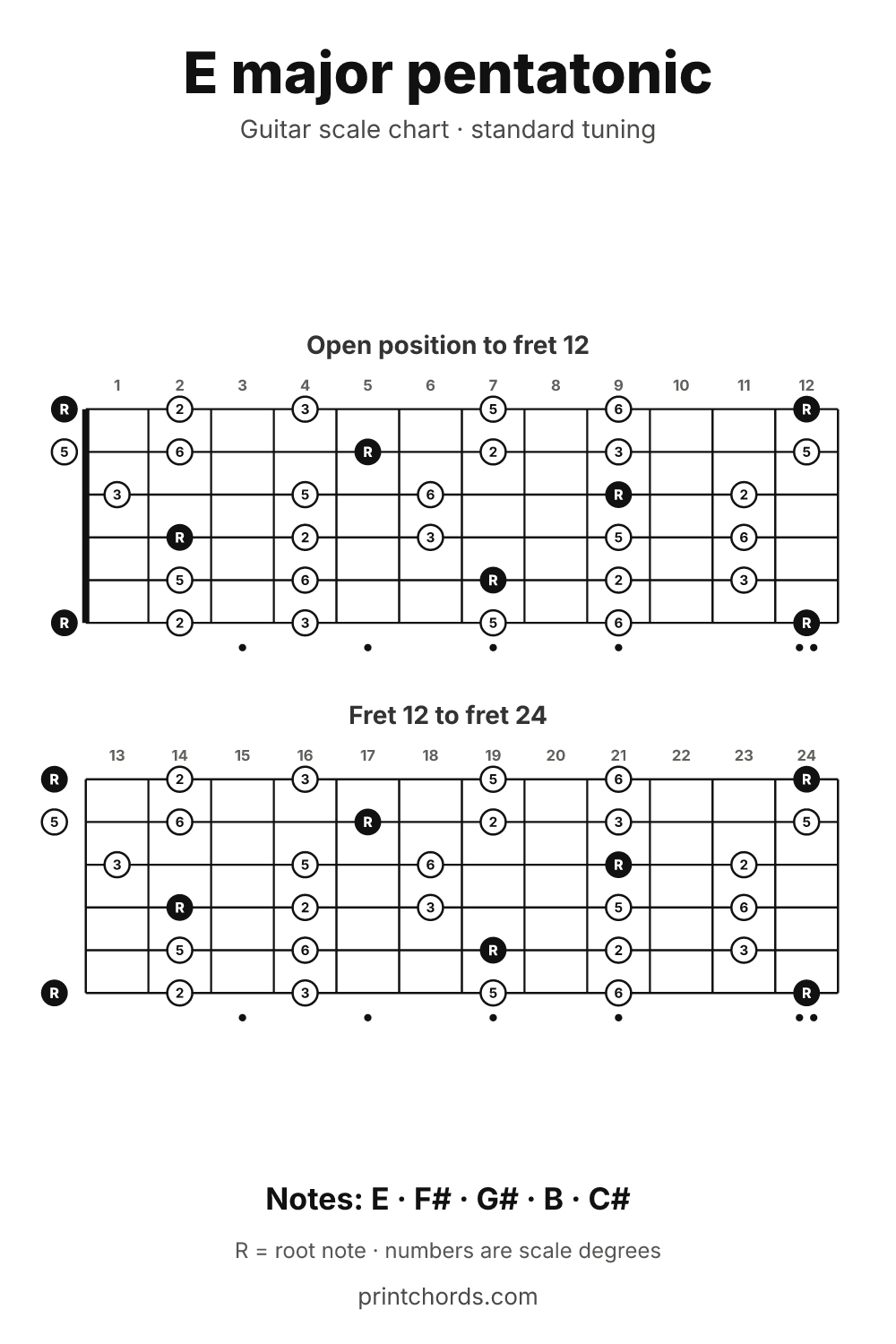
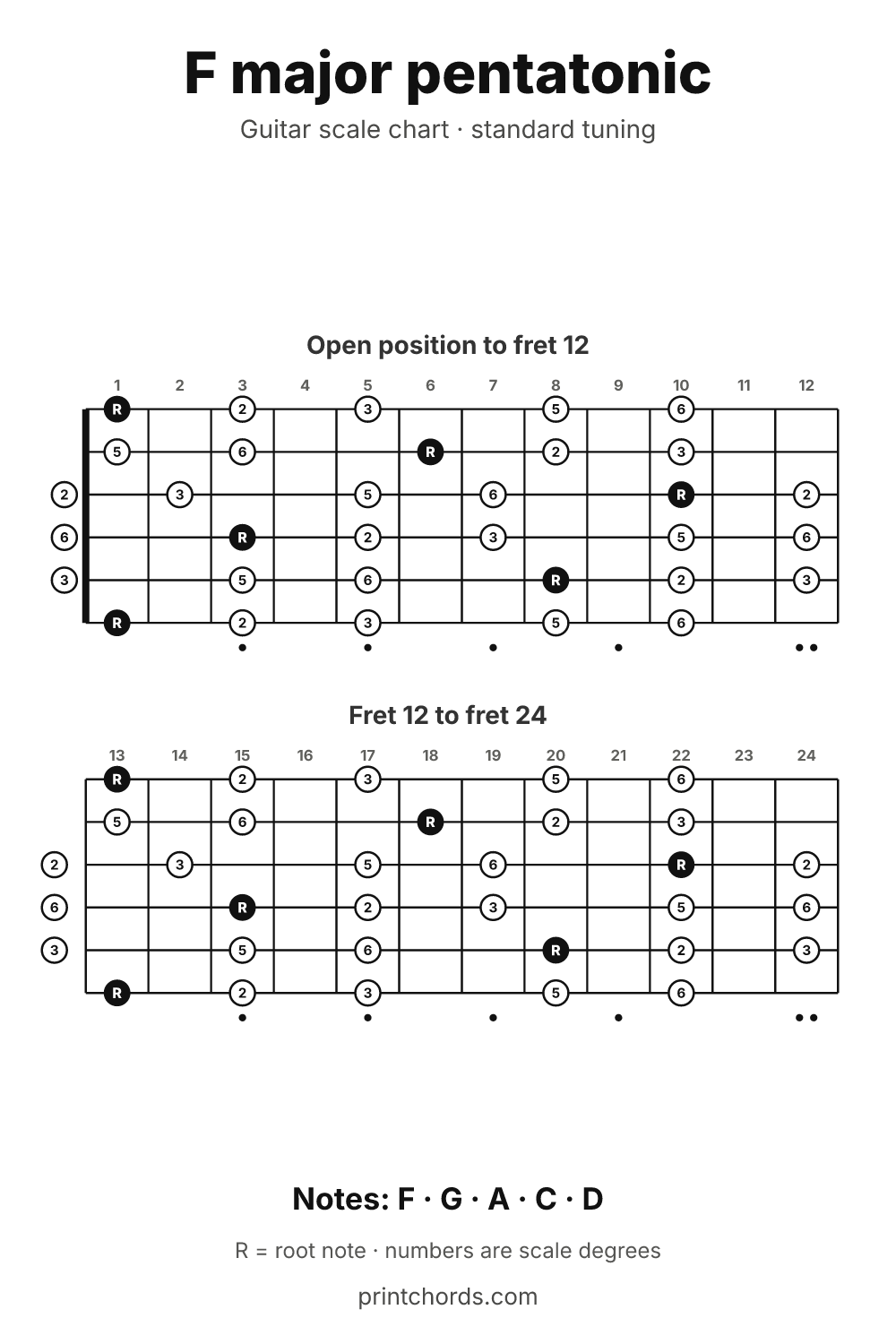
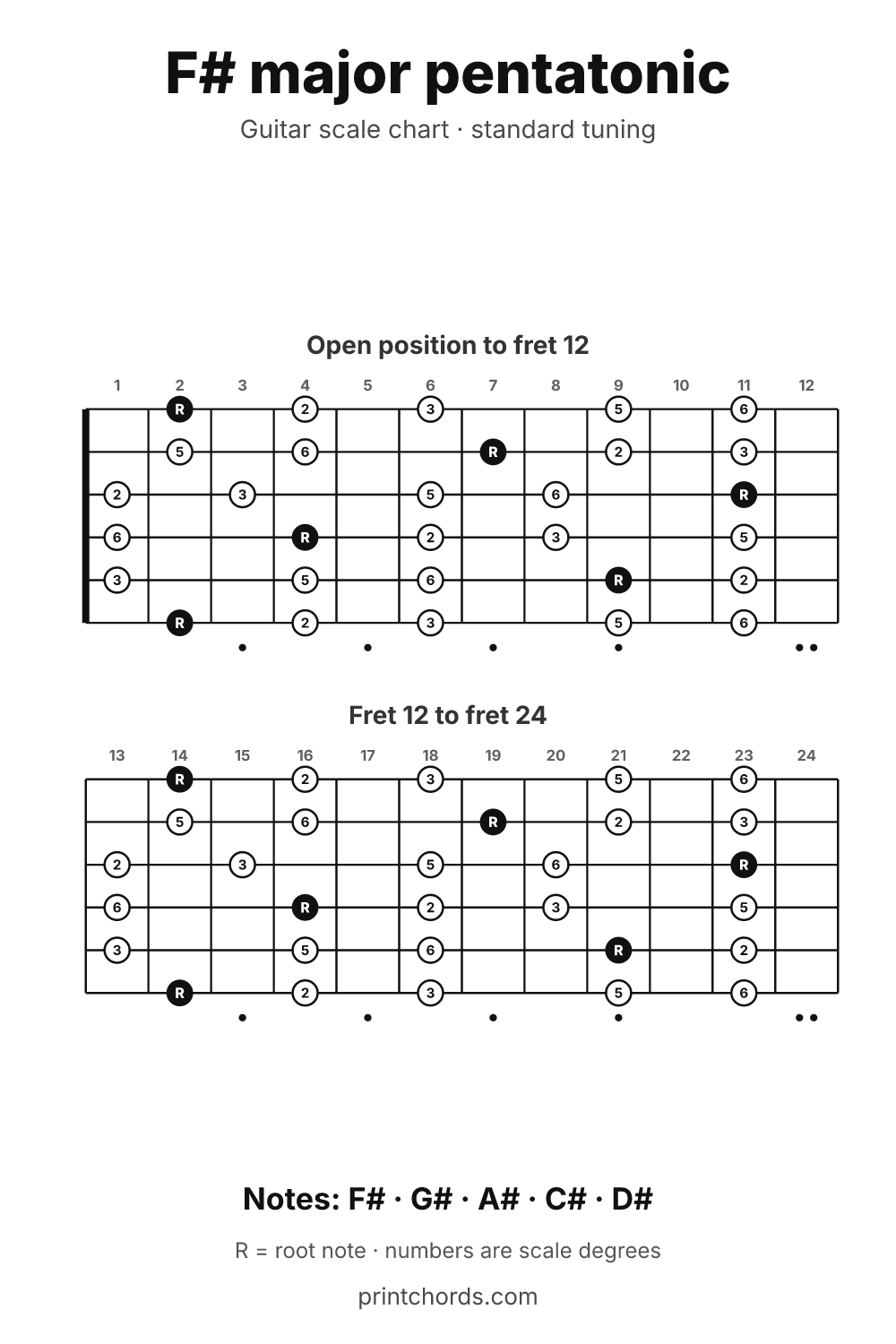
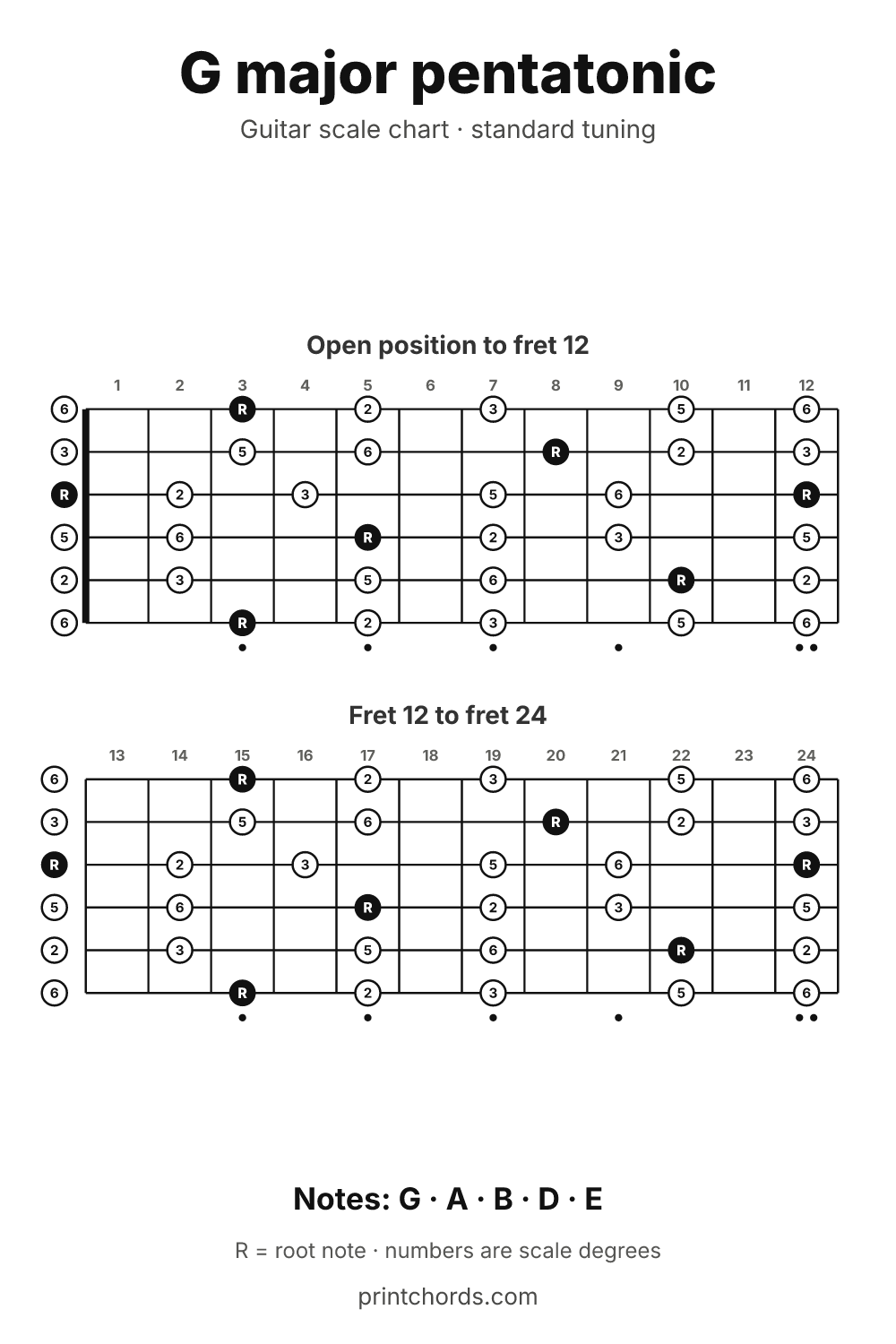
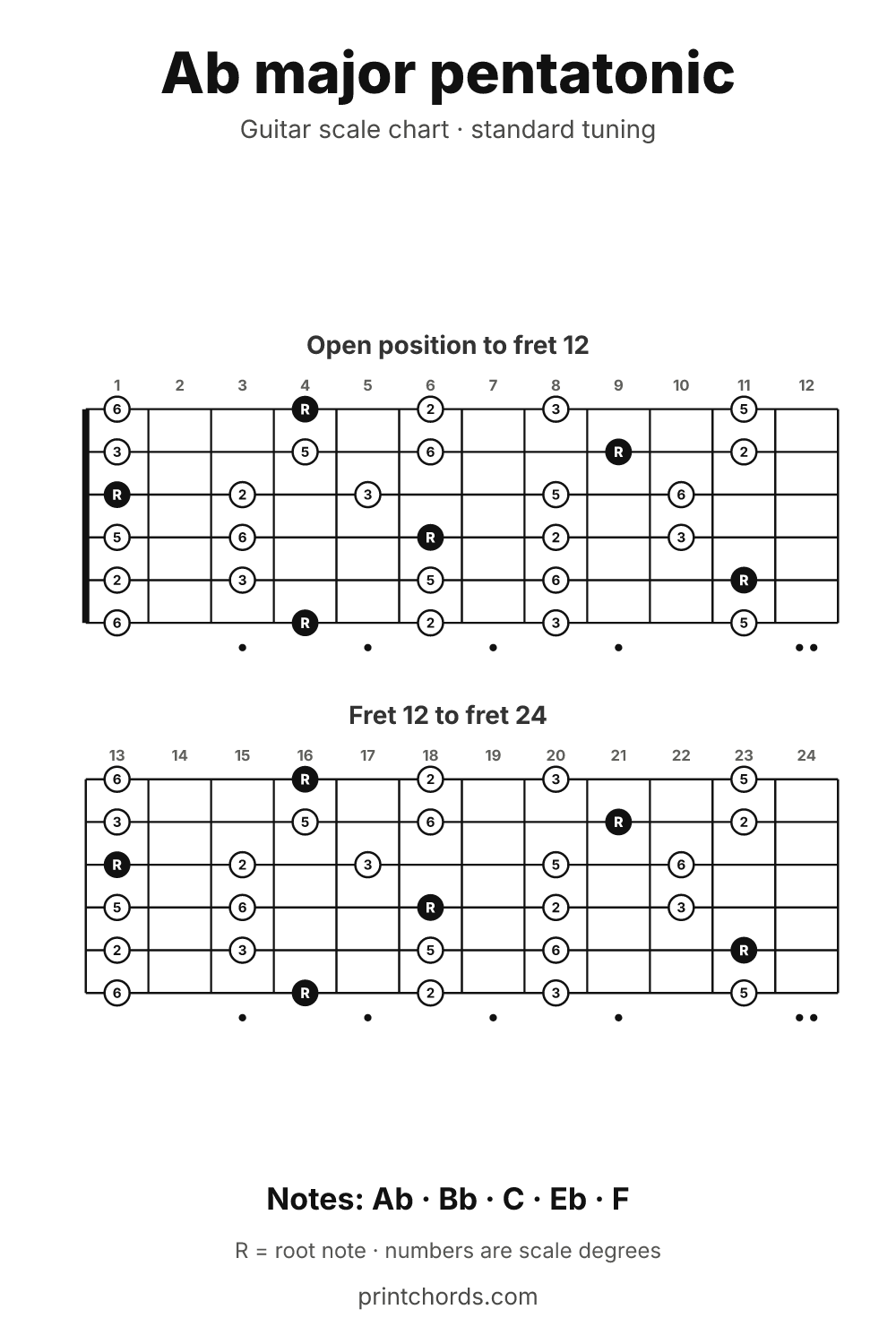
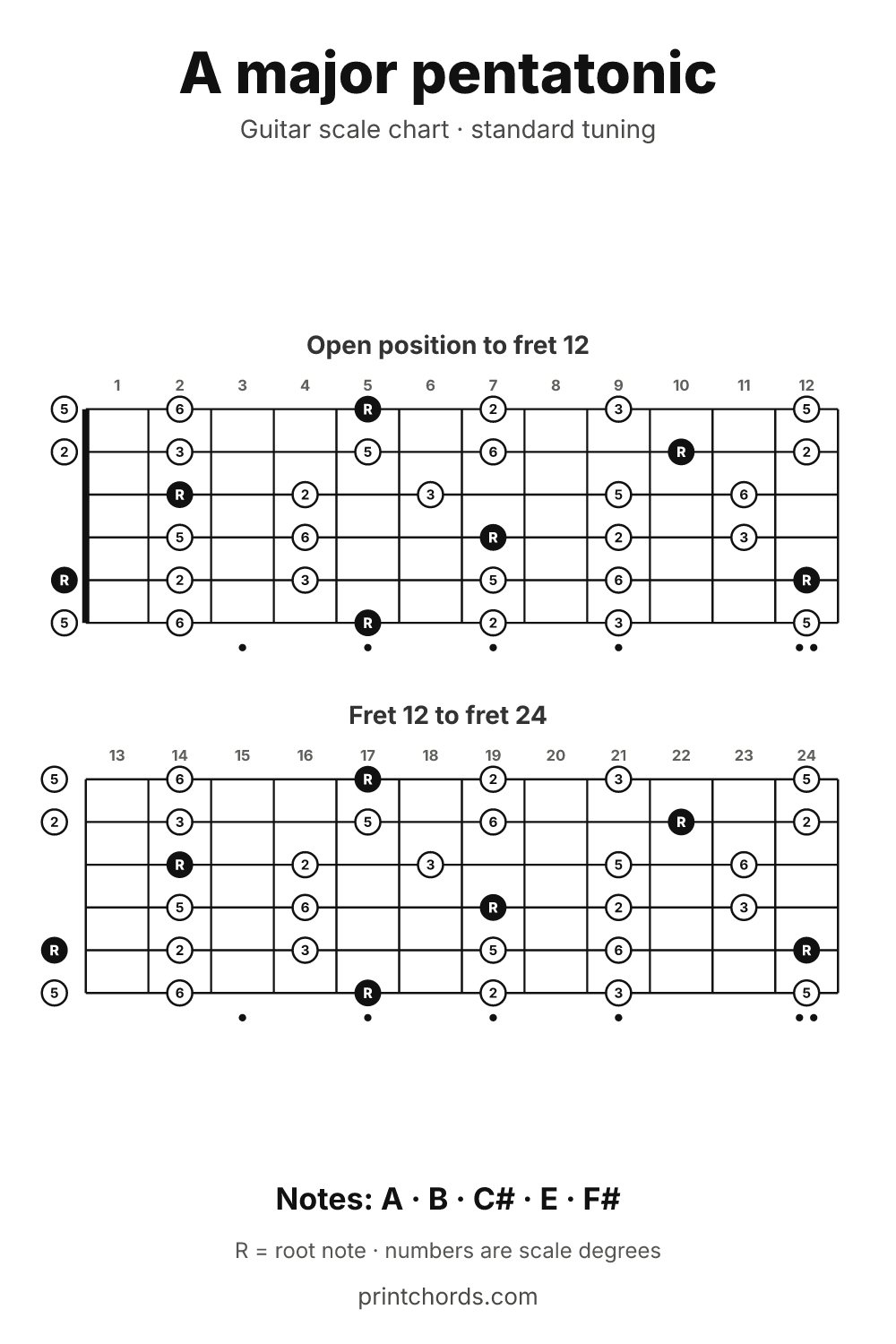
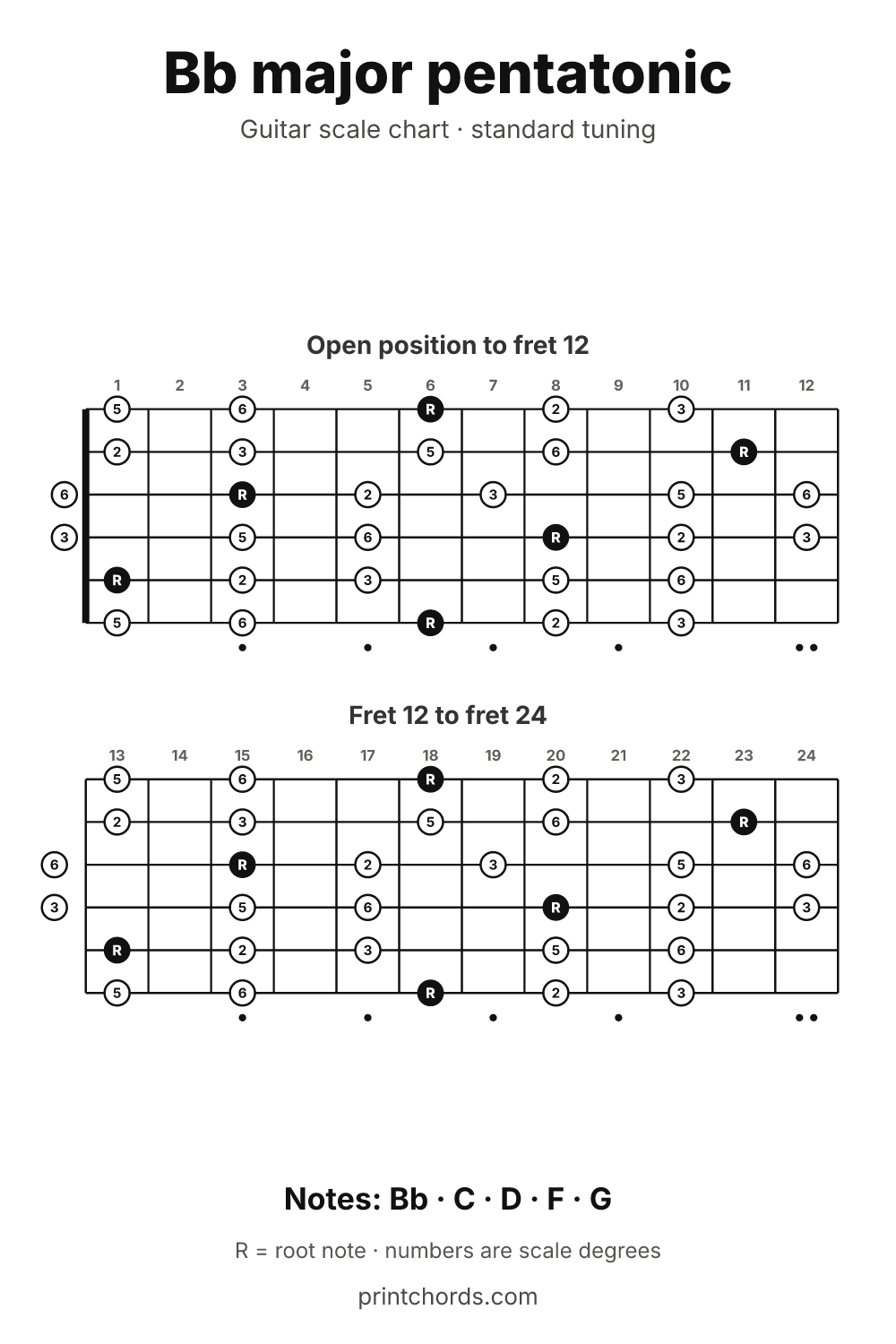
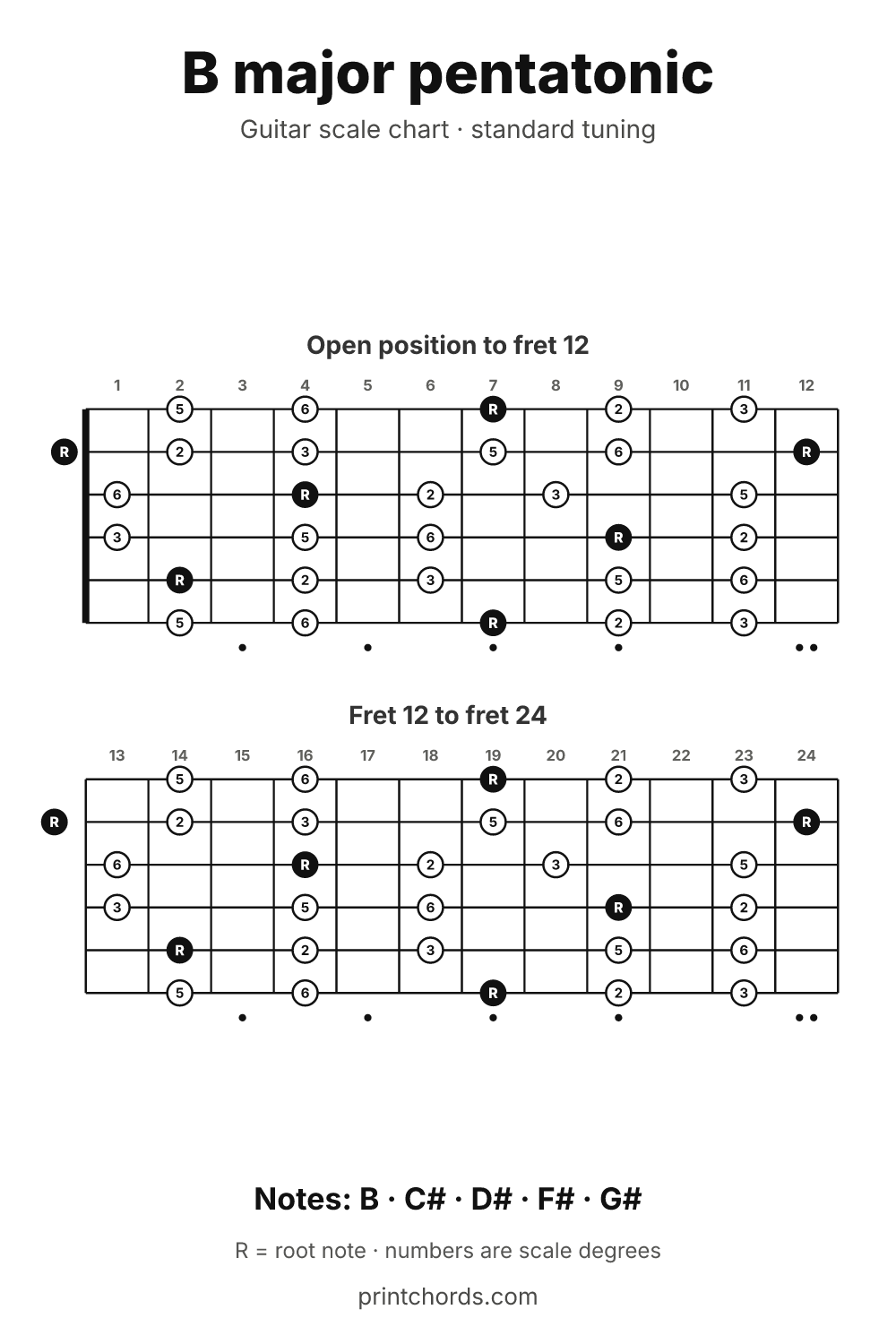
A major pentatonic
The same five-note idea with a brighter sound. Country, folk and most singalong melodies live in it.
Major pentatonic in every key printable PDF
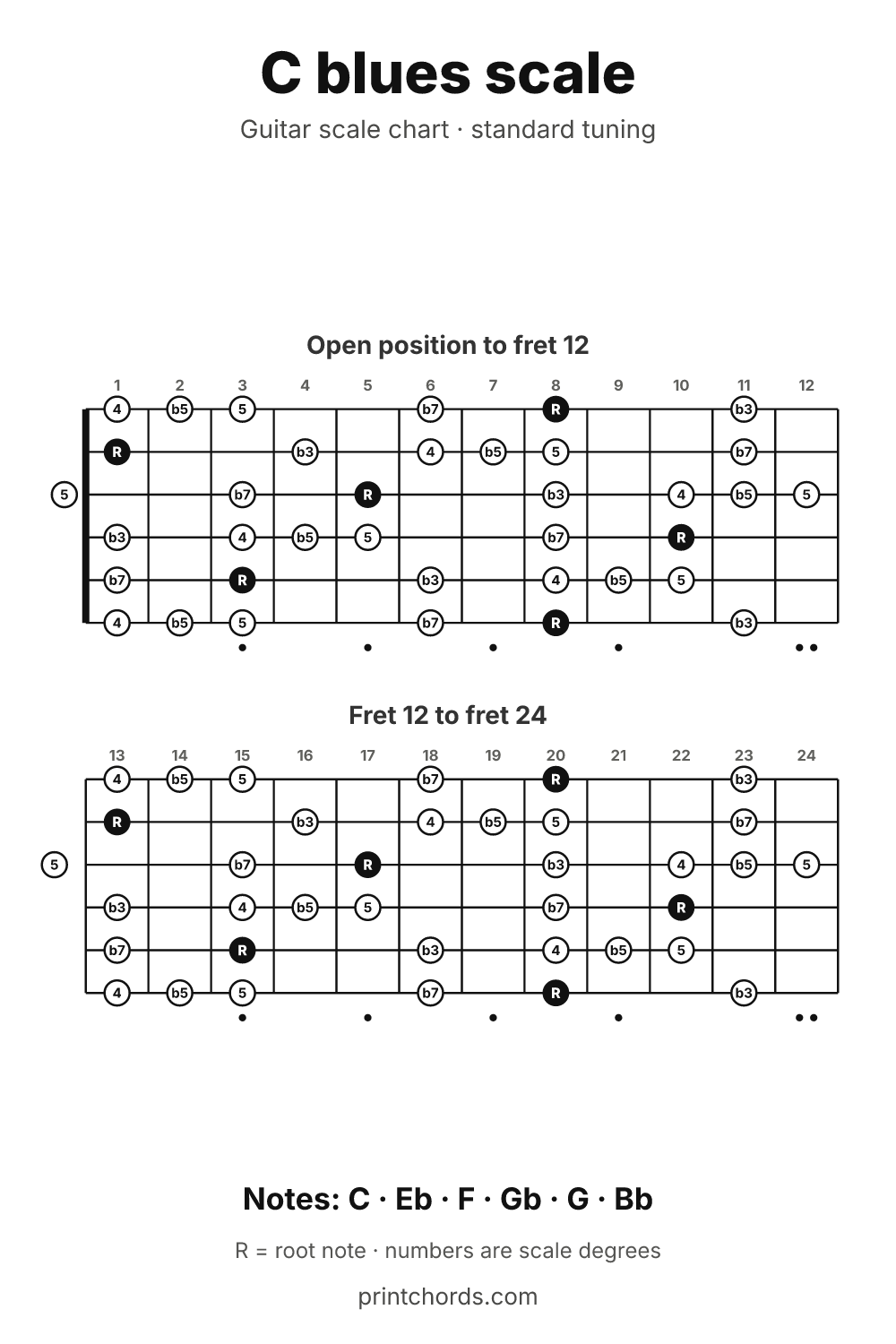
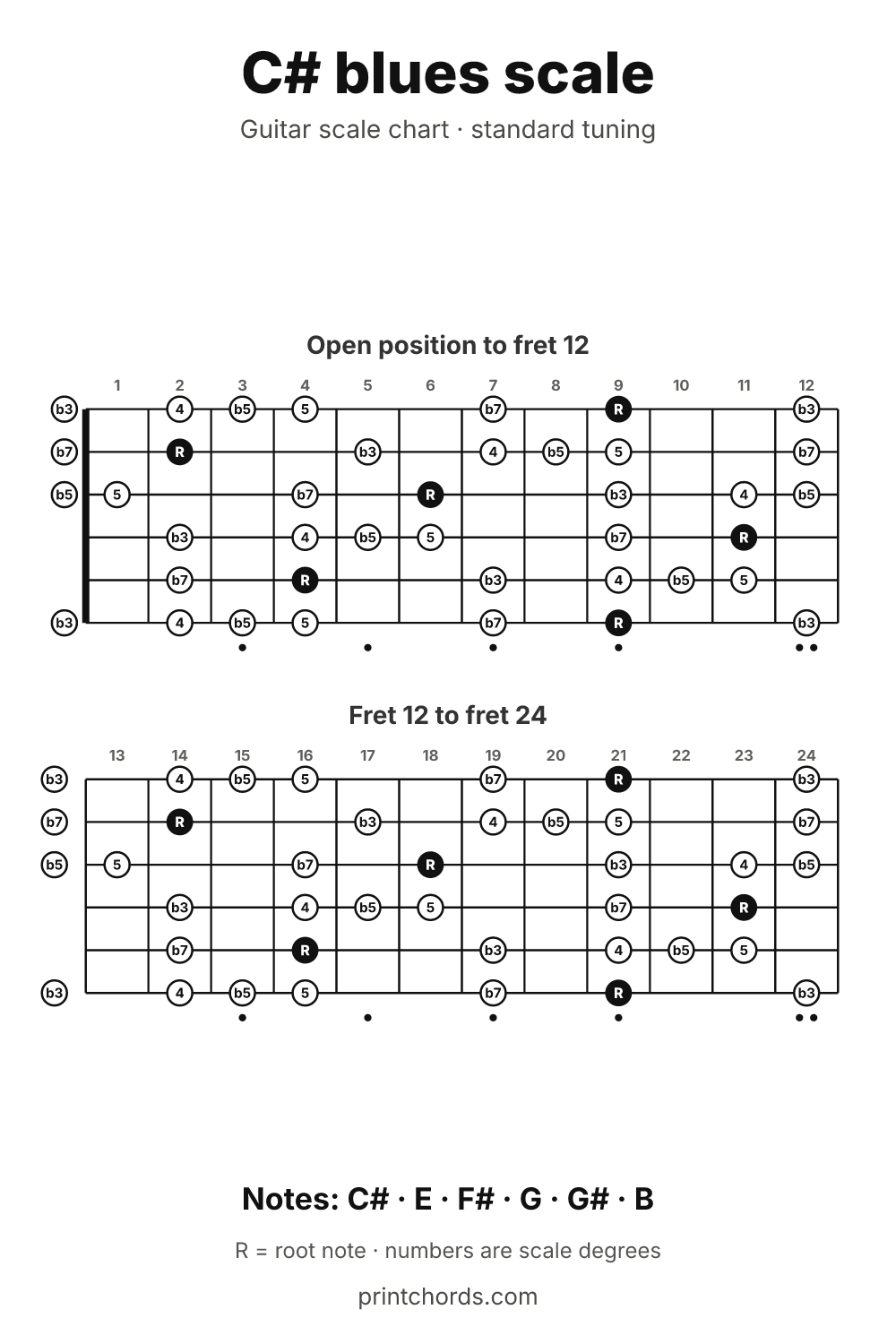
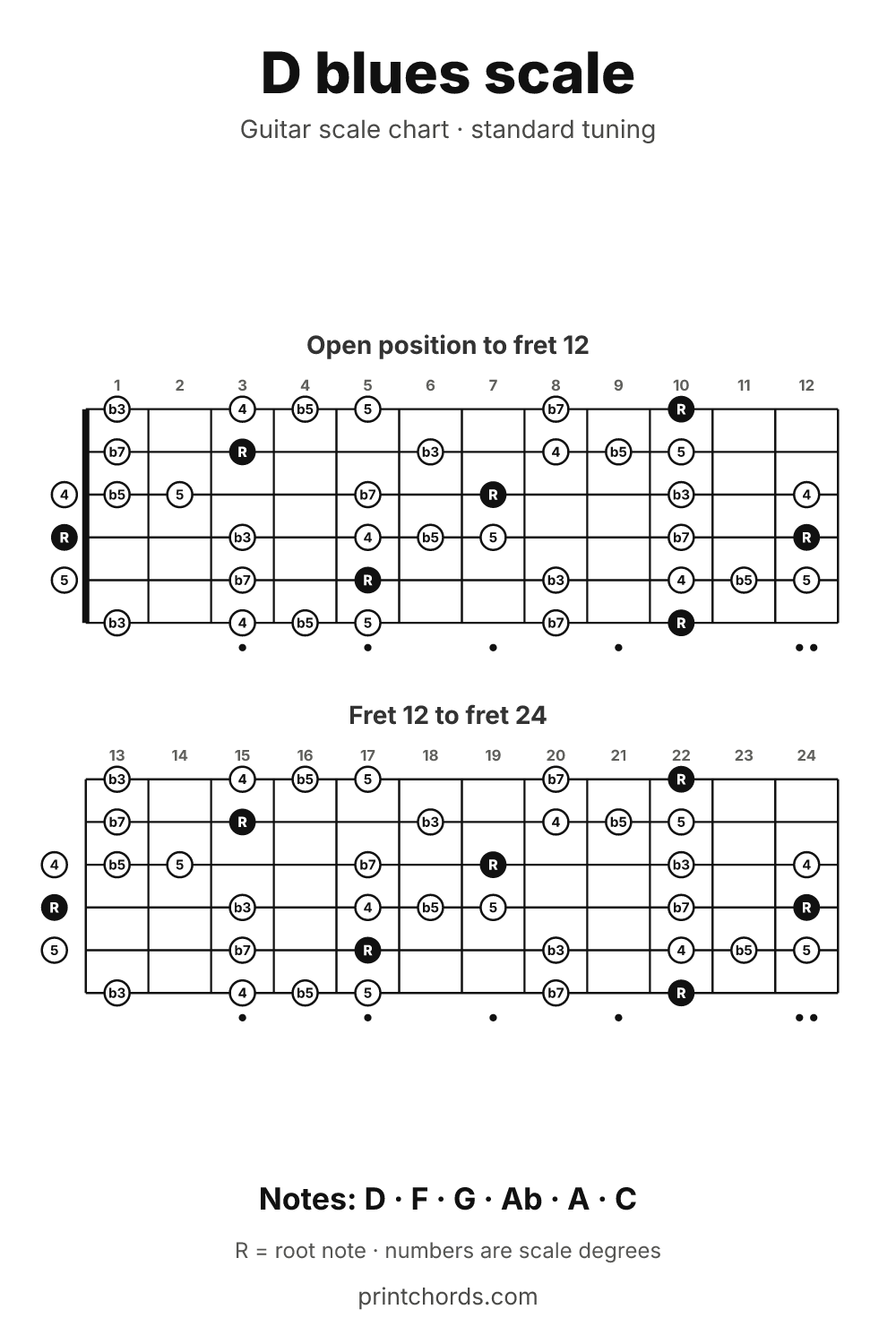
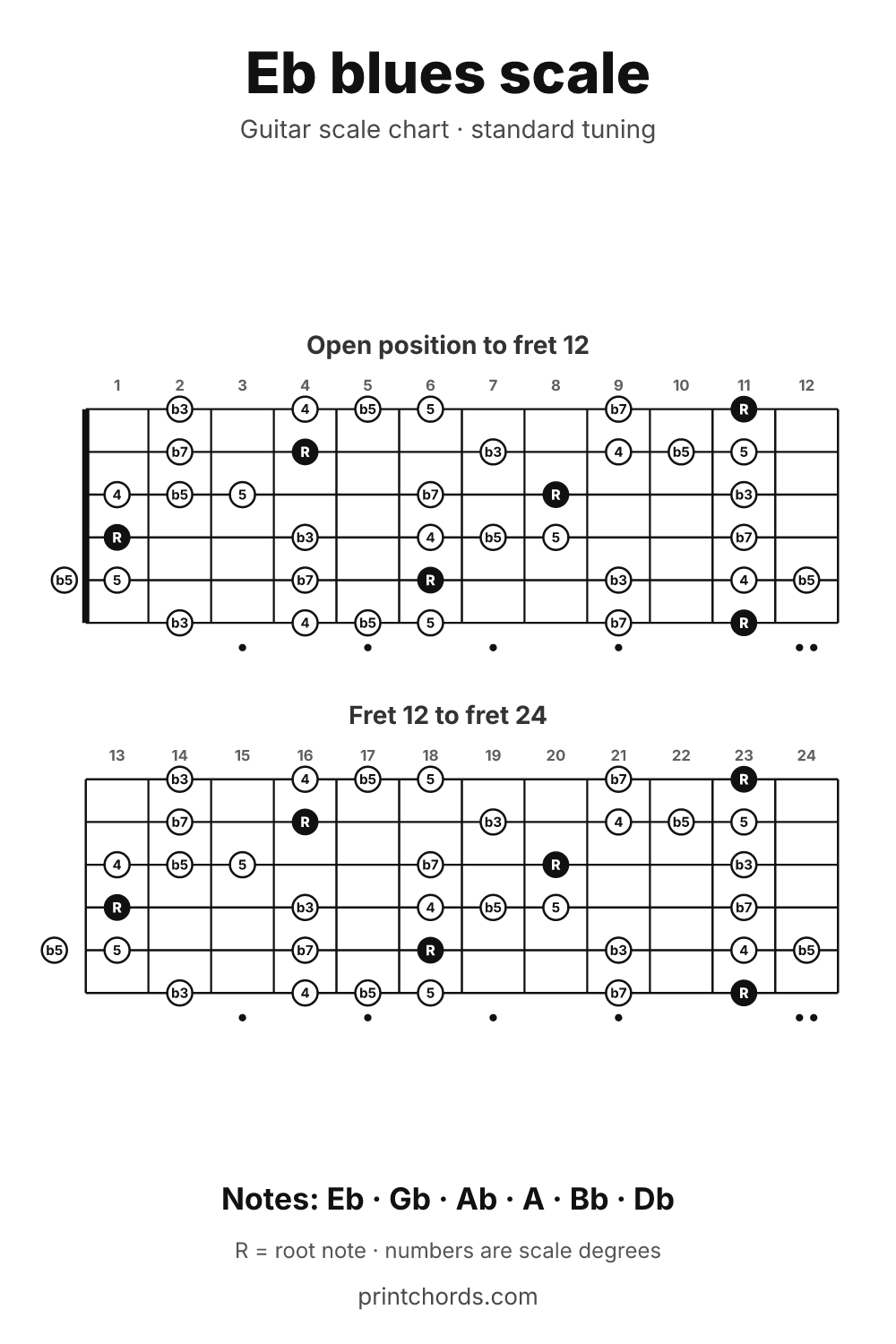
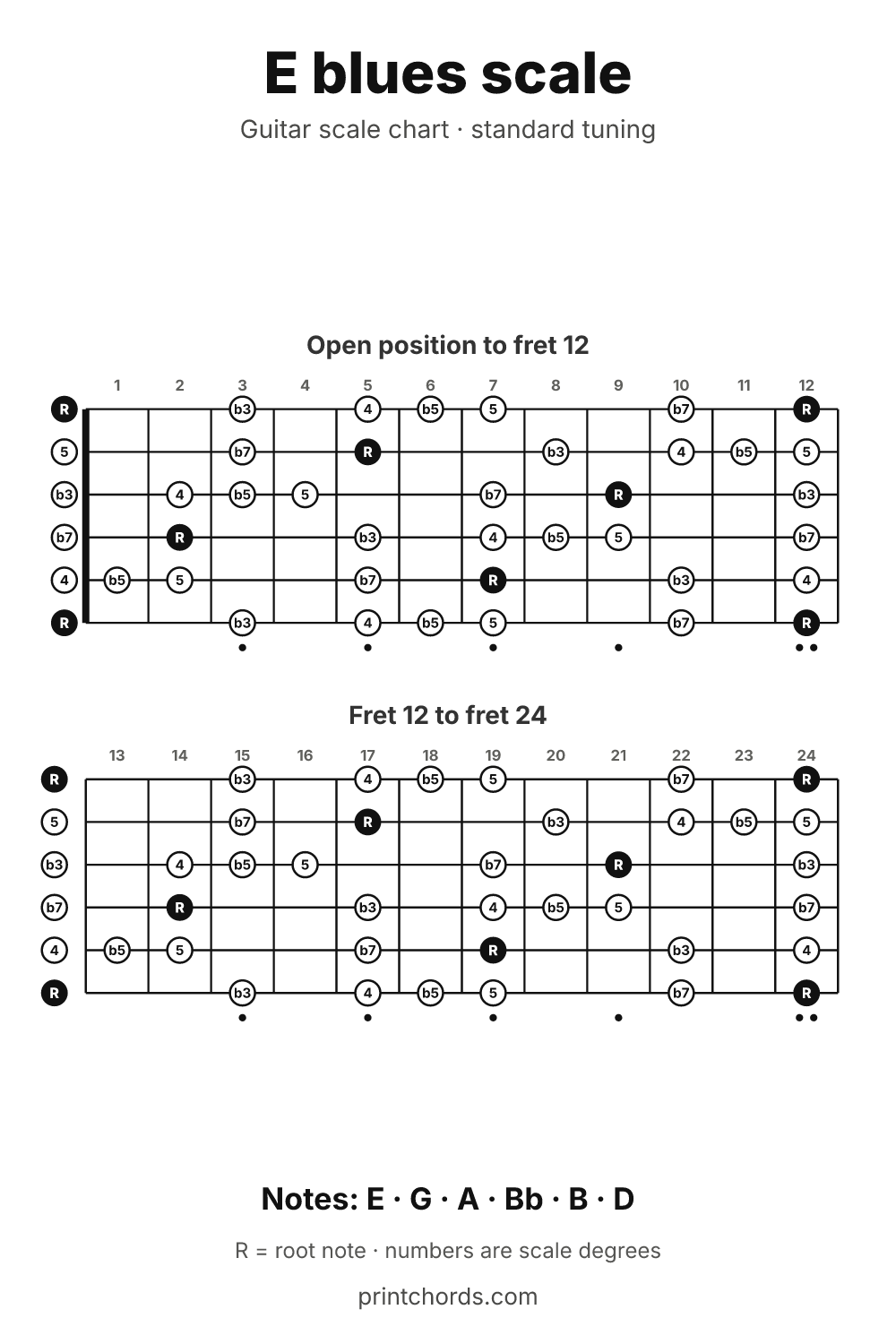
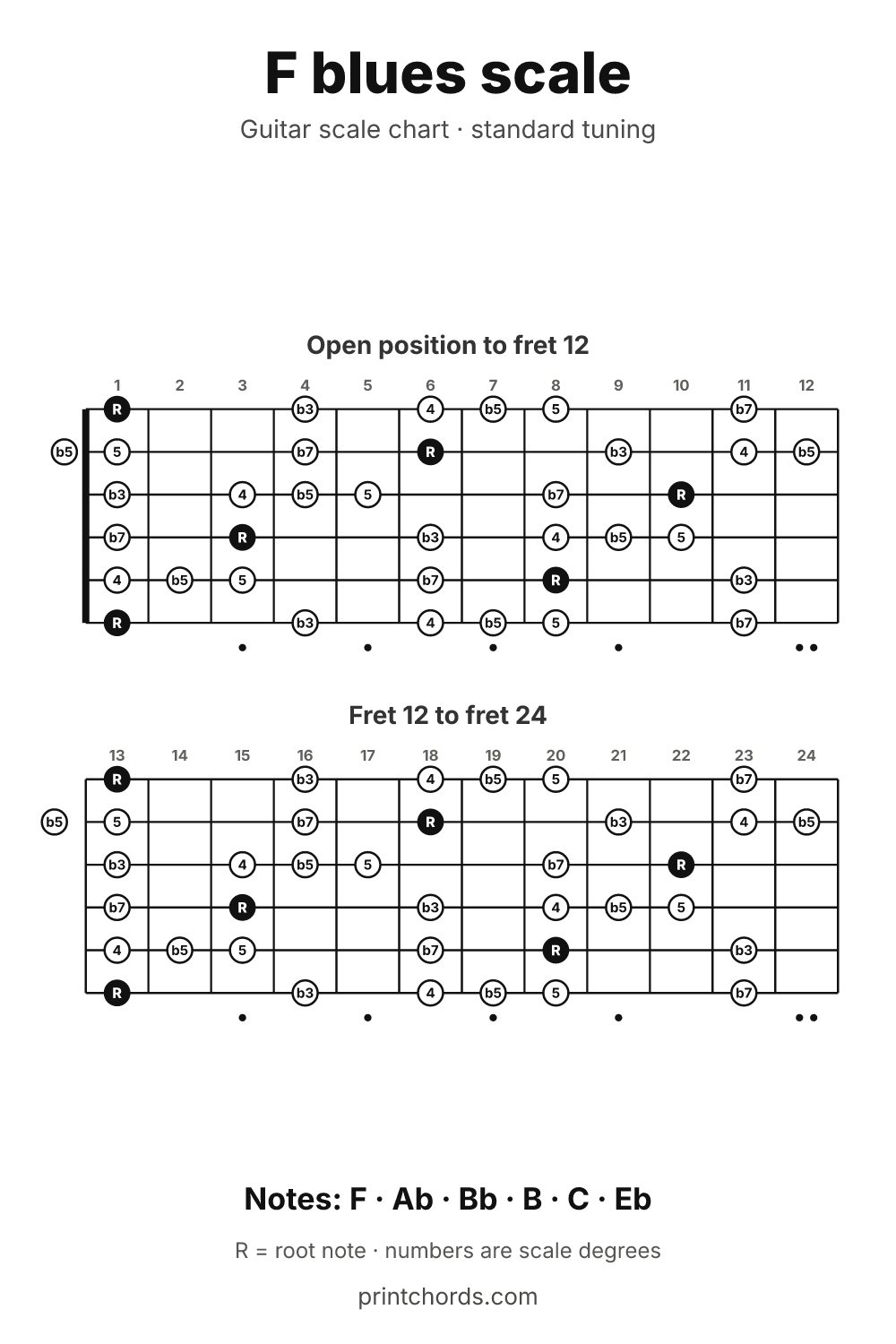
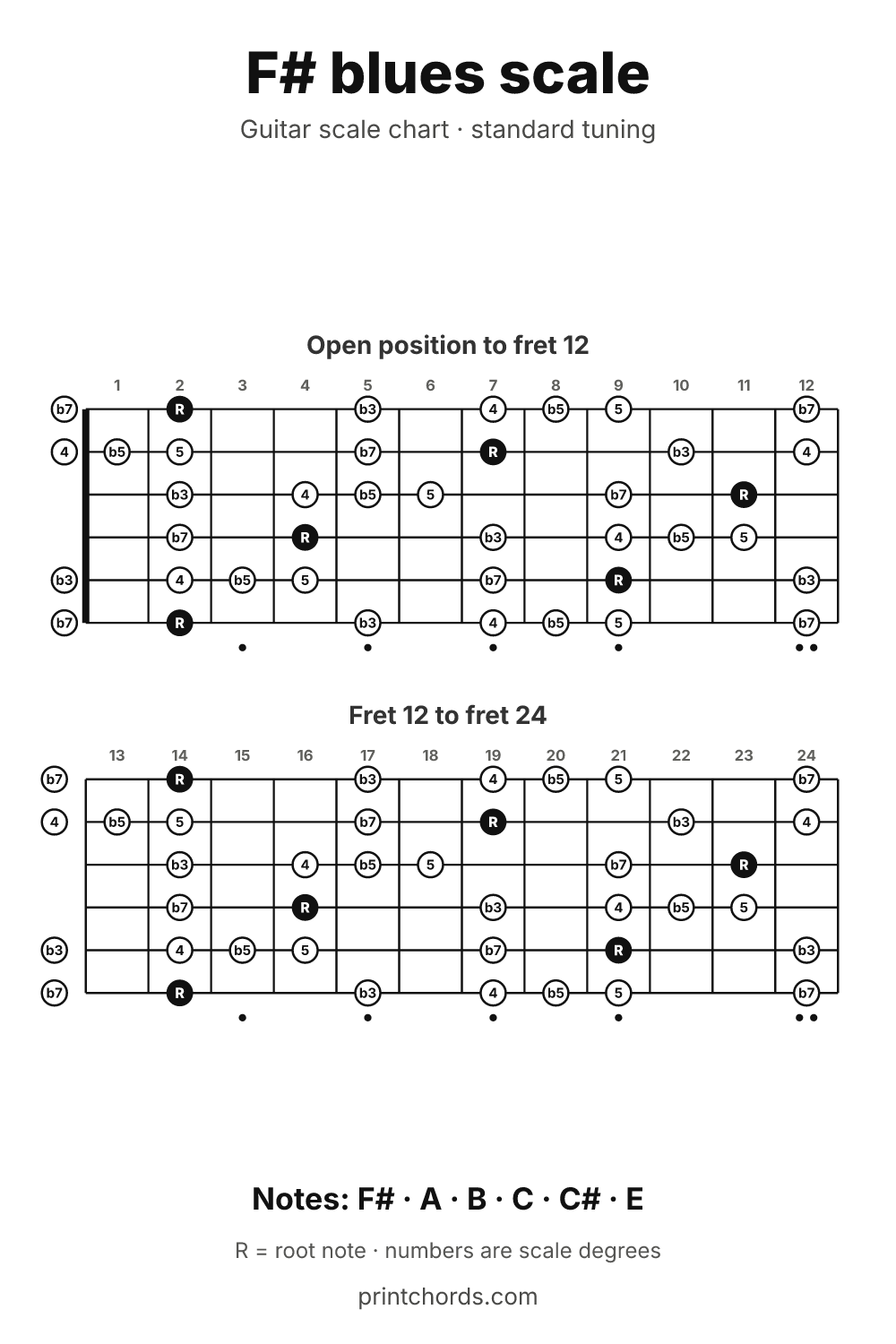
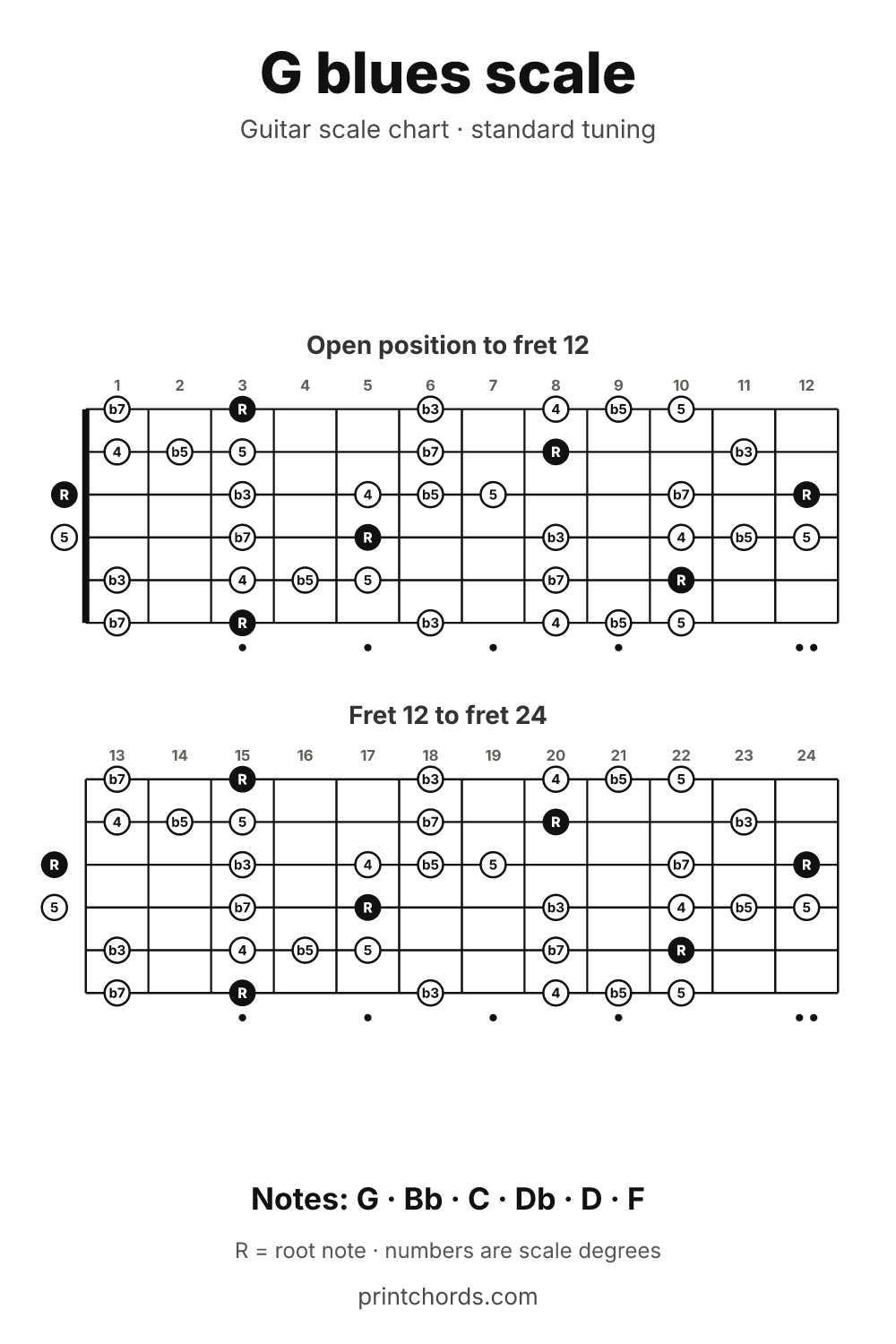
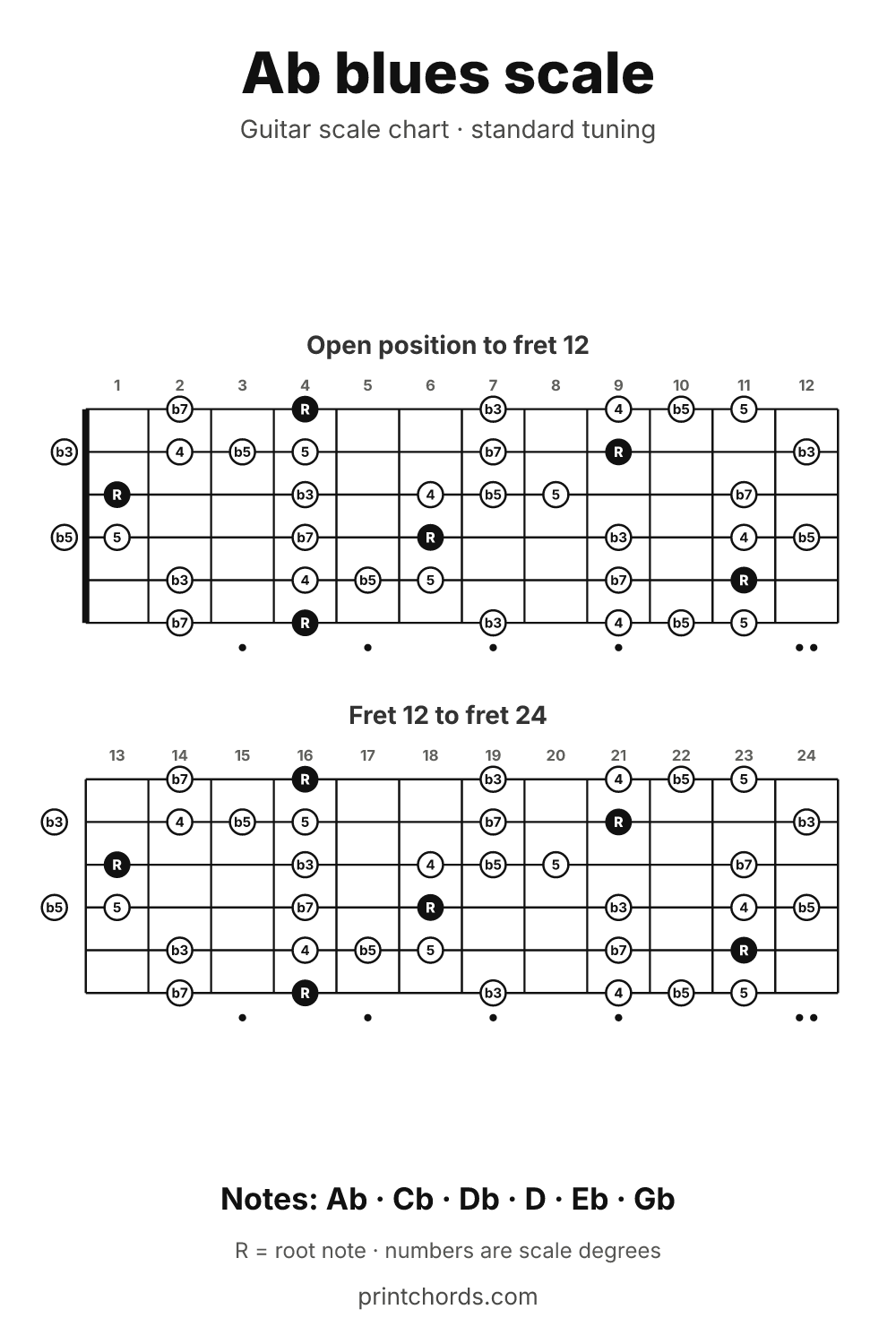
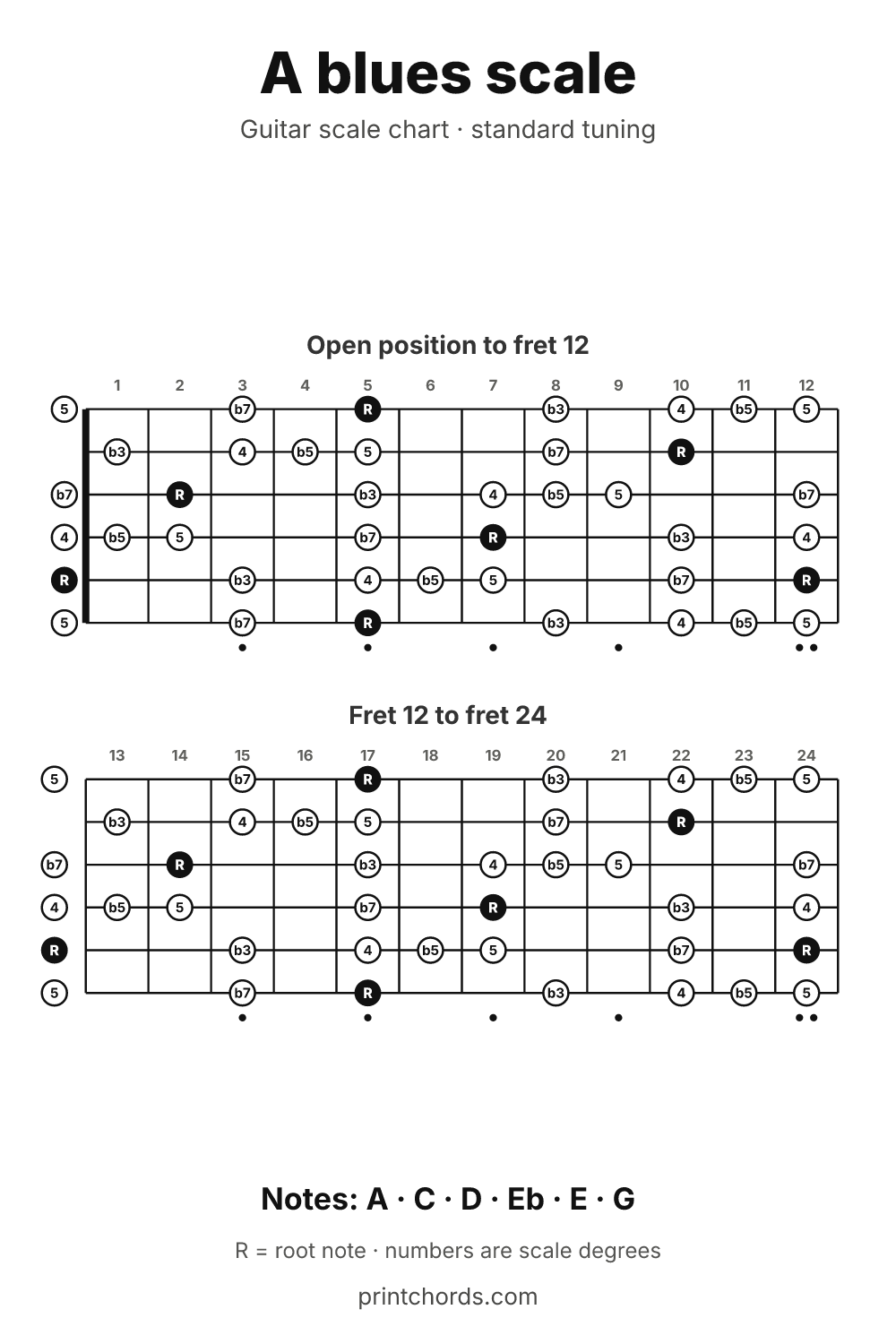
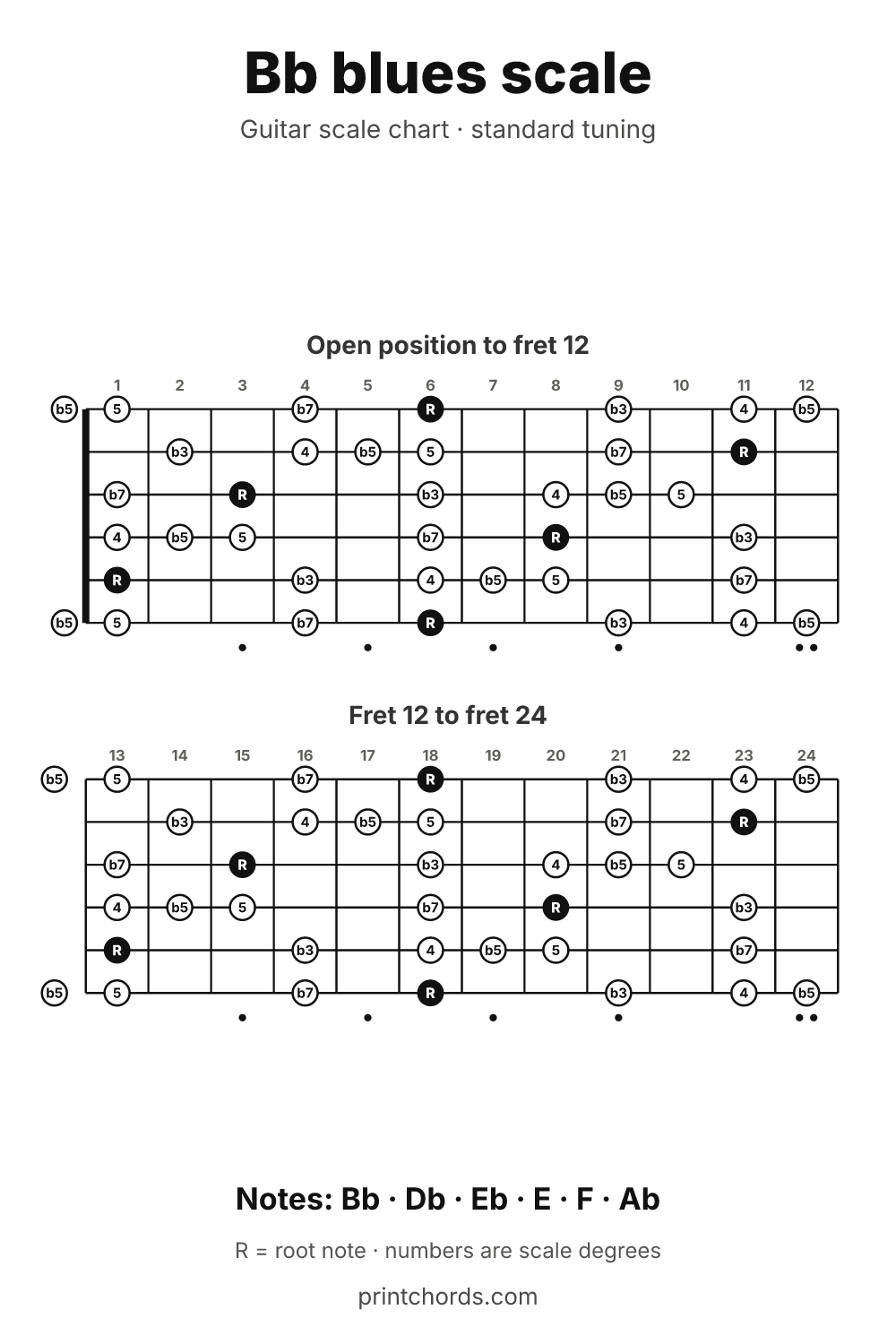
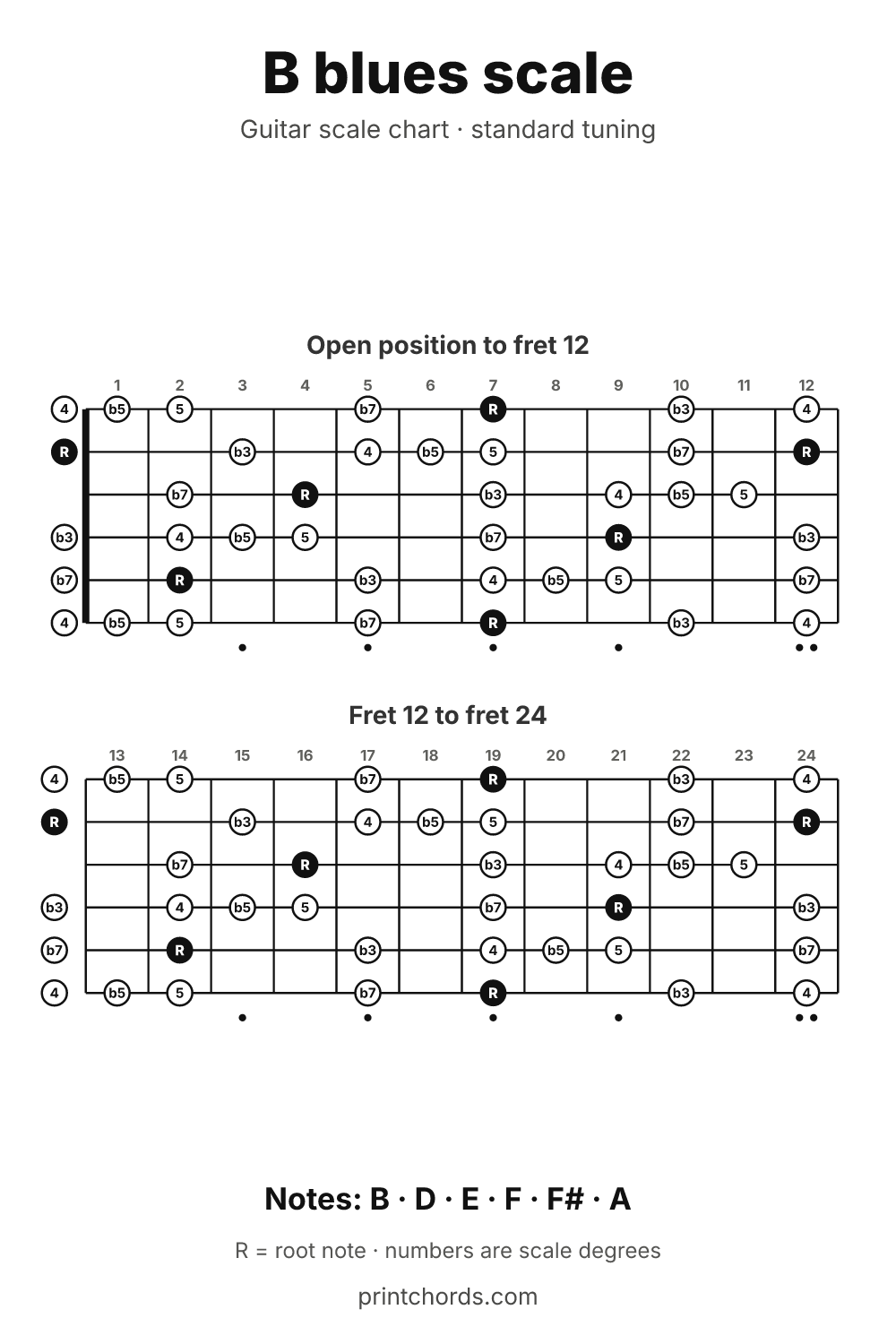
A blues scale
The minor pentatonic with one extra note between the fourth and fifth. That note is the whole sound.
Blues scale in every key printable PDF
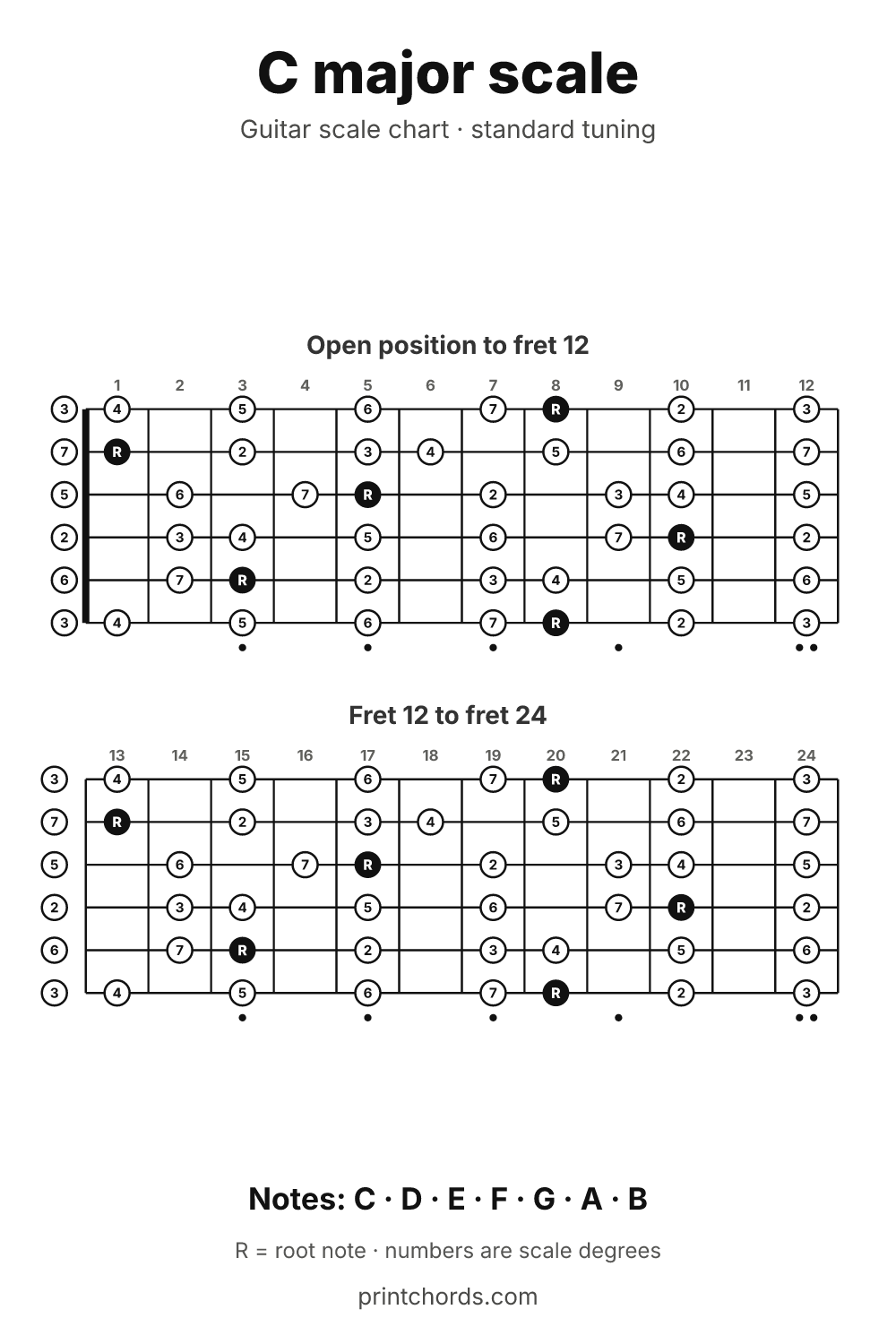
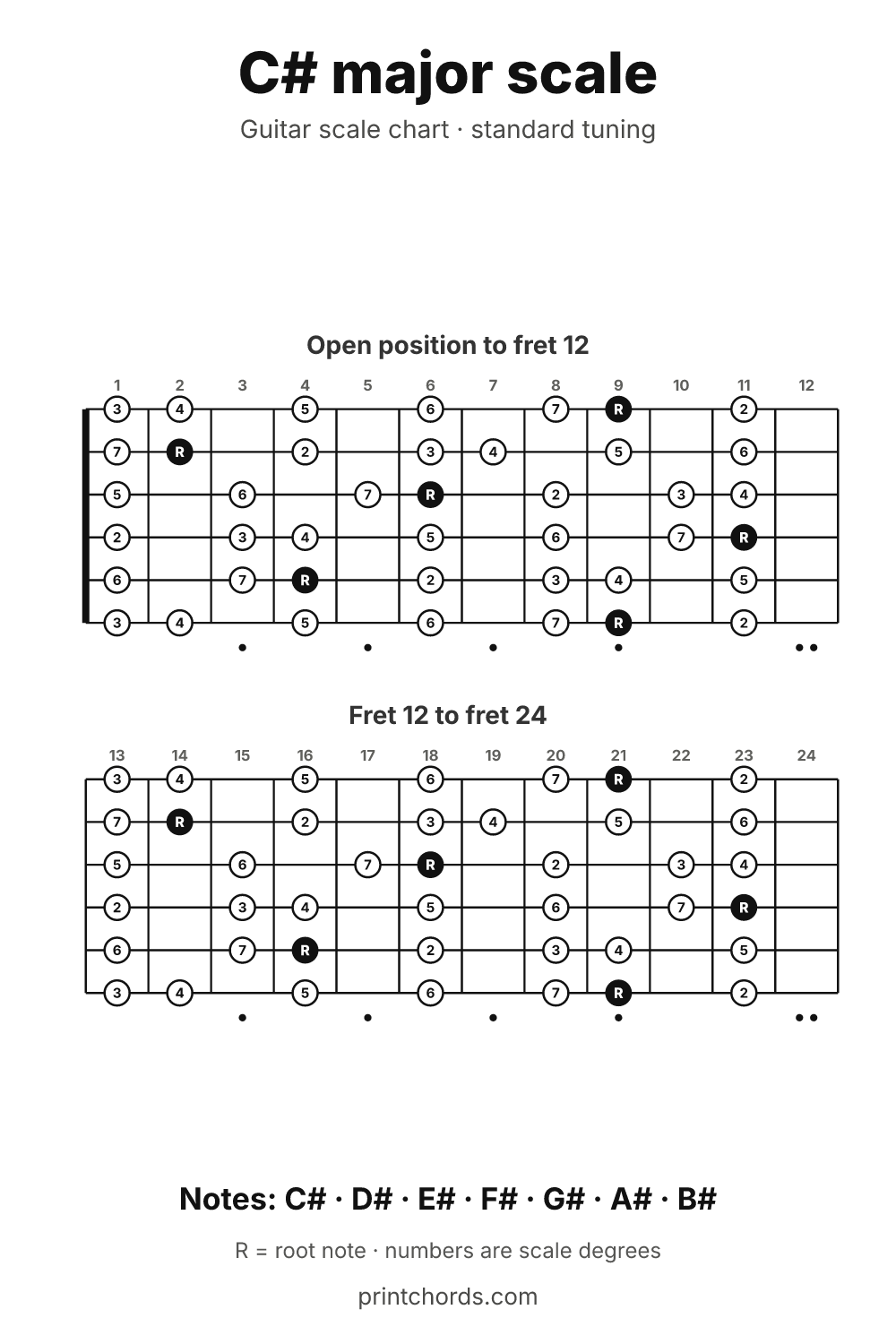
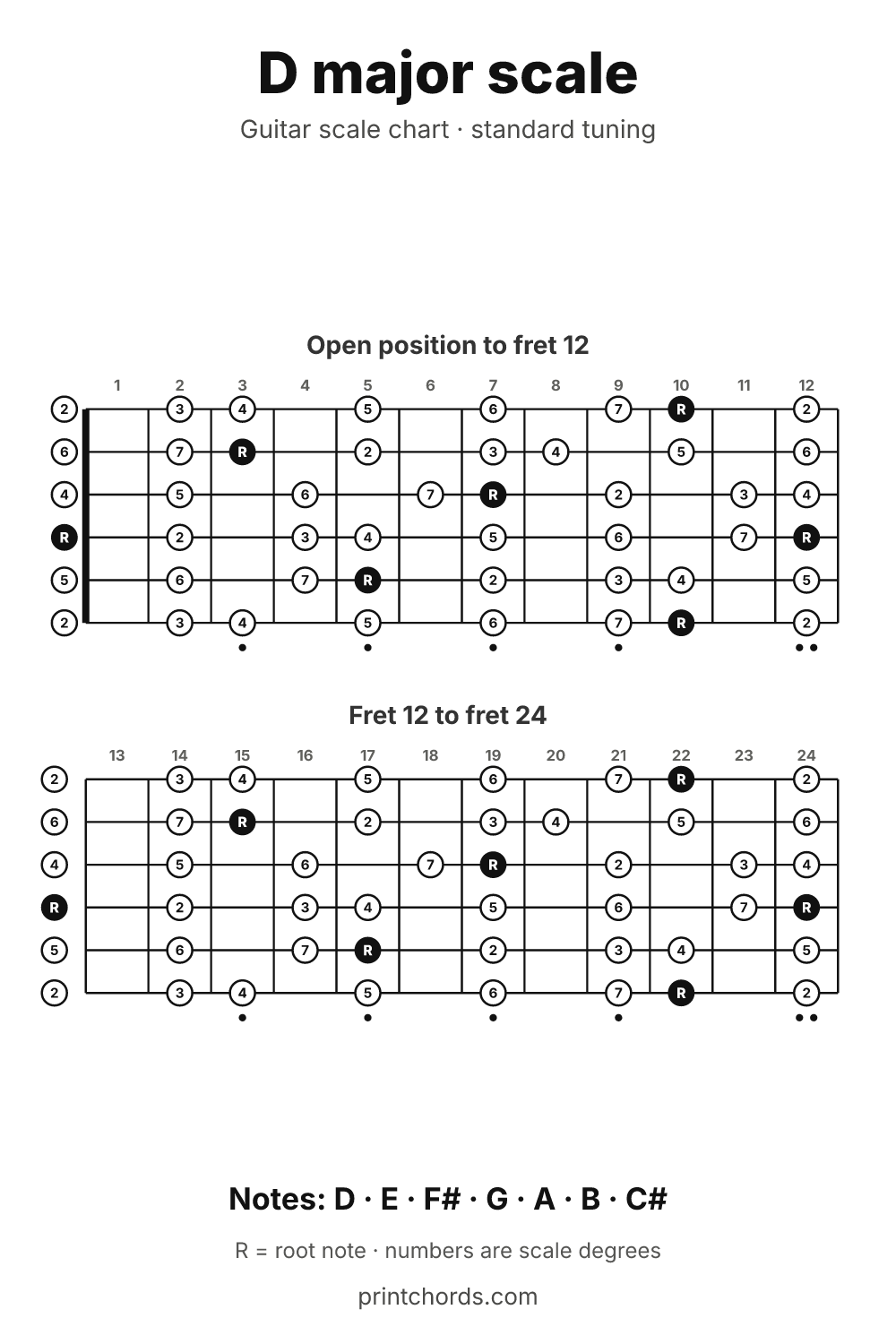
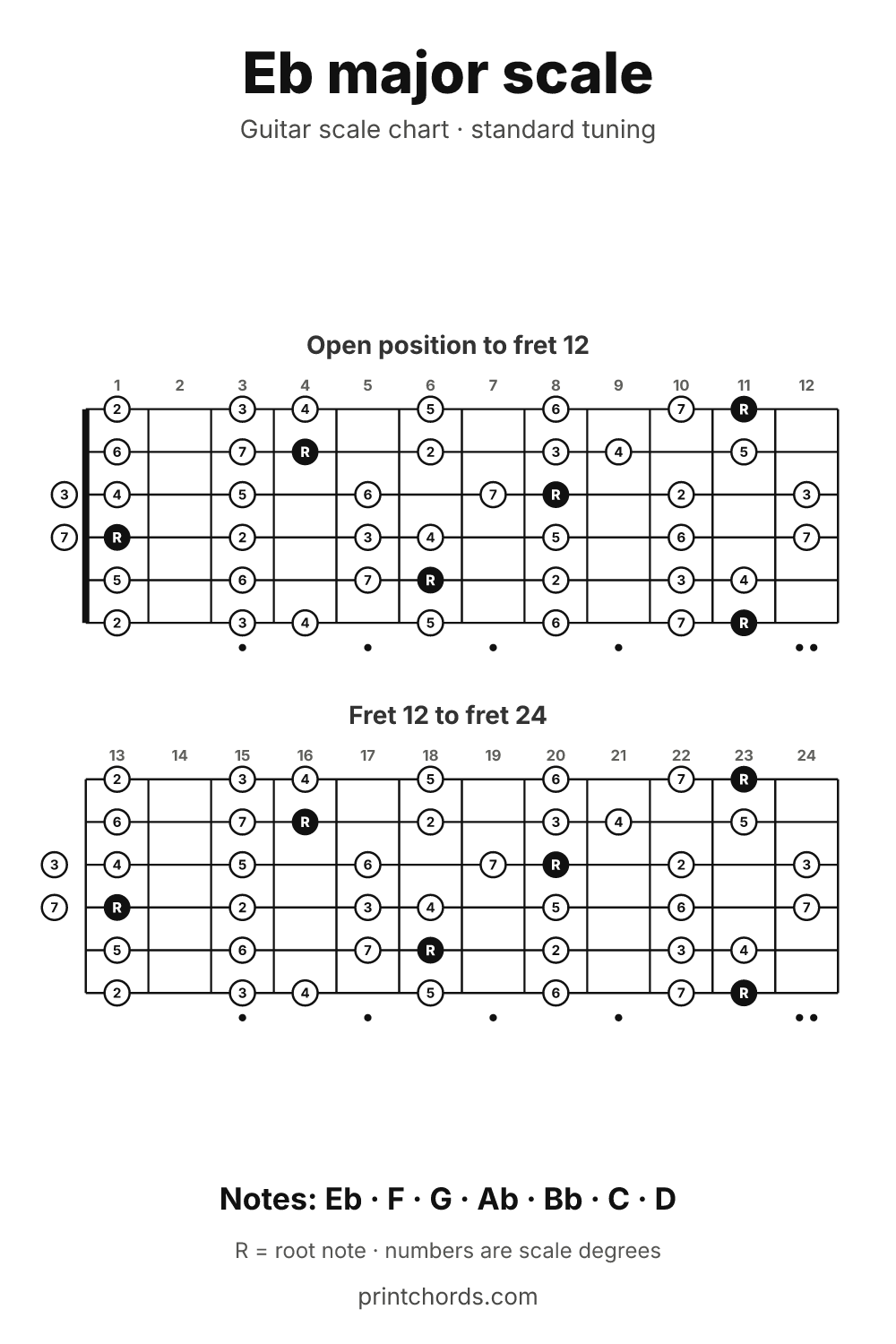
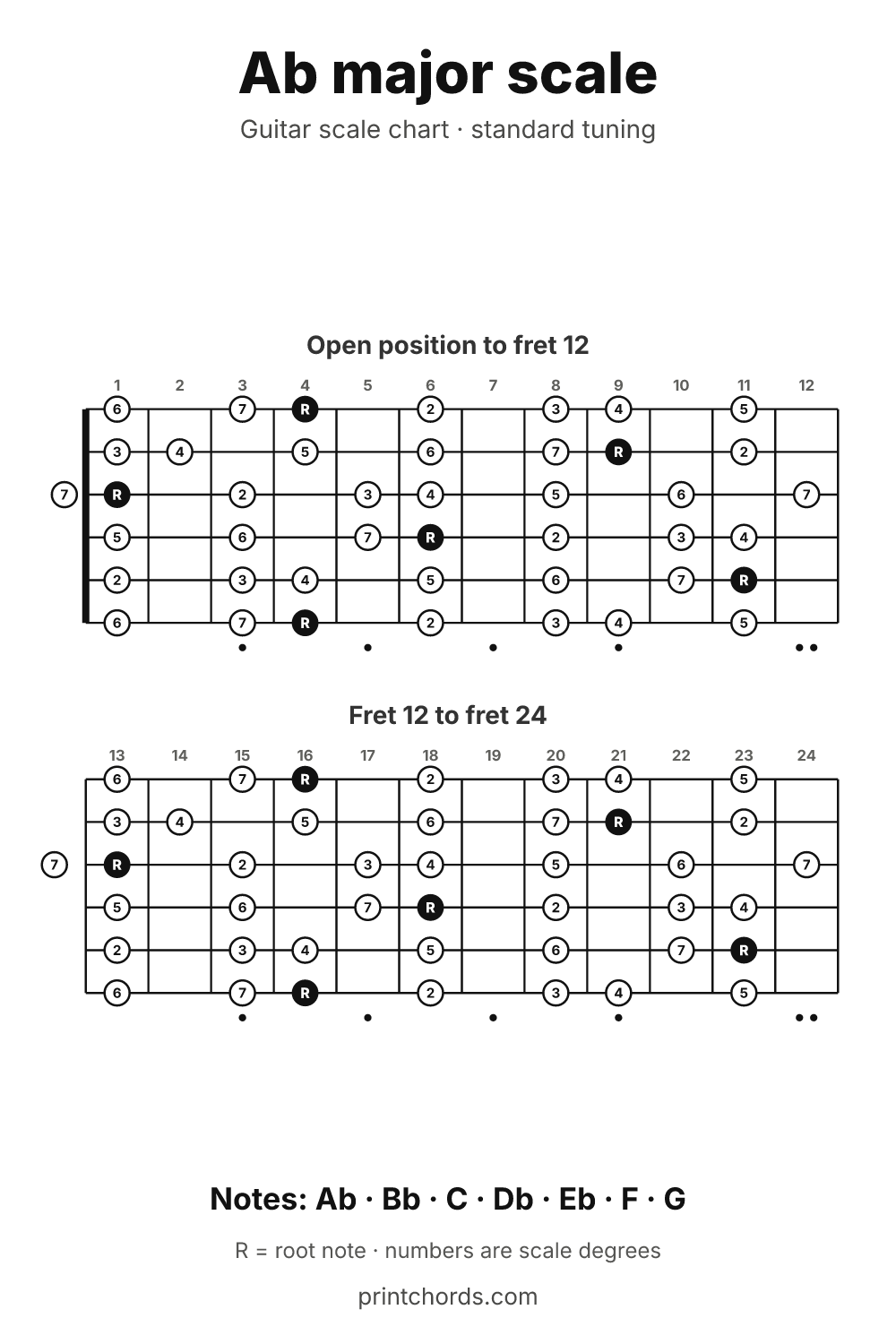
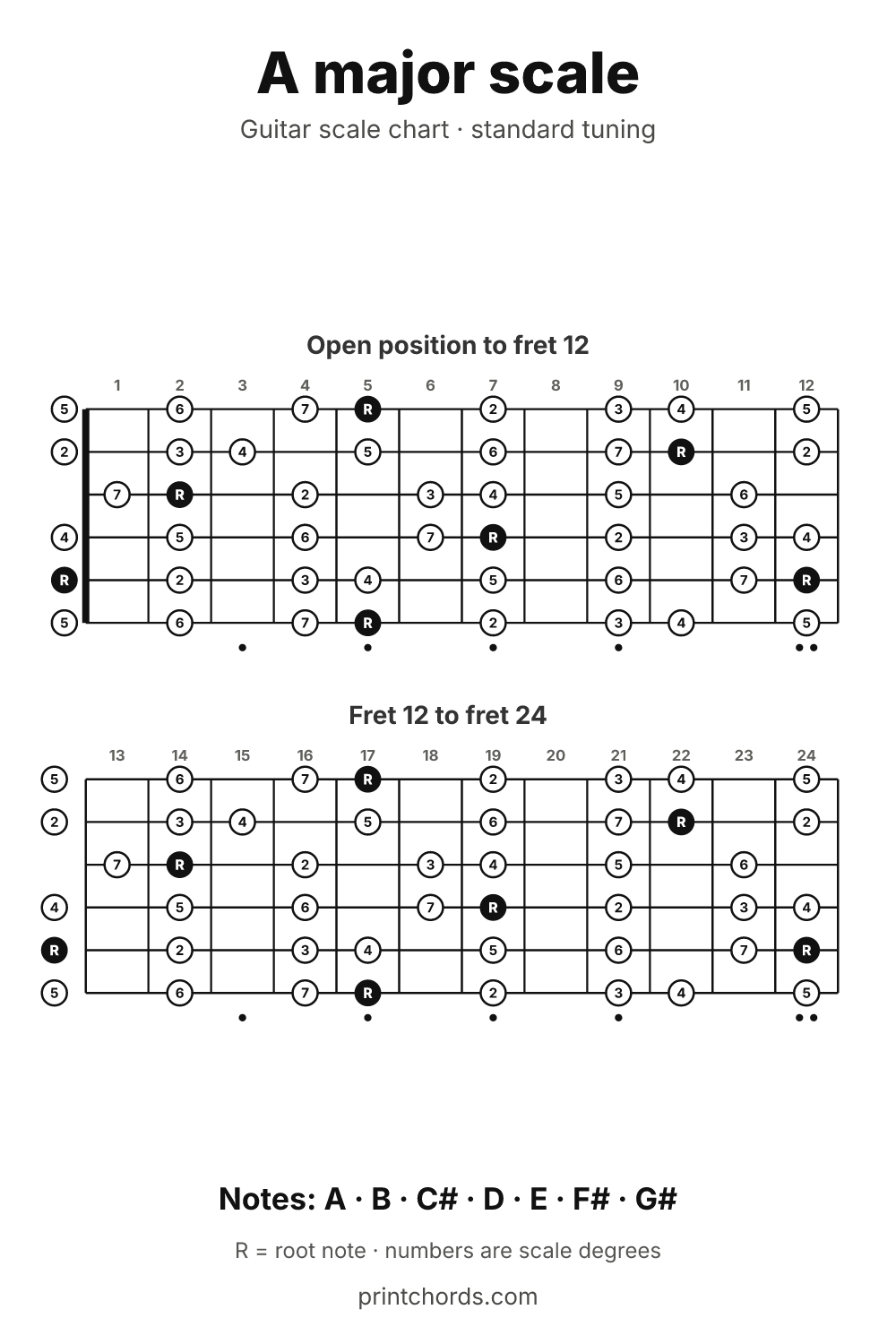
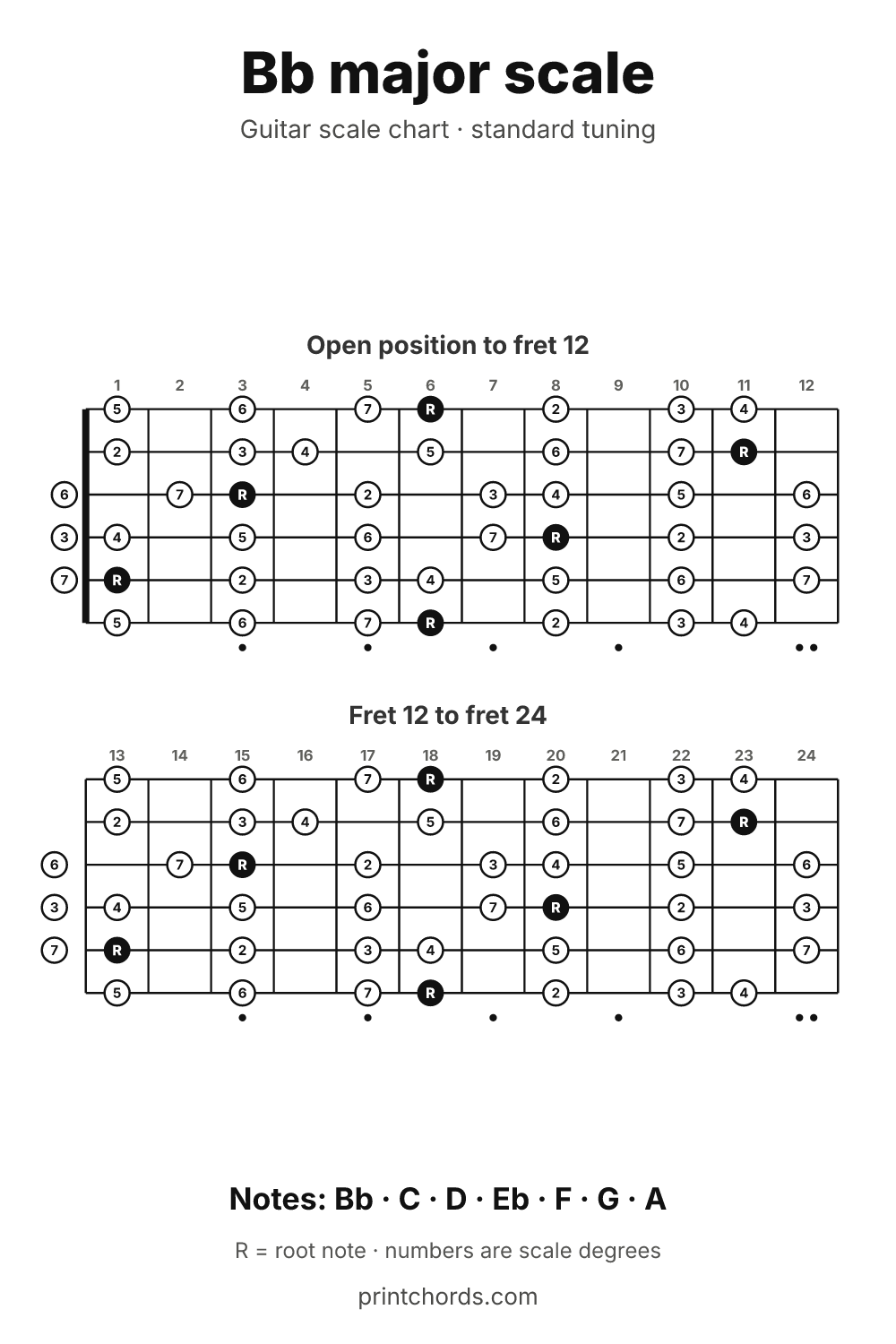
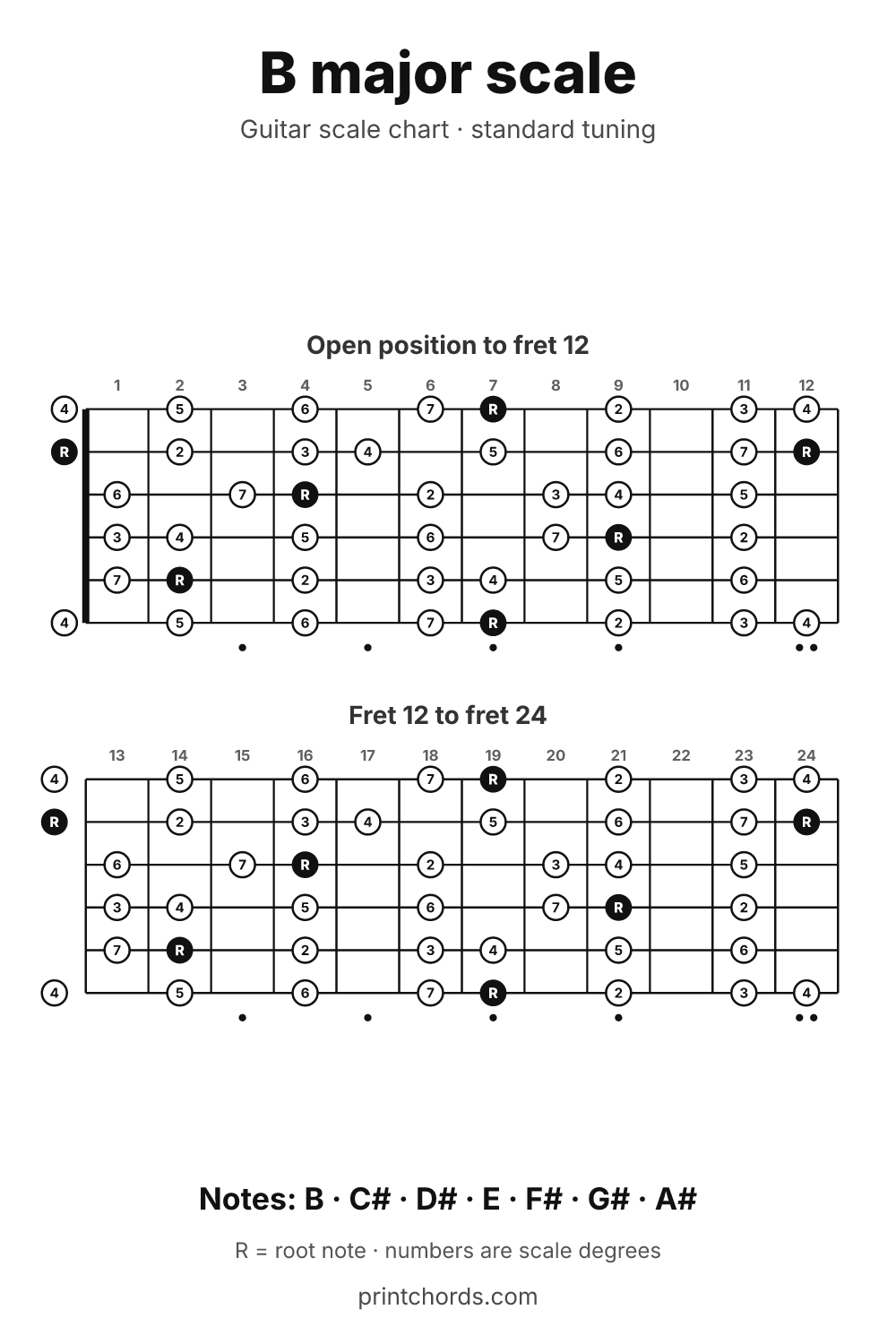
A major scale
Seven notes, and the reference every other scale is described against. Worth knowing where the roots are.
Major scale in every key printable PDF
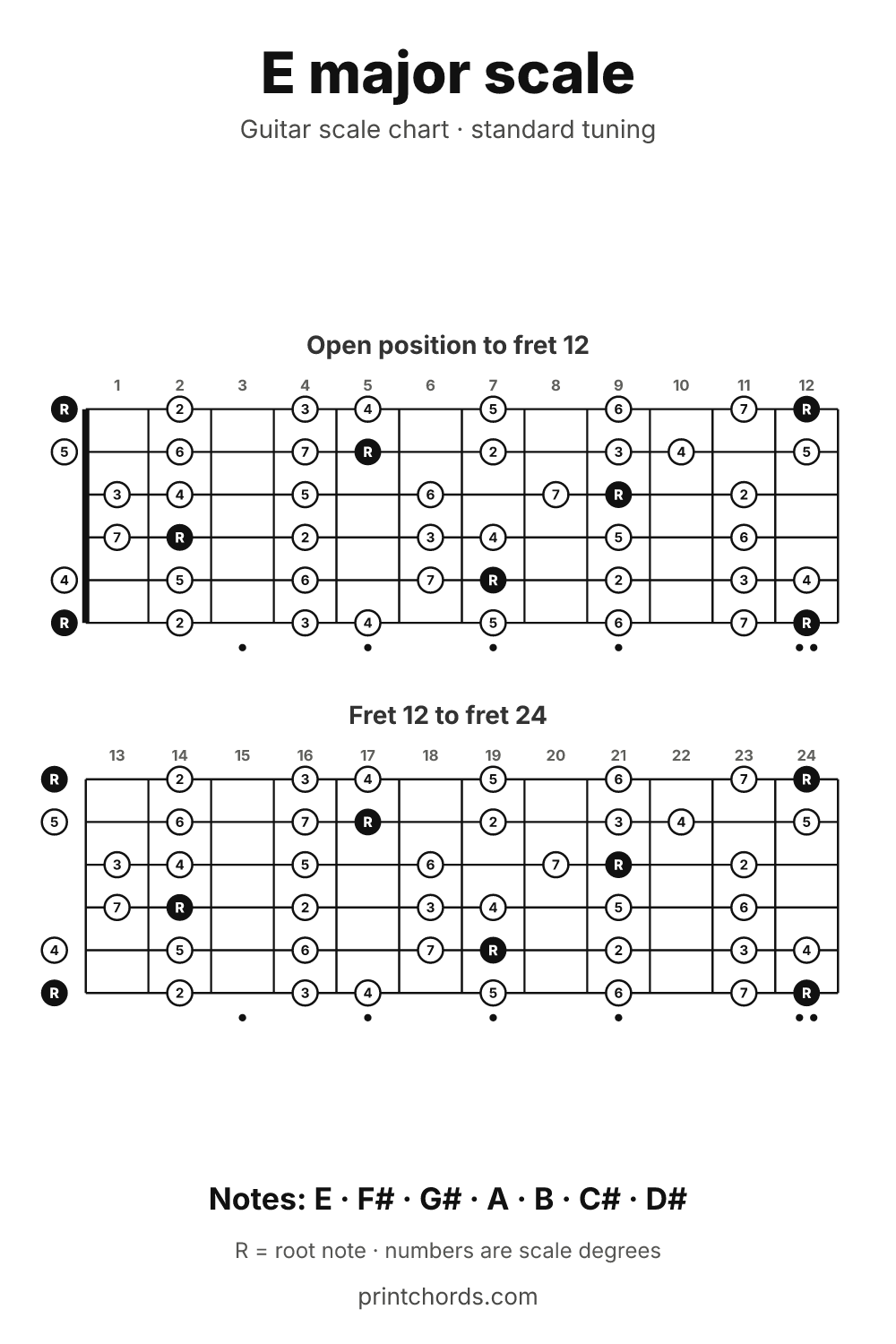
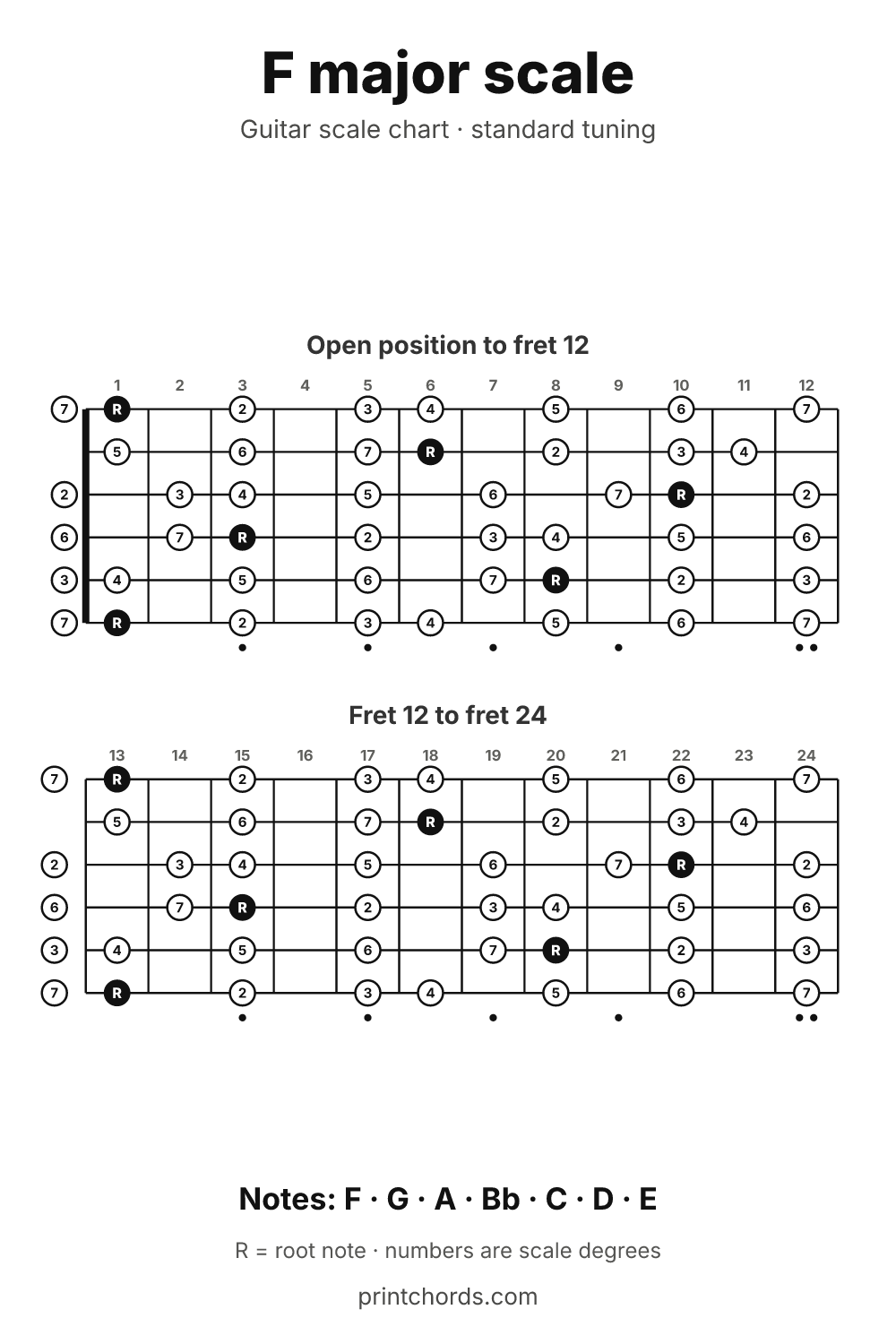
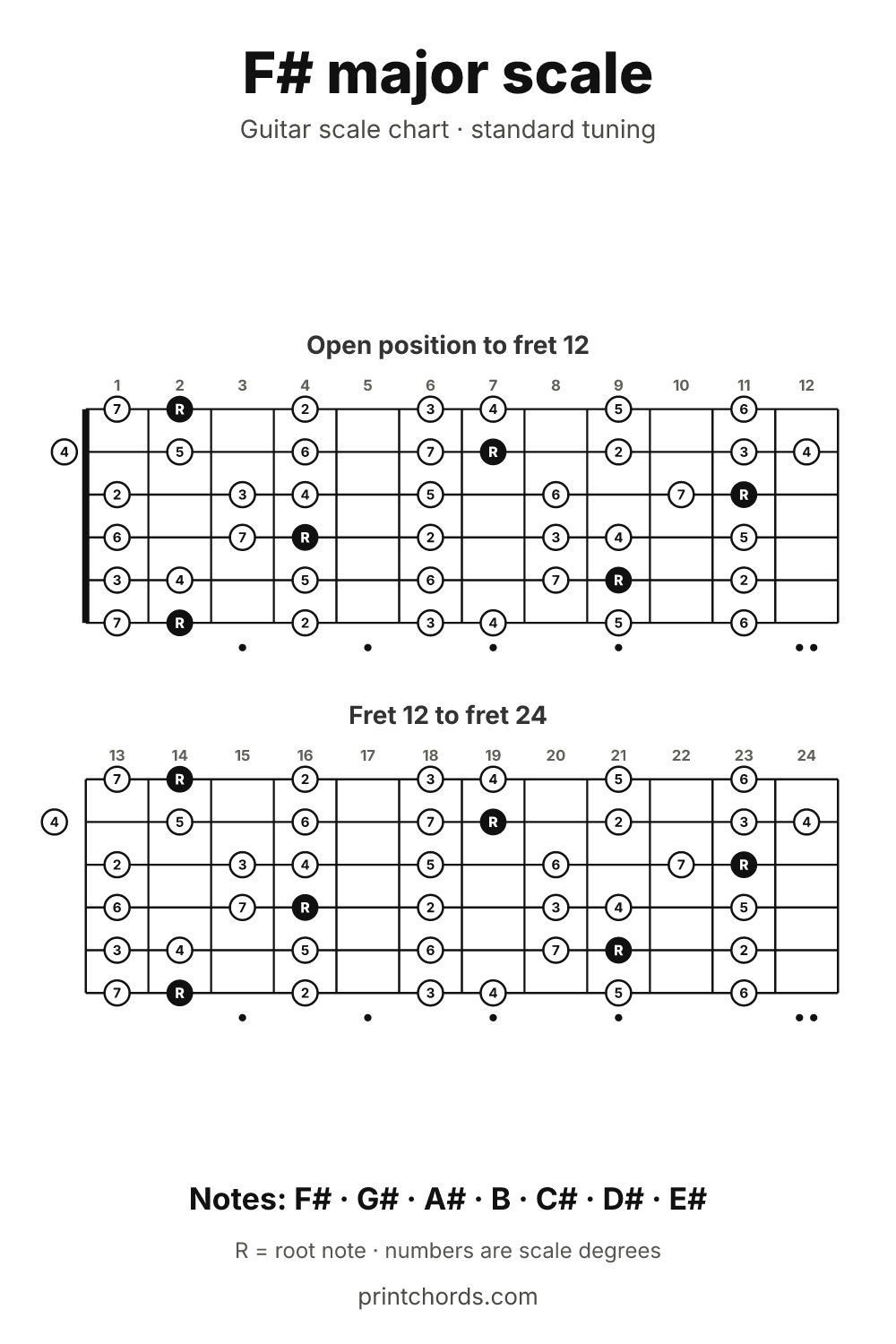
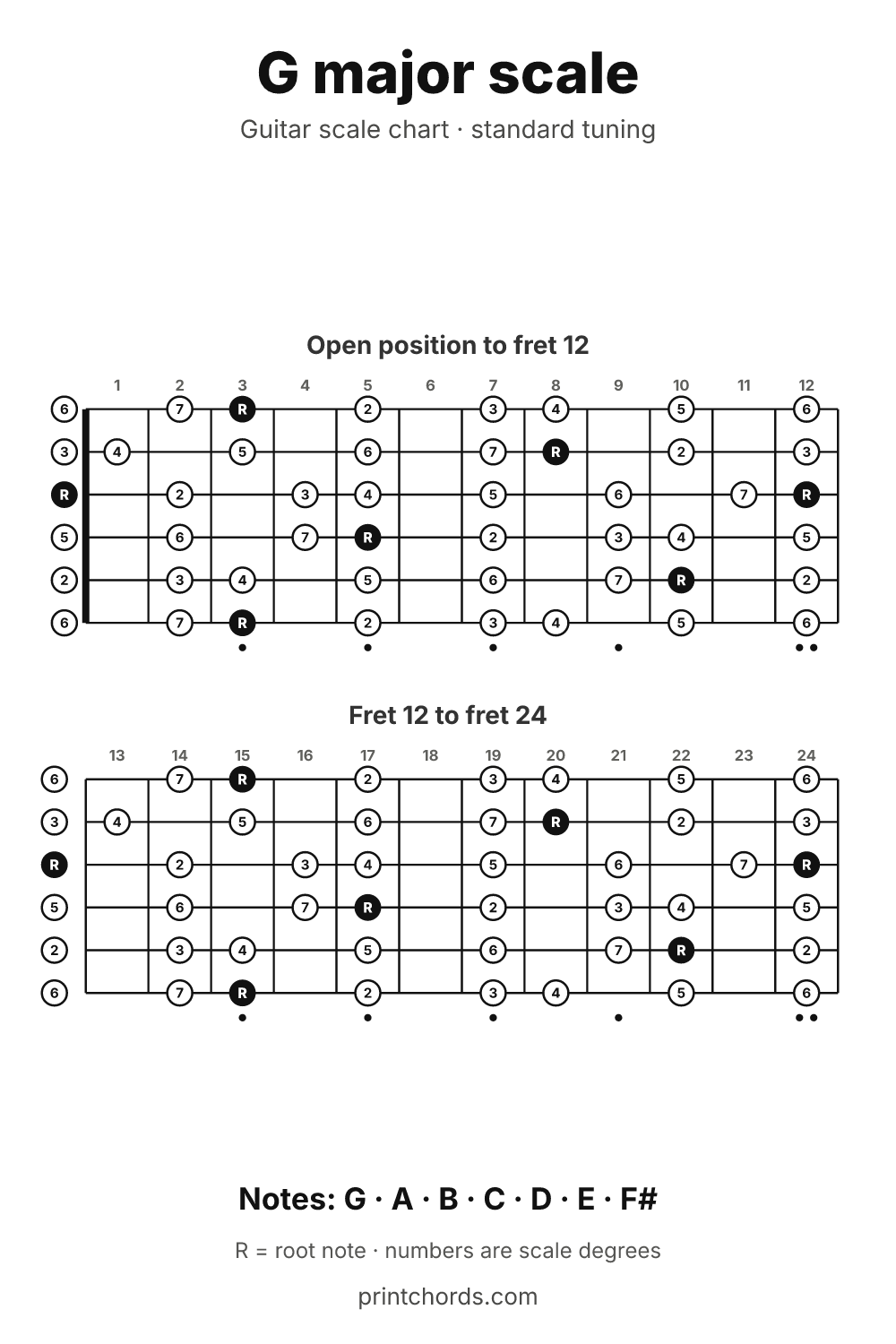
A natural minor
The major scale started from its sixth note. Same notes as its relative major, different centre of gravity.
Natural minor in every key printable PDF
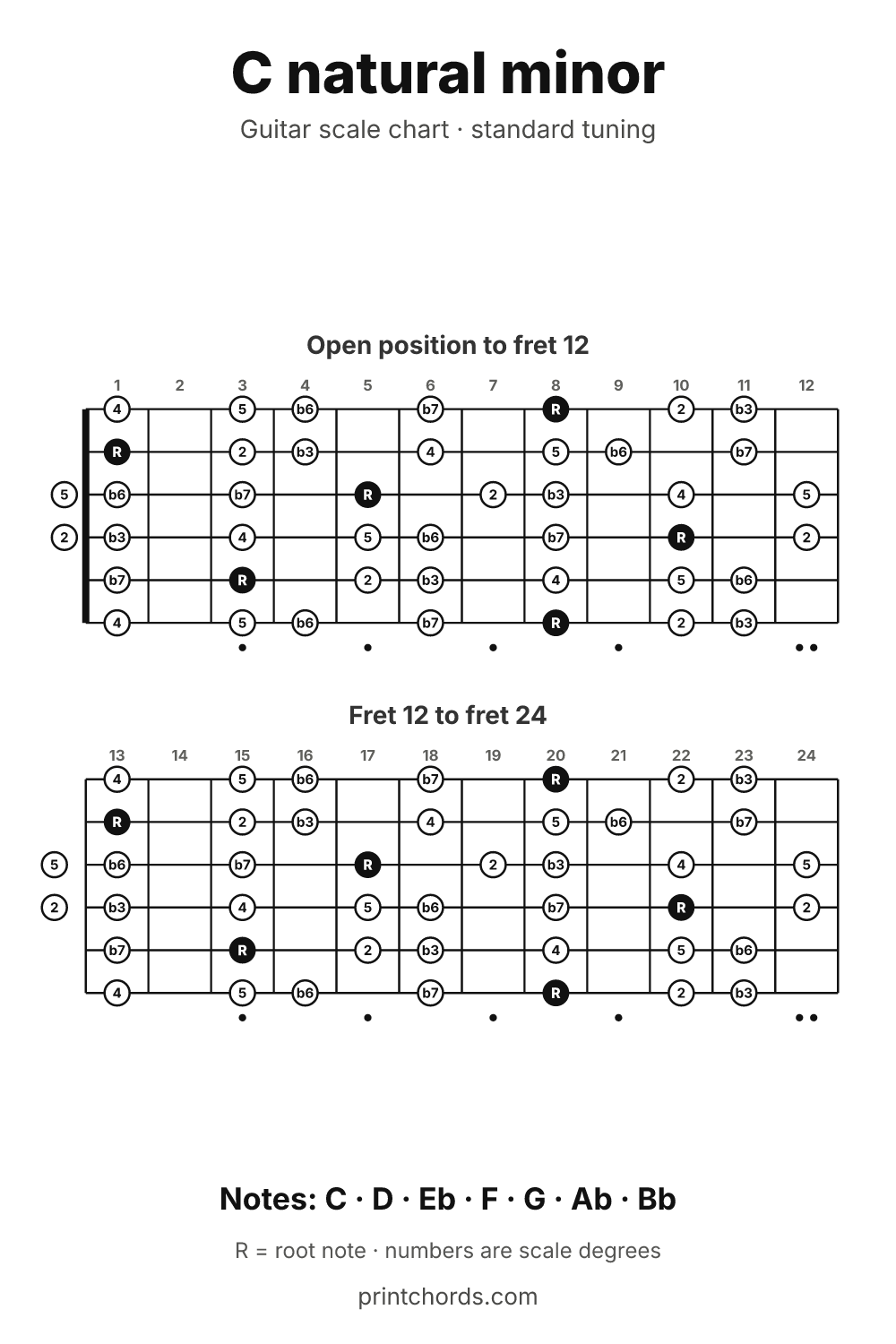
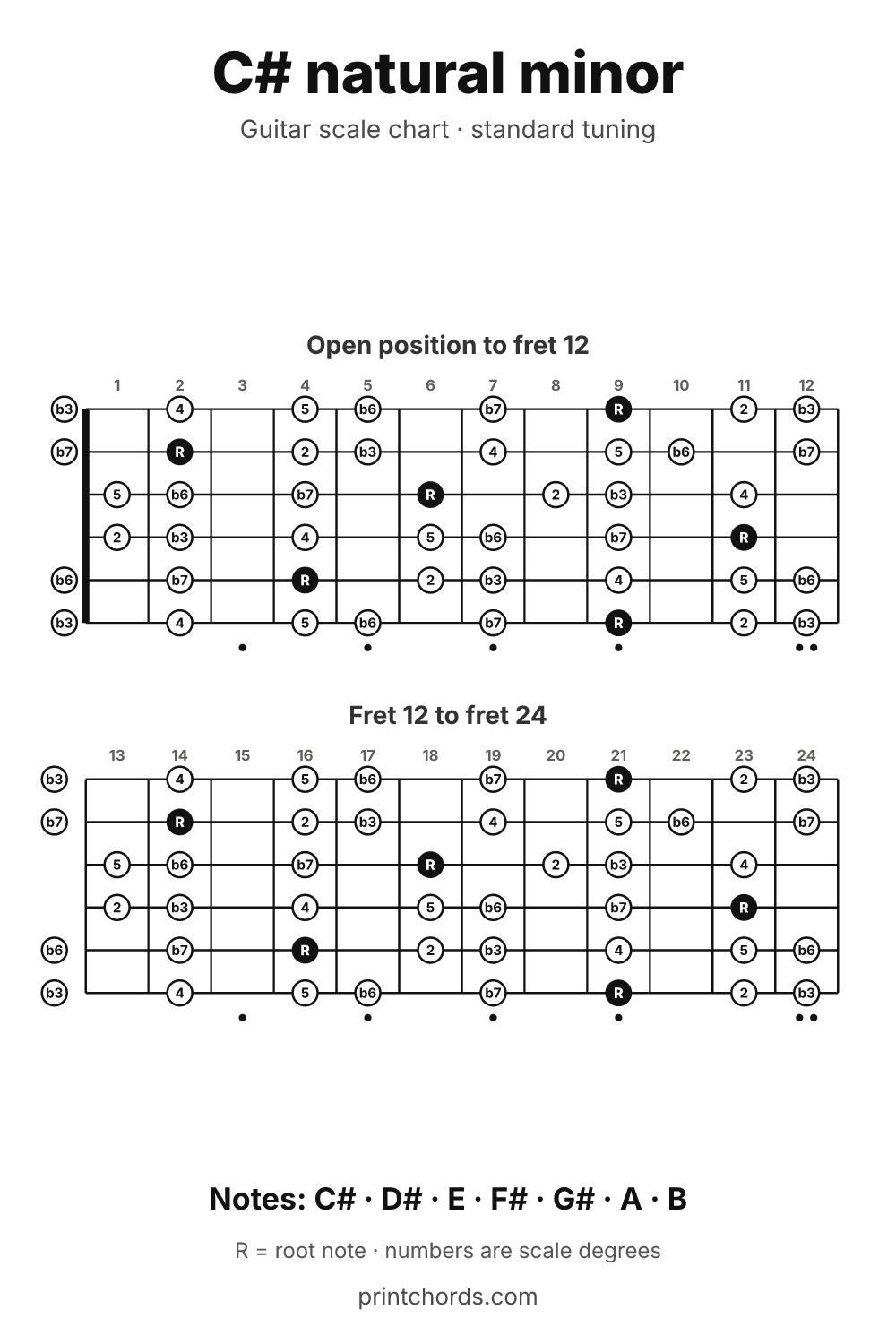
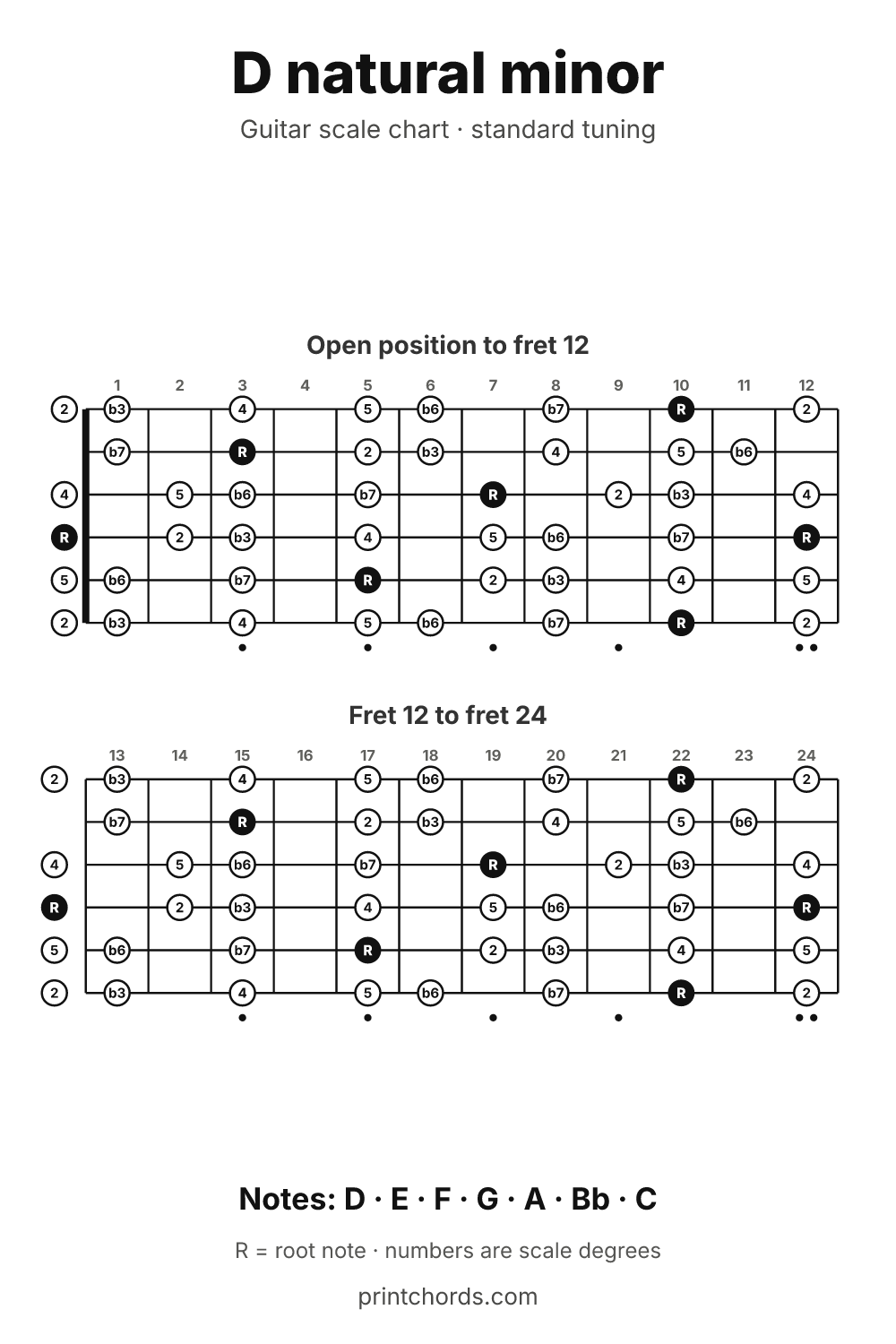
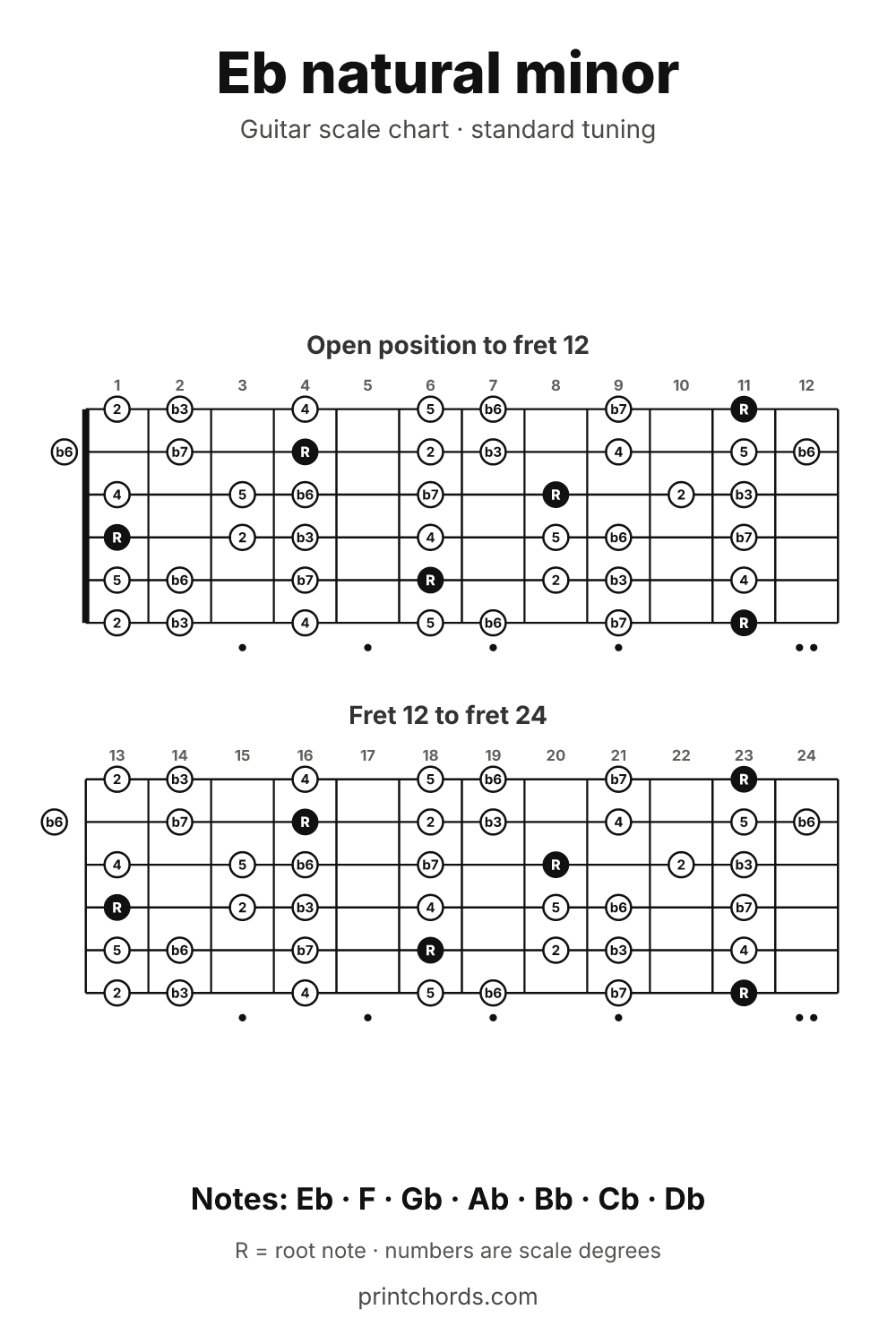
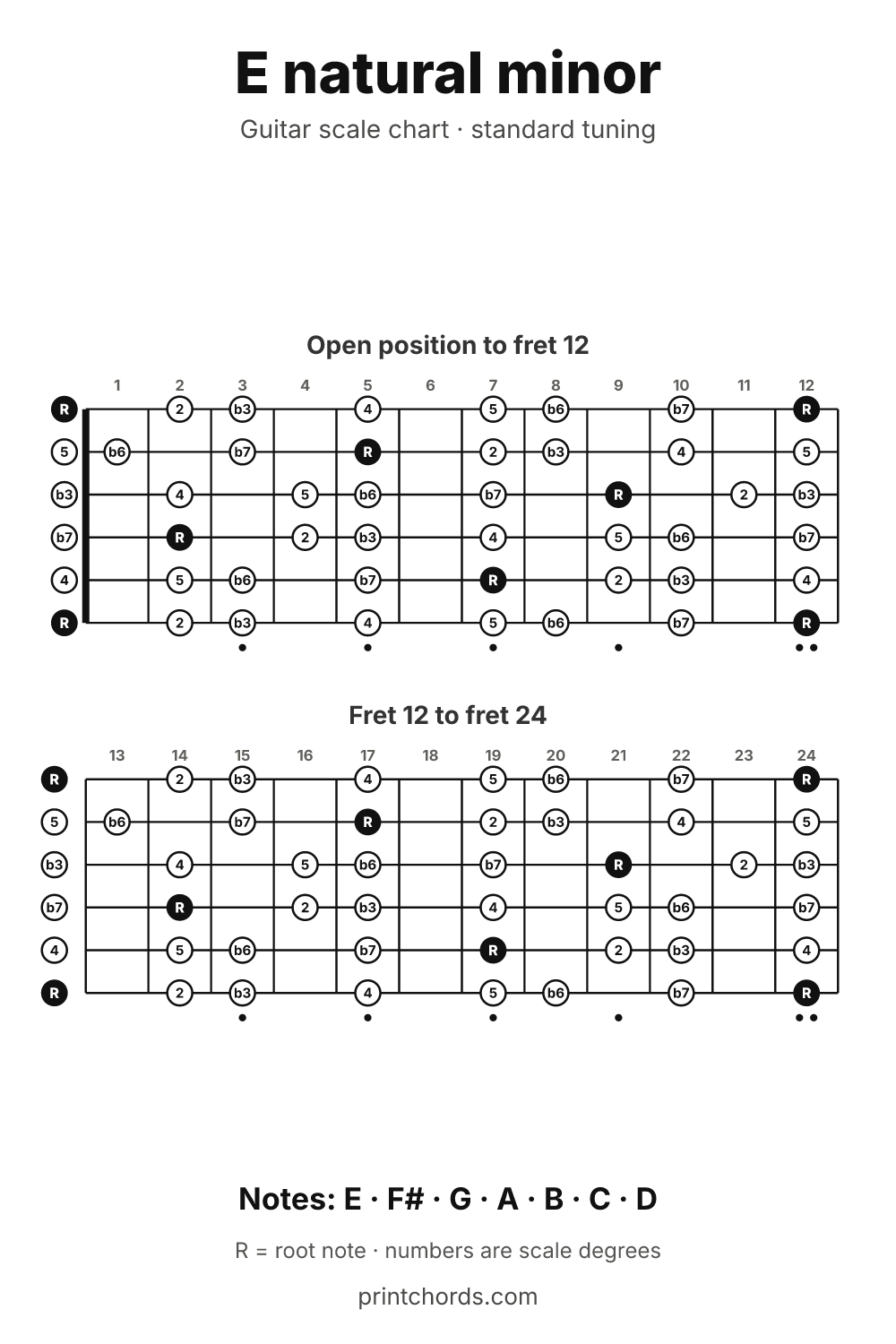
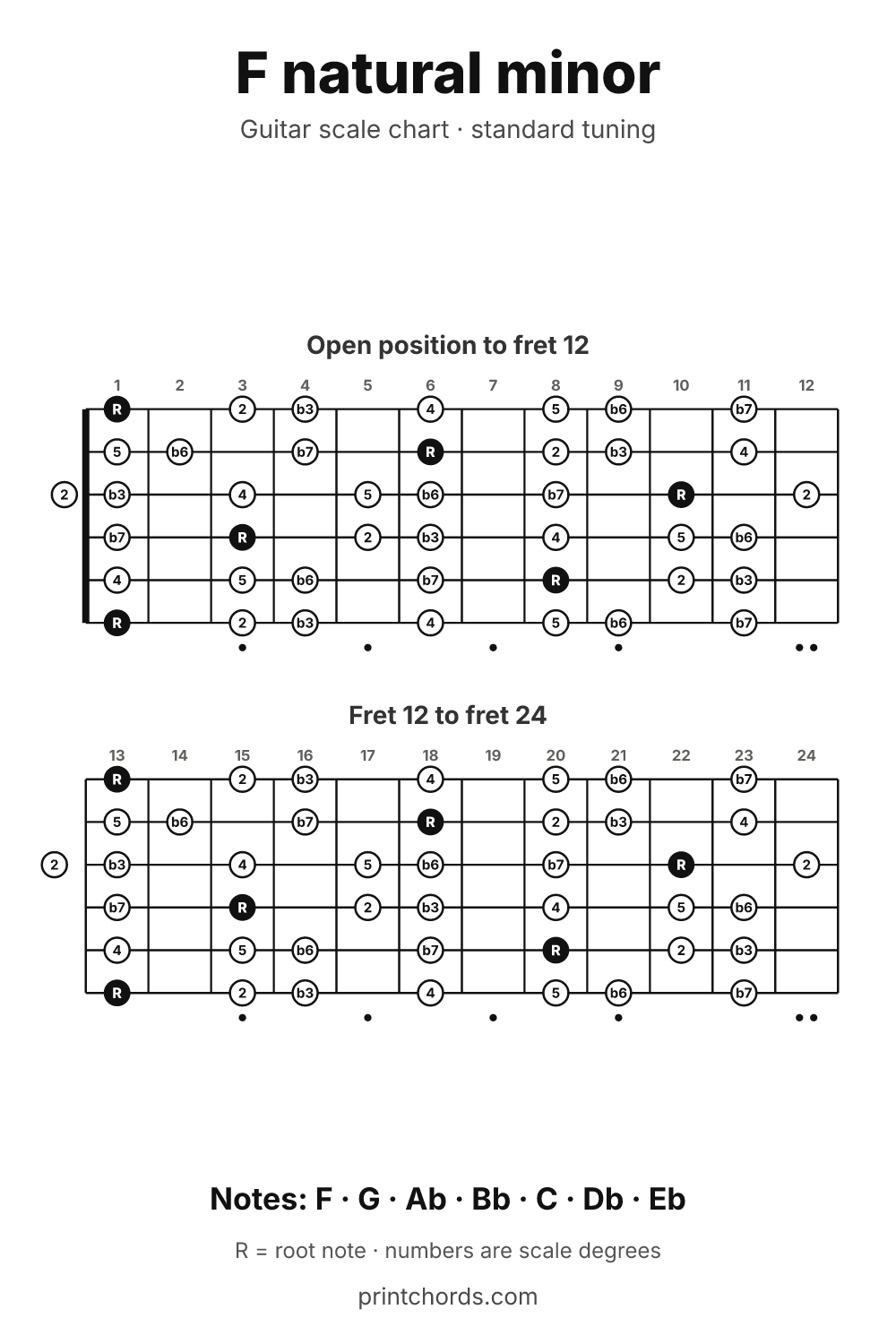
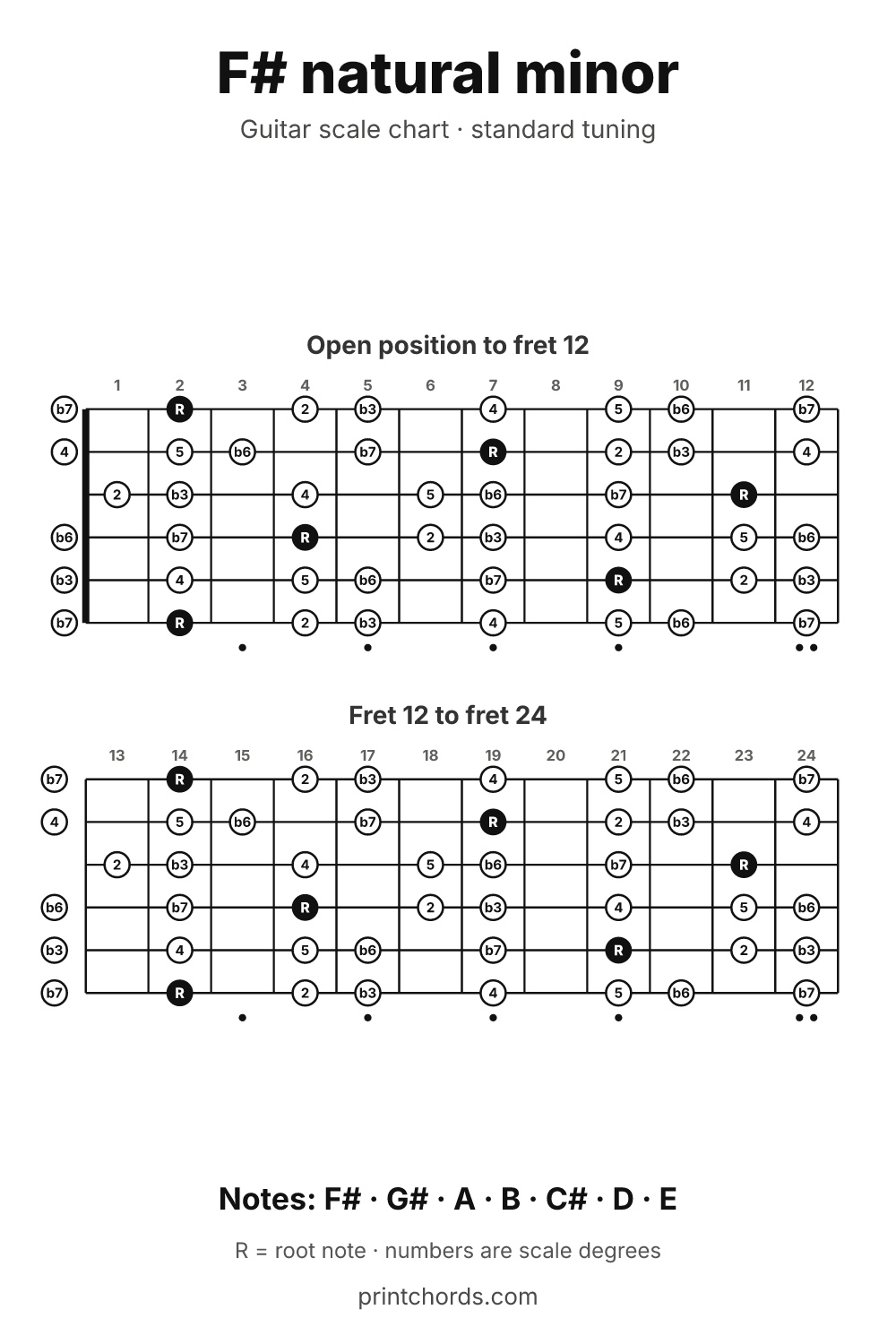
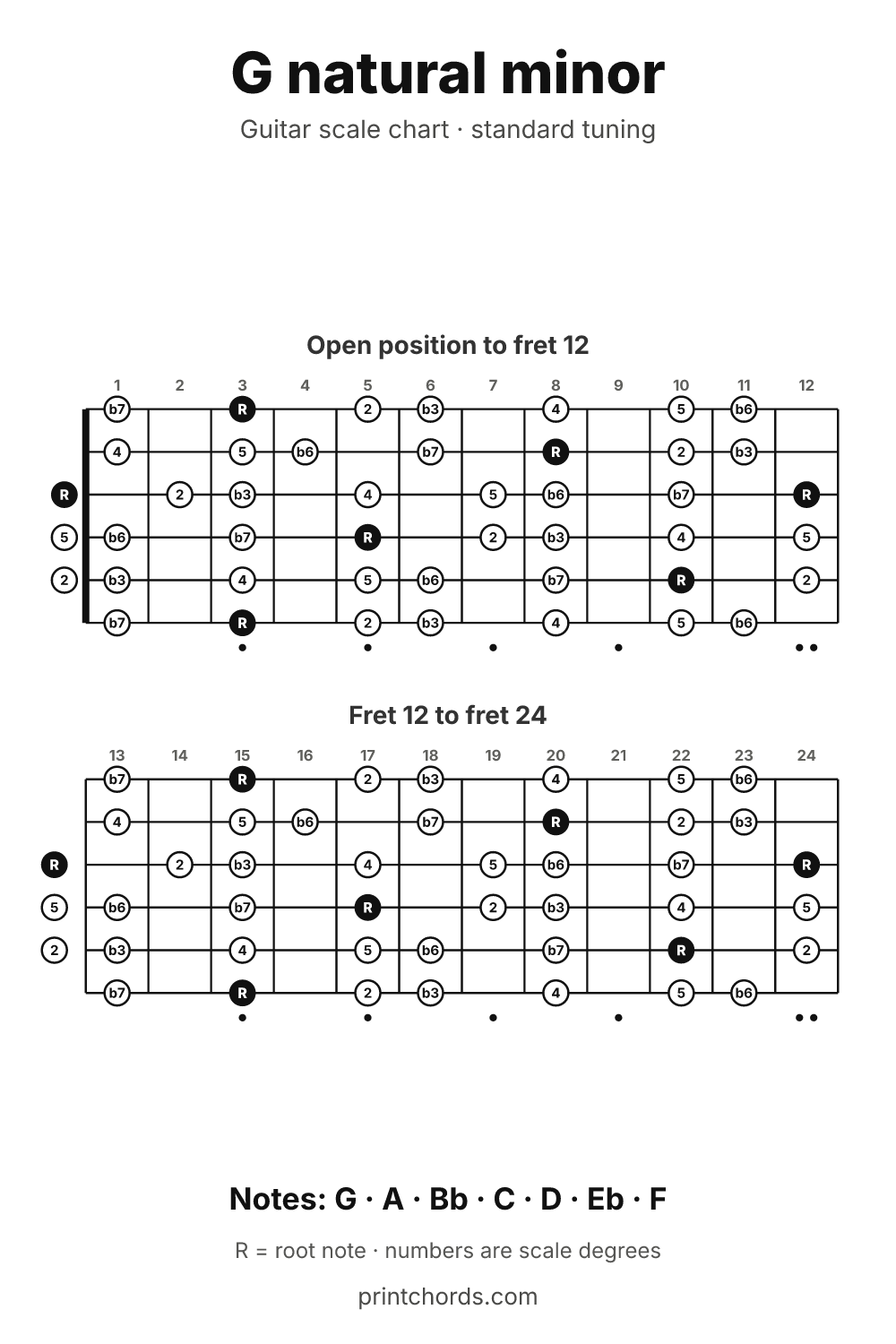
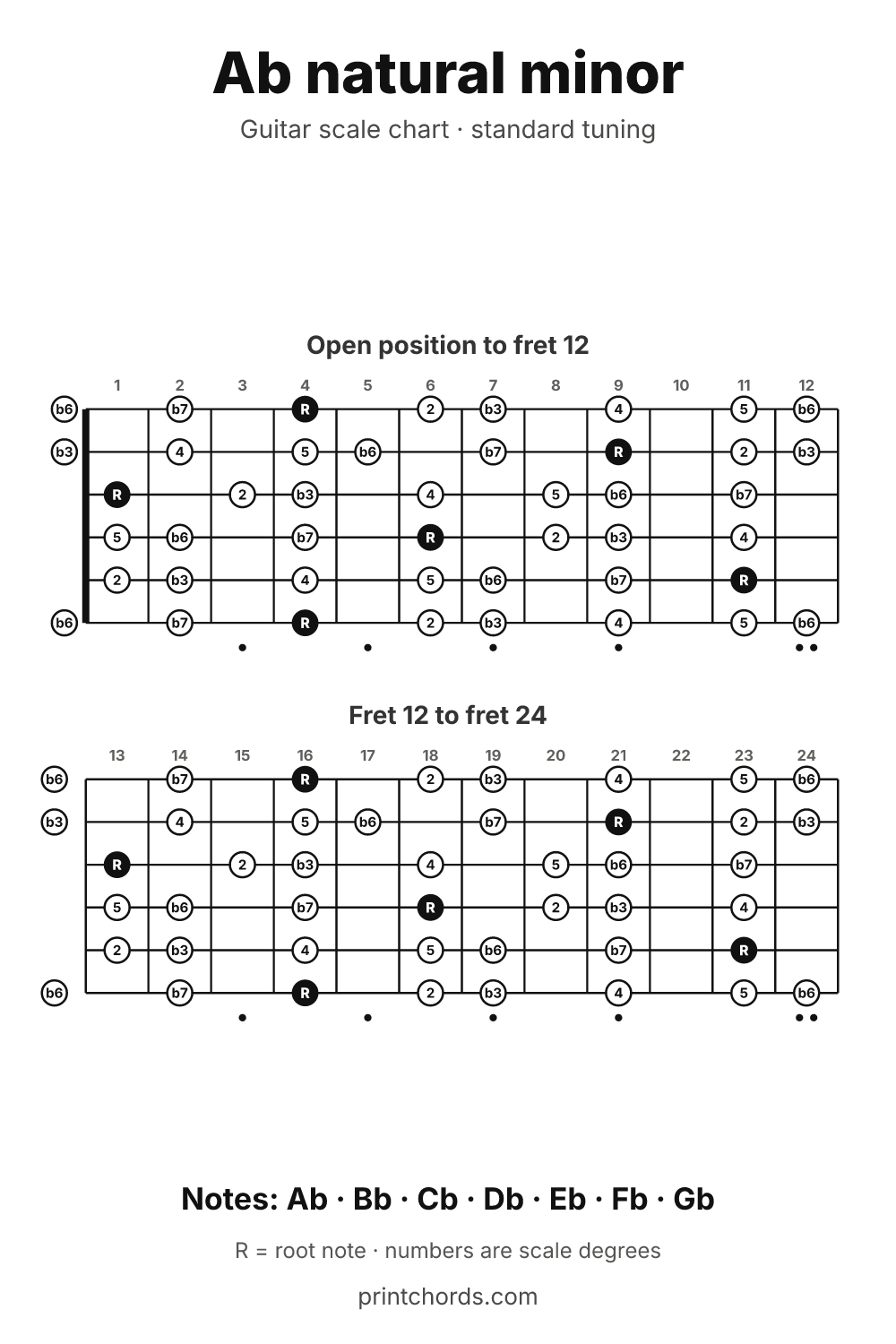
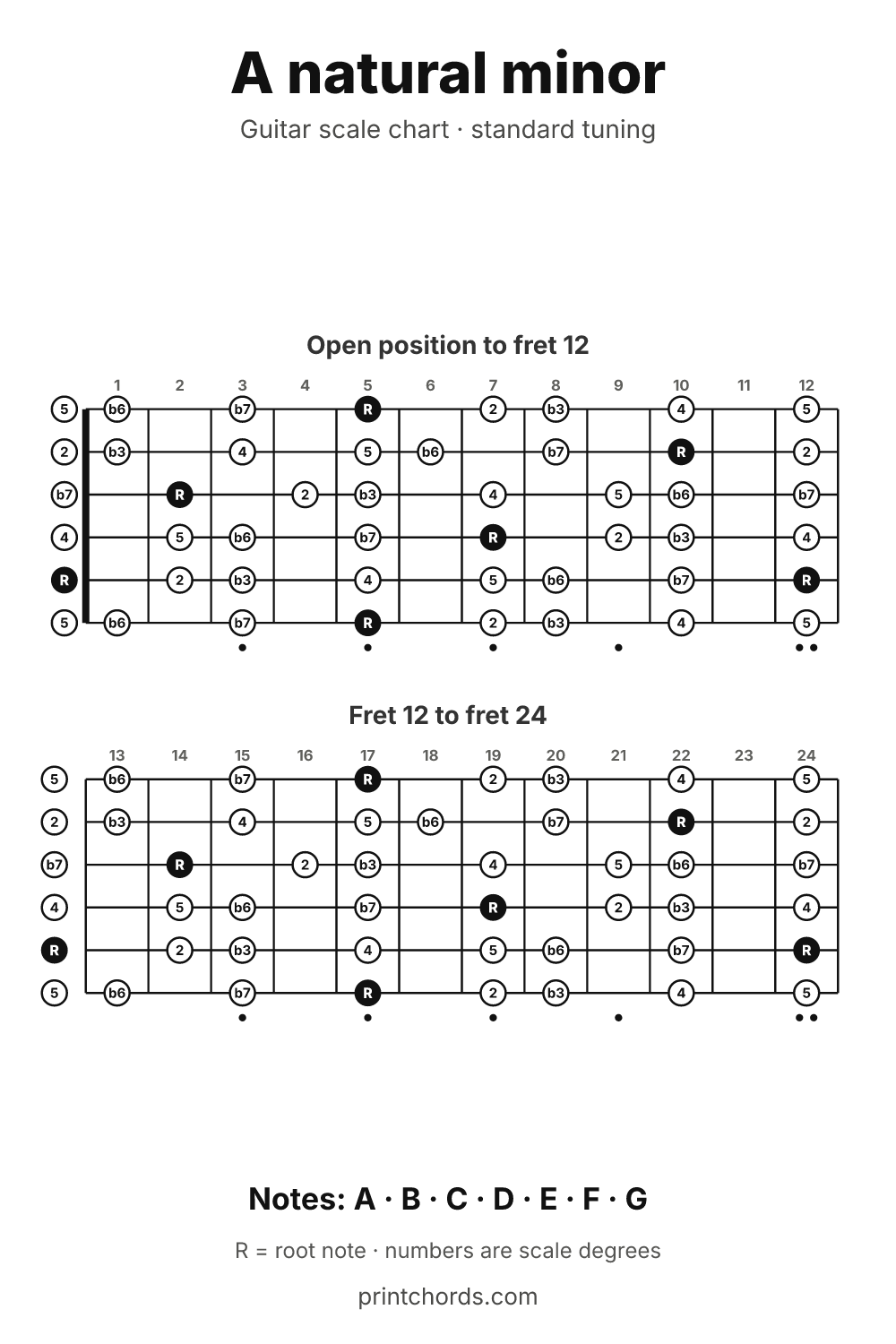
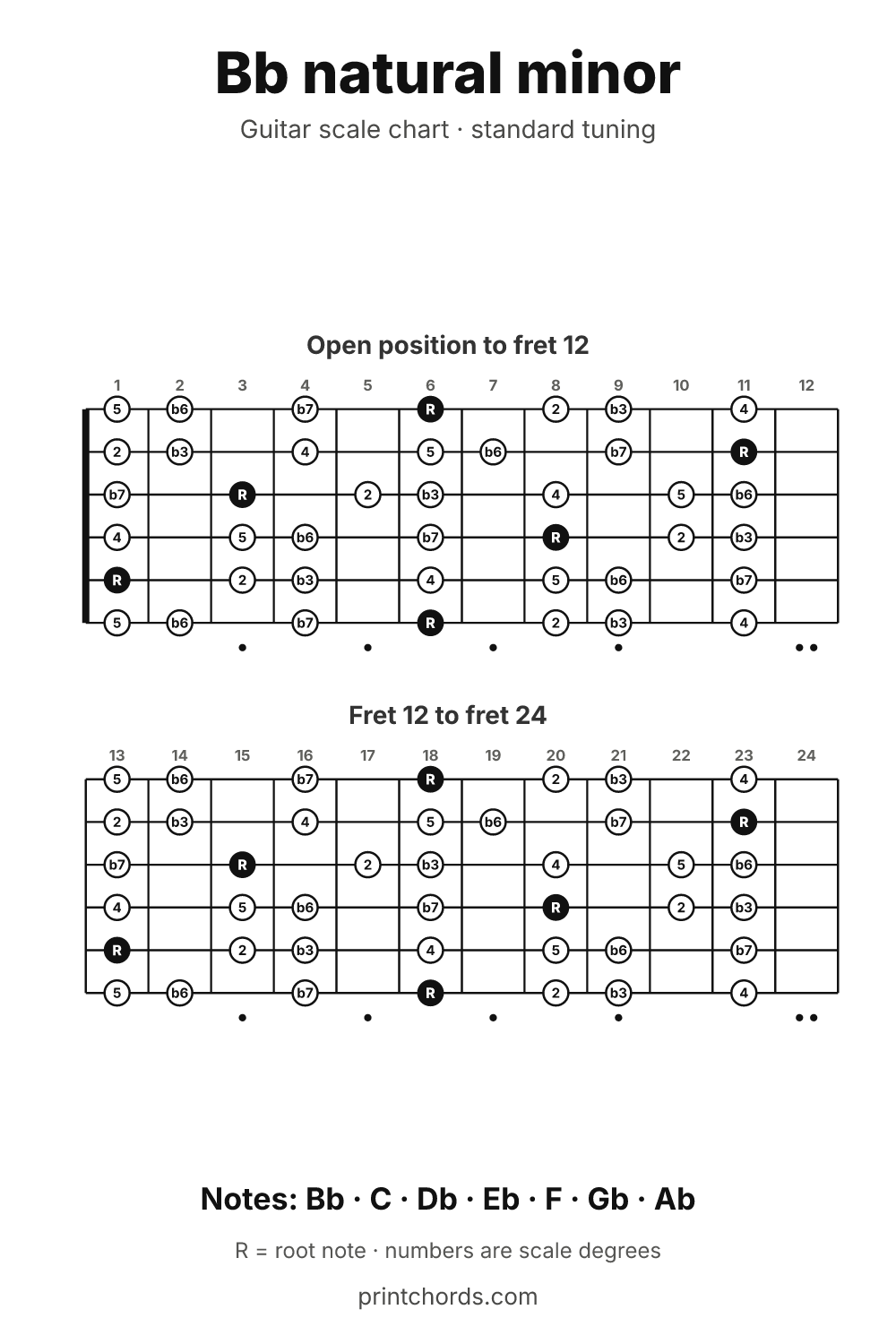
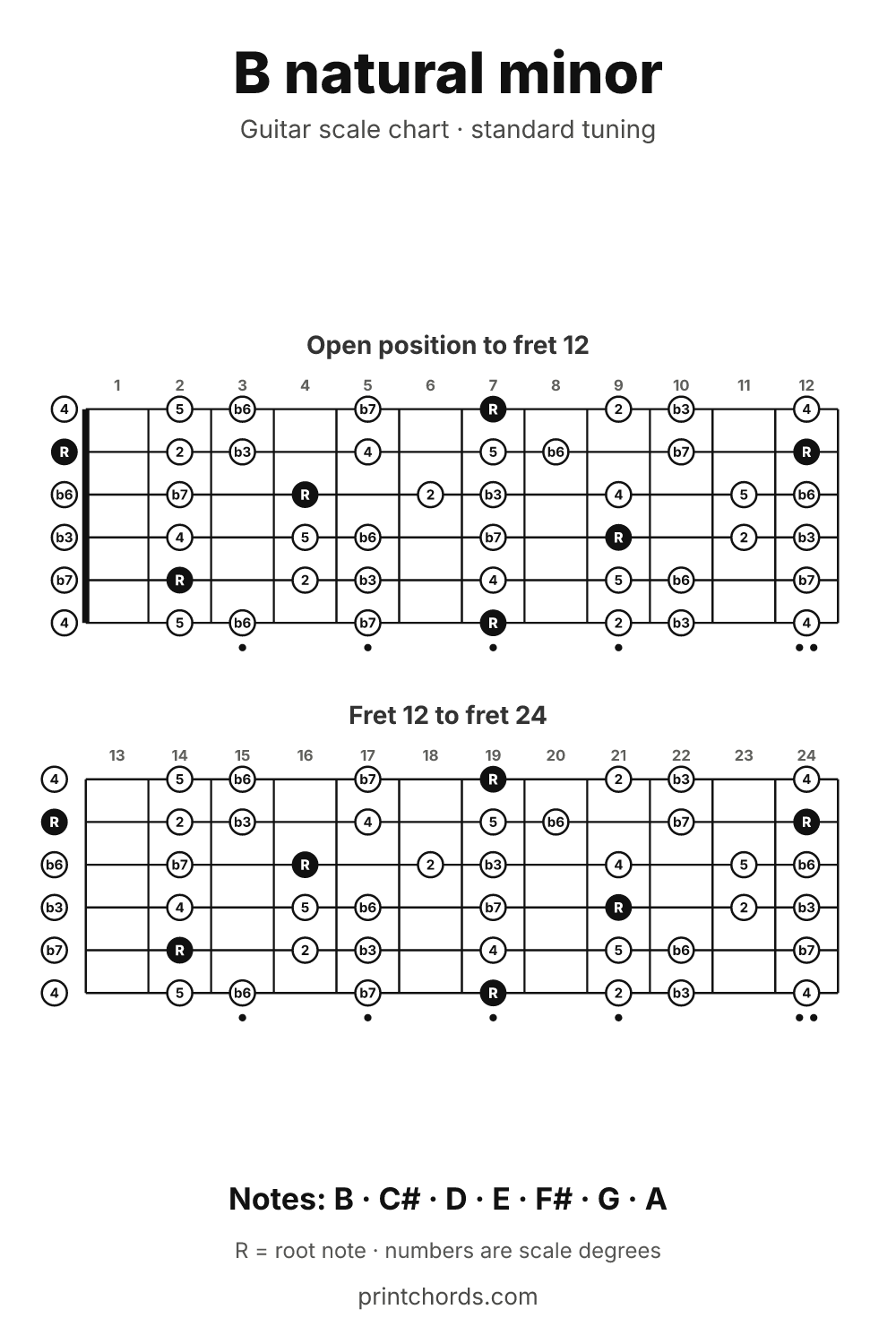
How to use these charts
A scale chart is not something to memorise in one sitting. What it is good for is seeing where the root notes sit, because those are what tie a shape to a key. Once you can find the roots on the sixth and fifth strings, every diagram on this page becomes movable and you stop learning twelve separate charts.
Start with the minor pentatonic. Five notes, no semitone clashes, and it sits under the hand in a way the seven-note scales do not. The blues scale is the same shape with one note added between the fourth and the fifth, so learning one buys most of the other. The major and natural minor scales are worth having later, mostly because they explain what the pentatonics leave out.
Every marker here is labelled with its scale degree rather than colour-coded, so a photocopy or a cheap black-and-white printer loses nothing. Roots are filled circles marked R; everything else is hollow with the degree written in.
Teaching from these scale charts? Everything here is free to copy for a class, and the page for teachers covers what to print, what you are allowed to do with it and how to link to it.
Frequently asked questions
Which guitar scale should I learn first?
The minor pentatonic. It has five notes instead of seven, the shape repeats cleanly up the neck, and almost every rock and blues solo you already know is built from it. The blues scale is the same shape with one note added, so it follows for very little extra work.
How do I move a scale to another key?
Find the root on the low E string and slide the whole shape there. That is what the R markers are for. The key switcher above redraws every diagram for you, and the fret numbers move with it.
What do the numbers in the circles mean?
They are scale degrees: R is the root, 2 is the second, b3 a flattened third, and so on. Degrees rather than note names, because the shape is the thing that moves, and the degrees stay the same in every key.
Do I need to learn all twelve keys?
No. Learn the shapes once and learn where the roots are on the sixth and fifth strings; that is all twelve keys. The per-key charts here are for practice and for printing, not for memorising separately.